
 By istorija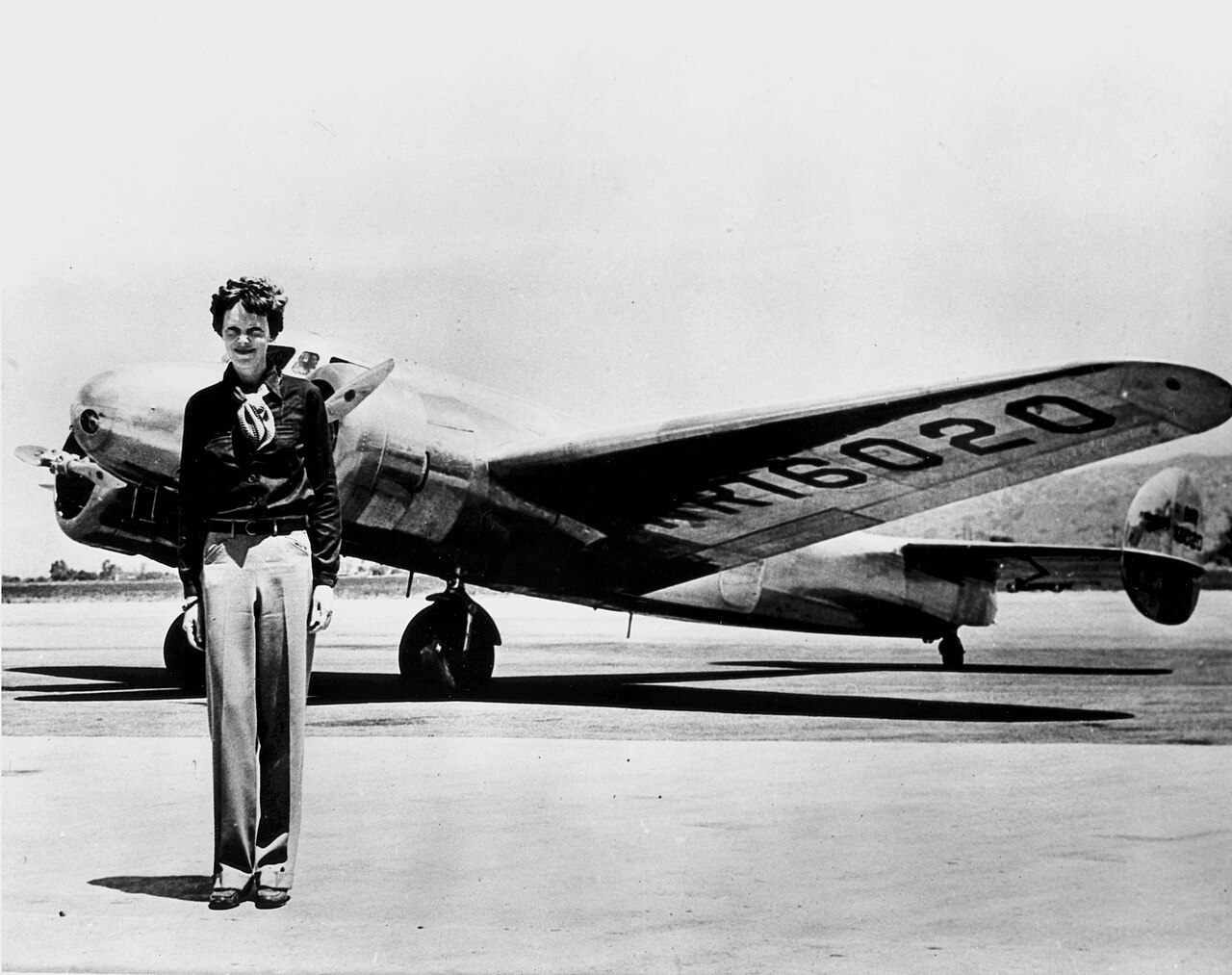
On July 2, 1937, Amelia Earhart, the most famous female aviator in the world, vanished somewhere over the vast Pacific Ocean. Along with her navigator Fred Noonan, she was attempting a feat no woman had ever achieved: circumnavigating the globe by following the grueling equatorial route. With a planned journey of nearly 29,000 miles (47,000 kilometers), it was the longest and most hazardous path around the planet ever attempted at the time, representing the ultimate test of endurance for both crew and aircraft.
Despite decades of searches, books, documentaries, and official inquiries, no definitive proof of what happened to Earhart and Noonan has ever been found. However, recent expeditions, advanced technology, and newly analyzed evidence have brought us closer than ever to understanding one of aviation’s greatest enigmas.
The Final Flight
Earhart and Noonan departed from Lae, New Guinea, on July 2, 1937, heading for Howland Island, a tiny speck of land in the central Pacific. Their Lockheed Electra 10E was heavily modified for long-range flight, but the journey was extremely challenging. The plane had limited fuel reserves, and navigation over open ocean relied on celestial methods and radio bearings.
The last confirmed radio transmissions from Earhart indicated she was low on fuel and could not locate Howland Island. The U.S. Coast Guard cutter Itasca, stationed near the island, heard her distress calls but could not establish clear two-way communication. After a massive search effort involving the U.S. Navy and Coast Guard, Earhart and Noonan were declared lost at sea on July 19, 1937.
The official conclusion at the time was that the plane ran out of fuel and ditched into the ocean.

The Main Theories
Over the decades, three primary theories have dominated:
- Crash and Sink The plane exhausted its fuel, ditched near Howland Island, and sank in deep water. This remains the simplest and most widely accepted explanation among many aviation historians.
- Landing on Nikumaroro (Gardner Island) The International Group for Historic Aircraft Recovery (TIGHAR) has spent decades investigating the hypothesis that Earhart and Noonan landed on the uninhabited atoll of Nikumaroro (formerly Gardner Island), about 350 nautical miles southeast of Howland. They cite:
- Radio signals heard after the plane was presumed lost.
- Artifacts found on the island (including a woman’s shoe, plexiglass fragments, and a possible aluminum patch consistent with Earhart’s plane).
- A 1937 photo that may show landing gear on a reef (though highly debated).
- Capture by the Japanese A persistent theory claims Earhart and Noonan were captured by Japanese forces in the Marshall Islands and either executed or held as prisoners. This theory gained traction in the 1960s with alleged eyewitness accounts, but lacks hard evidence. Declassified U.S. and Japanese documents have not supported it.
Latest Research and Developments (2020–2026)
Recent years have brought new tools and renewed efforts:
- Deep-sea searches: In 2019 and 2024, expeditions using advanced sonar and ROVs (remotely operated vehicles) scanned the ocean floor near Howland Island. While no confirmed wreckage of Earhart’s Electra has been found, the search area is enormous and extremely deep.
- Nikumaroro investigations: The International Group for Historic Aircraft Recovery (TIGHAR) has spent decades investigating the hypothesis that Earhart and Noonan landed on the uninhabited atoll of Nikumaroro. In 2018, forensic anthropologist Richard Jantz published a major study re-examining bones found on the island in 1940. Using modern statistical methods and comparing the bones to Earhart’s known measurements, Jantz concluded that there is a 99% probability that the remains belonged to Amelia Earhart. Although the study sparked debate and some criticism regarding sample size and methodology, it remains one of the strongest pieces of forensic evidence supporting the Nikumaroro landing theory. Subsequent expeditions have continued to analyze additional artifacts, including possible aircraft parts.
- Forensic re-examination: In 2024, a new forensic analysis of a metal patch found on Nikumaroro concluded it was consistent with repairs made to Earhart’s plane in Miami before her final flight.
- Radio signal analysis: Modern re-examination of reported post-loss radio signals suggests some may have been genuine, supporting the theory that the plane landed on a reef and transmitted for several days.
As of 2026, no single piece of conclusive evidence has been found. However, the cumulative weight of artifacts and signals increasingly points toward a forced landing on or near Nikumaroro rather than a simple crash into deep ocean.
A Legacy Beyond the Mystery
Whether Amelia Earhart’s plane lies at the bottom of the ocean near Howland Island or on a remote reef near Nikumaroro, her story transcends the question of how she died. She was a pioneer who shattered gender barriers in aviation, promoted peace and women’s rights, and inspired millions.
The search for Earhart continues not only because we want to solve a mystery, but because her courage and determination still represent the best of the human spirit, the willingness to push boundaries and reach for the unknown.
Currently Reading


Historical Challenge: Can You Conquer the Past?
Answer more than 18 questions correctly, and you will win a copy of History Chronicles Magazine Vol 1! Take our interactive history quiz now and put your knowledge to the test!