
 By istorija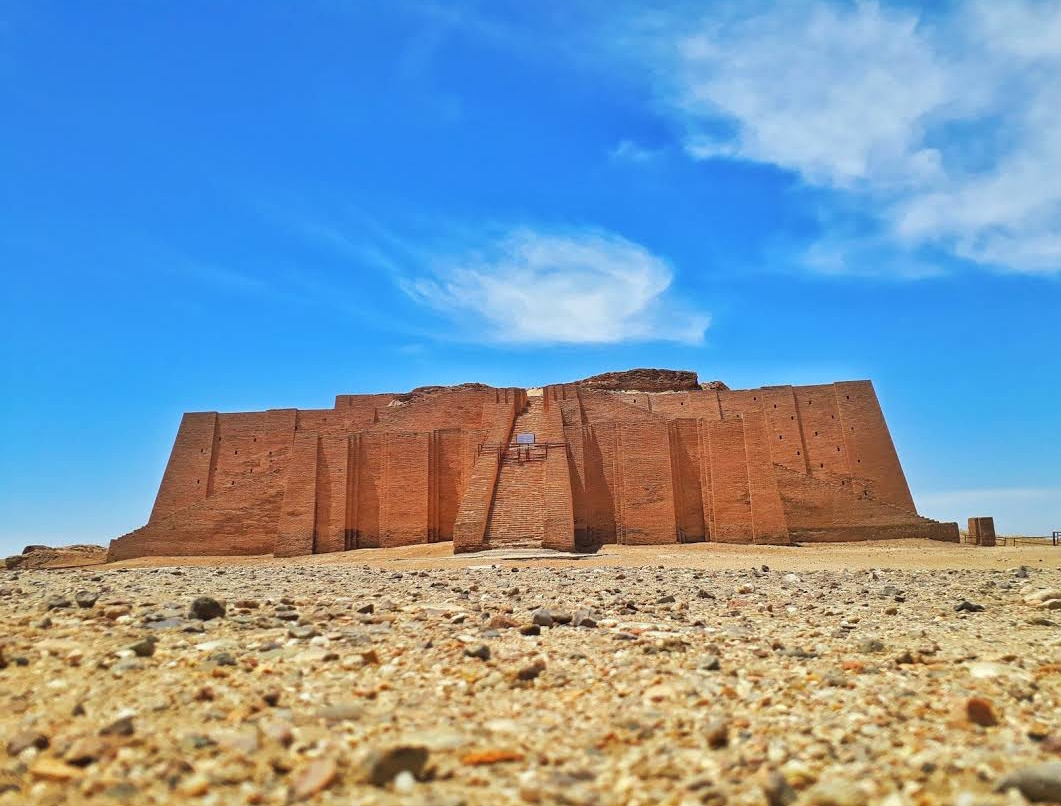
For millennia, the city of Ur lived primarily in the human imagination as a foundational landmark of biblical geography. Mentioned in the Book of Genesis as Ur of the Chaldees, it is introduced as the staging ground for one of the most consequential journeys in theological history: the departure of Abraham and his family toward the land of Canaan.
Before the rise of modern archaeology, little was known about the ancient city of Ur outside biblical references and scattered classical traditions. However, late 19th and early 20th-century archaeological campaigns transformed Ur from an elusive scriptural icon into a tangible, awe-inspiring reality of sun-dried mud bricks, gold-laden tombs, and complex geopolitics.
The Pioneer of the Sands: Sir Leonard Woolley’s Rediscovery
While initial soundings at Tell el-Muqayyar (the “Mound of Pitch”) in southern Iraq were made in the mid-19th century, the true secrets of Ur were unlocked between 1922 and 1934 by the British archaeologist Sir Leonard Woolley. Leading a joint expedition sponsored by the British Museum and the University of Pennsylvania, Woolley conducted a systematic excavation that gripped the global public imagination.
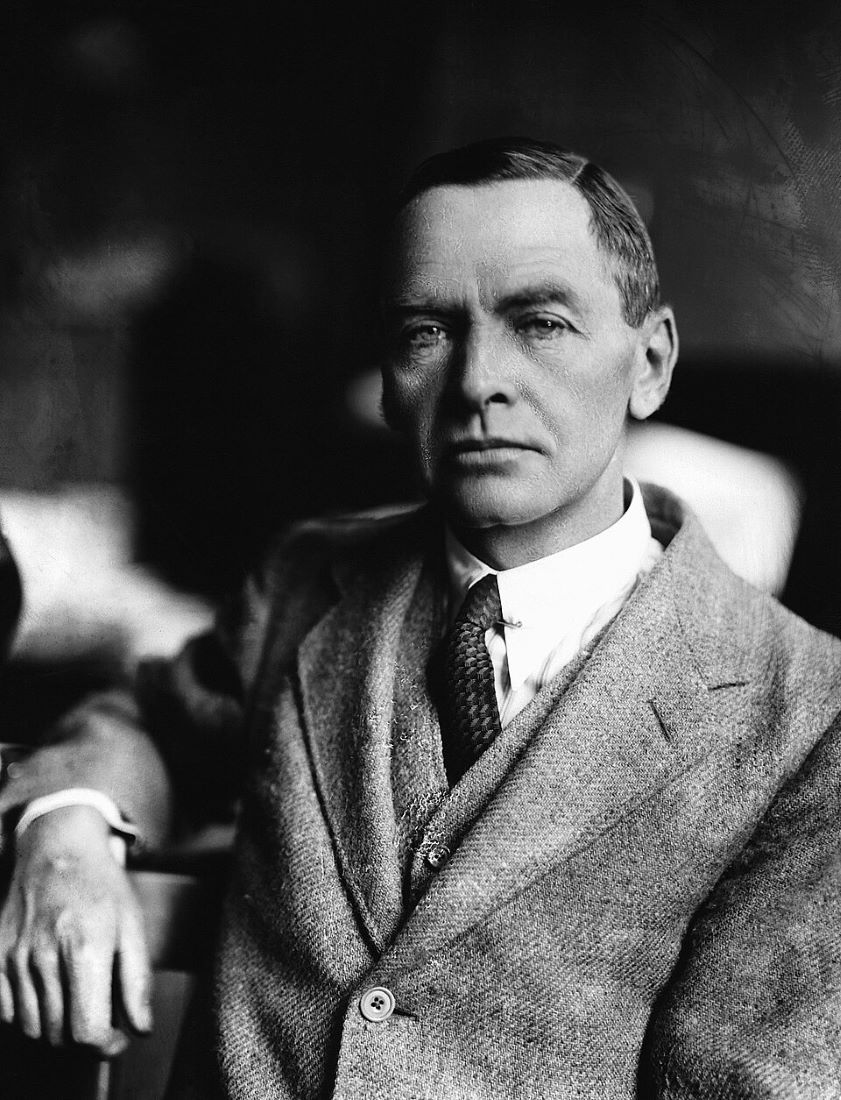
Woolley’s most sensational discovery was the Royal Cemetery of Ur, dating to the mid-third millennium BC. Here, he laid bare the burial chambers of early Sumerian dynastic rulers, exposing a world characterized by extraordinary wealth and sophisticated craftsmanship. Among the most iconic artifacts unearthed were:
-
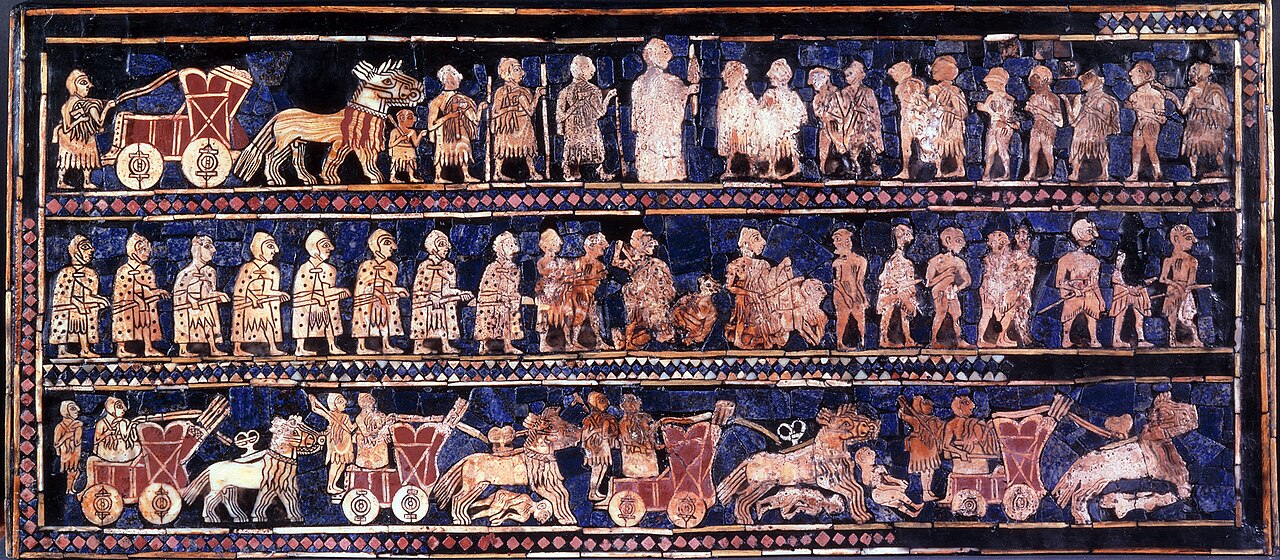
The Standard of Ur: A hollow wooden box inlaid with a mosaic of lapis lazuli, shell, and red limestone. Its two main panels, traditionally dubbed “War” and “Peace,” provide a vivid narrative of Sumerian society, including military scenes featuring tightly organized infantry formations and early wheeled carts.
-
The Golden Helmet of Meskalamdug: An astonishingly detailed electrum helmet beaten into the shape of a wig, representing the pinnacle of early metalsmithing.
-
The Queen’s Lyre: One of several magnificent stringed instruments discovered, adorned with a gold bull’s head and intricate mythological plaques.
Funerary Rituals and Retainers
Woolley’s excavations also revealed a sobering aspect of early Mesopotamian kingship: the presence of human sacrifice. In large pits adjacent to royal vaulted tombs, dozens of retainers, including soldiers, musicians, and court ladies wearing elaborate headdresses, were deliberately killed as part of royal funerary rituals to accompany their sovereigns into the afterlife. While early theories suggested mass poisoning, modern osteological analyses continue to investigate the exact mechanisms, suggesting a highly controlled, ritualized process.
Anatomy of a Bronze Age Superpower
At its zenith, Ur was a bustling, cosmopolitan port city and a major economic powerhouse of the ancient Near East. Due to the shifting courses of the Tigris and Euphrates rivers and centuries of heavy silting, the ruins of Ur now lie some 150 miles inland. However, around 2100 BC, Ur sat near the head of the Persian Gulf, serving as a maritime trading hub connected to regional commercial networks.
The Ziggurat of Ur-Nammu
The visual and spiritual anchor of the city was the massive Ziggurat of Ur, built during the Third Dynasty of Ur by King Ur-Nammu and his son Shulgi around 2100 BC. Dedicated to the moon god Nanna (or Sin), the city’s principal patron deity, this monumental stepped pyramid was constructed with a core of mud bricks wrapped in a thick outer casing of baked bricks set in bitumen.
The structure was a marvel of ancient engineering:
-
Dimensions: It stood on a massive rectangular base, rising in distinct stepped tiers toward a high sanctuary at the summit.
-
Moisture Control: The builders incorporated deep “weep holes” in the exterior brickwork to evaporate moisture from the damp mud-brick interior core, preventing structural collapse during seasonal shifts.
-
Optical Refinements: The walls of the Ziggurat curved slightly outward, creating an optical illusion of absolute straightness and monumental strength.
Urban Fabric and Daily Life
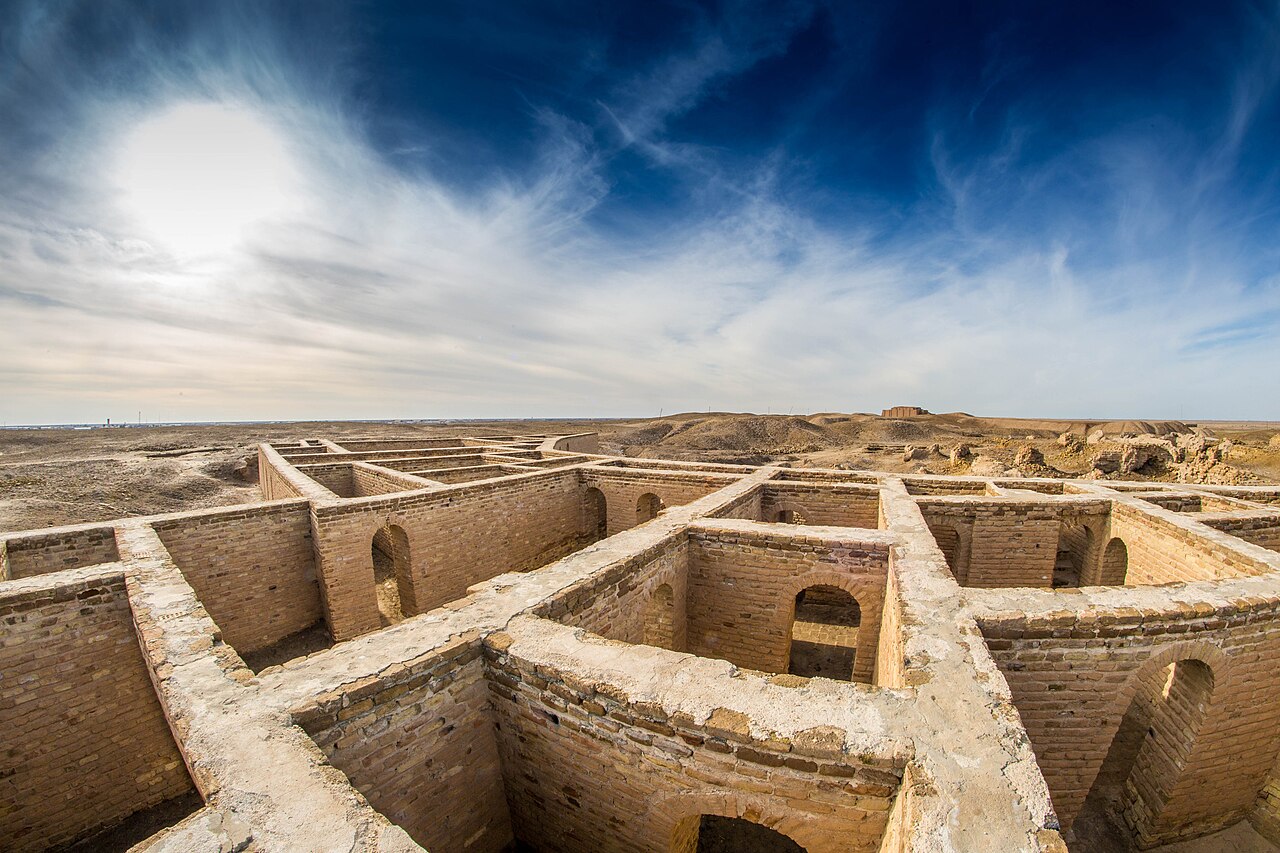
Outside the sacred temple precinct, Woolley uncovered dense residential quarters. The domestic architecture of Ur revealed a highly developed standard of living. Houses were typically double-storied, constructed around central open-air courtyards that provided ventilation and light. The ground floors housed reception rooms and kitchens, while upper wooden balconies led to private living quarters. This urban layout showcases a stratified, highly literate society where cuneiform clay tablets recorded legal disputes, royal decrees, and extensive commercial transactions.
The Theological Echo: Ur and the Monumental Structures
The sophisticated architectural landscape of Mesopotamia stands in a compelling dialogue with biblical literature. Many scholars have suggested that Mesopotamian ziggurats may have inspired the biblical story of the Tower of Babel (Genesis 11:1–9).
To pastoral or semi-nomadic groups interacting with these urban centers, the massive, mud-brick structures of Mesopotamian worship were powerful symbols of imperial centralization and state-controlled religion. In the biblical narrative, Abraham’s departure symbolizes a break with the polytheistic religious traditions of Mesopotamia, setting the stage for a new covenant built upon a distinct theological framework.
The Geopolitical Crucible: From Glory to Ruin
The history of southern Ur is a turbulent narrative of shifting dynasties and foreign pressures:
-
The Elamite Sacking (c. 2004 BC): The glorious Third Dynasty of Ur came to a cataclysmic end when an army from Elam swept across the region, captured King Ibbi-Sin, and thoroughly sacked the city.
-
The Isin-Larsa and Babylonian Era: The city was rebuilt, eventually passing into the spheres of influence of competing regional powers, including the kingdom of Larsa and the first Babylonian Empire.
-
The Neo-Babylonian Renaissance: Centuries later, the final major architectural revival occurred under the Neo-Babylonian king Nabonidus (r. 556–539 BC), an antiquarian ruler who extensively remodeled the Ziggurat of Ur-Nammu and appointed his eldest daughter as the high priestess.
-
The Persian Conquest and Abandonment: Following the incorporation of the region into the Persian Empire, Ur’s influence steadily waned. By the 4th century BC, the Euphrates River had altered its course, leaving the city stranded in an arid desert landscape without water or trade access, leading to its final abandonment.
Alternative Geographies: Locating the Biblical Ur
While the southern Mesopotamian site of Tell el-Muqayyar remains the standard, universally recognized identification for biblical Ur among mainstream archaeologists, it is not without historiographical debate. A distinct line of historical and geographical scholarship suggests that Abraham’s ancestral home may have been located much further north.
The Case for Northern Ur (Urfa / Şanlıurfa)
Ancient texts, local traditions, and certain historical accounts linked to early Judeo-Christian interpretations identify Urfa (ancient Edessa, modern Şanlıurfa in southeastern Turkey) as the true patriarchal home.
The arguments for this northern localization rely on several key observations:
-
The Proximity to Haran: According to Genesis 11:31, when Terah and Abraham left Ur to go to Canaan, they traveled to Haran and settled there for a time. Haran is located in southeastern Turkey, near Urfa. If Abraham were traveling from southern Iraq to Canaan, moving up to Haran would constitute a massive and illogical detour to the north. From Urfa, however, Haran is a natural step along the standard ancient trade route heading south.
-
The “Chaldean” Anachronism: The biblical text uses the term Ur of the Chaldees. Because the Chaldeans did not appear in southern Mesopotamia until the late 11th or 10th century BC, long after the traditional patriarchal age, some scholars argue that Kasdim may have originally referred to a northern tribal group, which was later updated by biblical scribes.
-
Cuneiform Toponyms: Administrative tablets found at Ebla and Ugarit, as well as Hittite state archives, explicitly mention a northern city named Ura or Ur within the upper Euphrates trade network.
-
Local Traditions: To this day, Şanlıurfa preserves a deep cultural heritage as the traditional birthplace of Abraham, featuring sacred pools and landmarks central to local heritage.
Despite these arguments, the overwhelming majority of archaeologists and Assyriologists continue to identify biblical Ur with the prominent Sumerian city excavated by Woolley in southern Iraq. The immense wealth, historical significance, and prominent placement of the southern city within ancient Mesopotamian literature make it the primary focus of historical consensus.
Conclusion: A Enduring Legacy
Whether Abraham’s narrative traces its origins to the highly literate, maritime mega-city of southern Sumer or to the northern commercial hub of Urfa, the historical essence of the journey remains profoundly significant.
The departure from Ur represents a departure from an established world of monumental state religion, imperial bureaucracy, and urban conformity. The physical legacy of Ur, with its awe-inspiring Ziggurat, pristine gold artifacts, and complex urban layout, stands as an enduring monument to the majestic, complex, and deeply spiritual world of the ancient Near East.
Currently Reading
Historical Challenge: Can You Conquer the Past?
Answer more than 18 questions correctly, and you will win a copy of History Chronicles Magazine Vol 1! Take our interactive history quiz now and put your knowledge to the test!