
 By istorija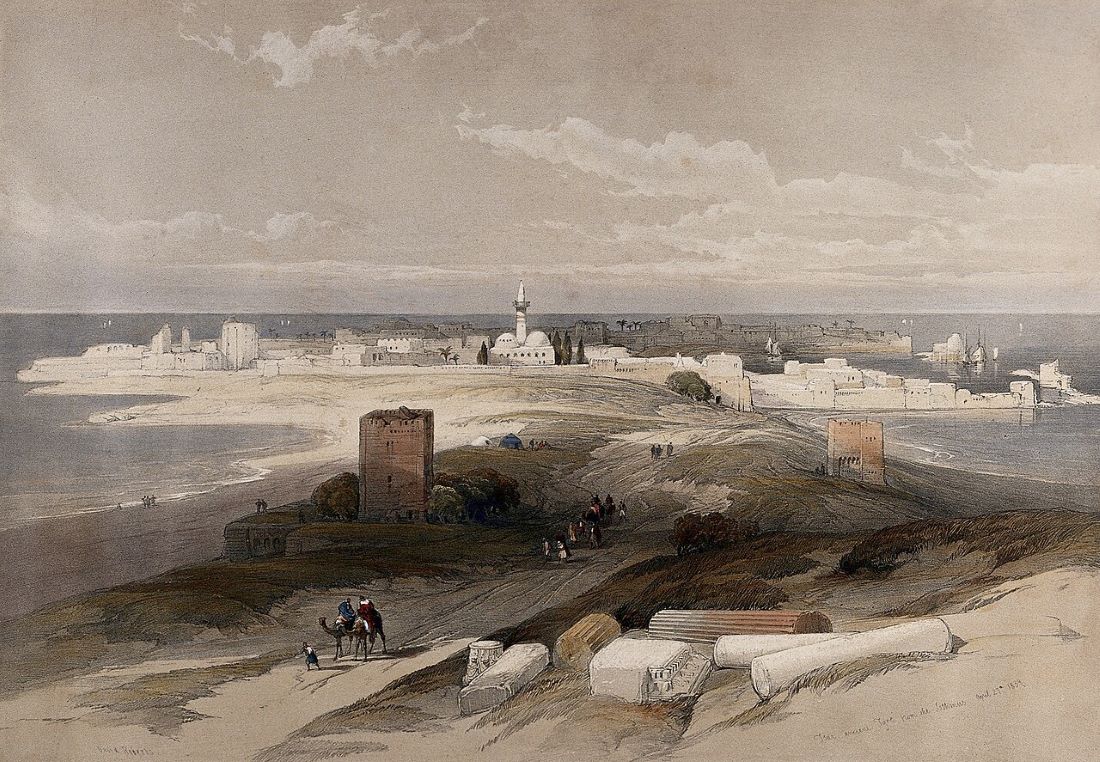
Long before Rome cast its geopolitical shadow across the Mediterranean, a network of fiercely independent city-states dominated the waves. These were the Phoenicians, whose very name may derive from the Greek word associated with the famed purple dye they exported. At the absolute vanguard of this maritime civilization stood Tyre, a breathtaking island-fortress off the coast of modern Lebanon.
While Tyre was renowned for its seafaring audacity and impenetrable walls, its Mediterranean-wide commercial dominance was built on something far more volatile and precious: a deep, visceral shade of blood-red violet known to history as Tyrian Purple.
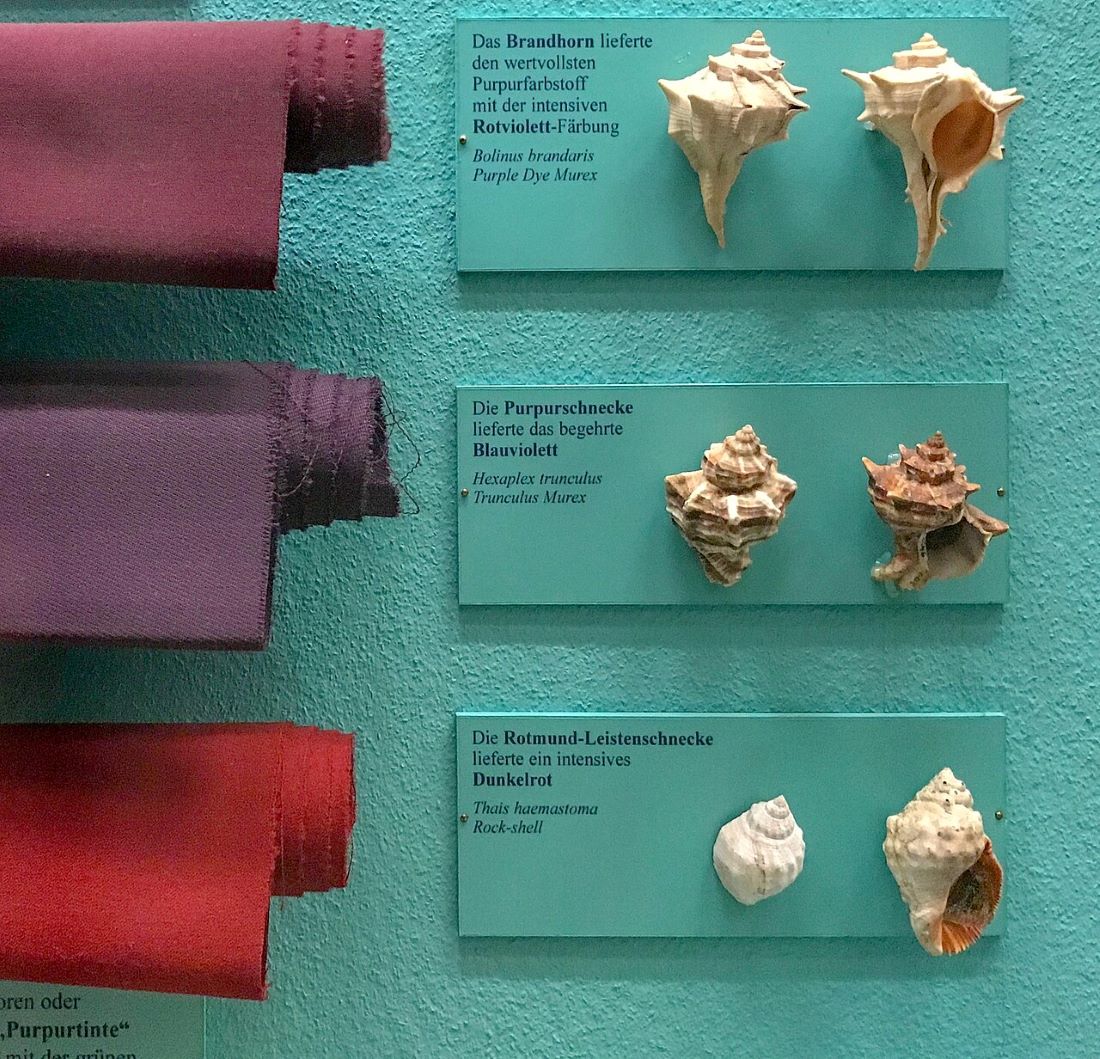
The Marine Alchemy: Hexaplex Trunculus and the Secret of the Snail
The foundational myth of Tyre attributes the discovery of the dye to the city’s patron god, Melqart. While walking along the beach with the nymph Tyros, his dog bit into a large sea snail, staining its muzzle a brilliant, indelible violet. Captivated by the hue, Tyros demanded a gown made of the same color, and the Tyrian dye industry was born.
In historical reality, the process was a grueling, industrial-scale operation of marine alchemy. The source of the dye lay within the hypobranchial glands of predatory sea snails, specifically two species of the Muricidae family: Hexaplex trunculus (banded dye-murex) and Bolinus brandaris (spiny dye-murex).
The production was notoriously meticulous and highly unpleasant:
-
The Scale of Harvest: Each snail yielded only a single drop of precursor fluid. To dye just one single Roman toga, workers had to harvest, crack open, and process upwards of 10,000 to 12,000 individual mollusks.
-
The Fermentation: The extracted glands were placed in massive lead vats, salted, and left to simmer over a low, continuous fire for up to ten days. As the liquid reduced, a complex biochemical reaction occurred. Exposure to sunlight and oxygen transformed the pale fluid into a spectrum ranging from deep violet-blue to a rich, dark crimson.
-
The Putrid Odor: The decomposing snails produced a foul, sulfurous stench so overpowering that ancient authors routinely noted its unpleasantness, ensuring that Tyrian dye factories were typically located on the outskirts of settlements.
The Weight of Status: The Economics of Tyrian Purple
The resulting fabric was unlike anything else in the ancient world. While vegetable-based dyes faded rapidly or turned dull under the sun, Tyrian purple retained its brilliance far longer than most contemporary dyes, maintaining its depth for generations. It became the ultimate ancient luxury good.
Because the production process required immense labor, specialized knowledge, and millions of snails, the value of Tyrian purple skyrocketed to extraordinary levels.
The Price of Status: Historical records indicate that during its peak, a single pound of pure Tyrian purple wool could cost more than a common laborer earned in a year. In terms of raw economic value, it occasionally approached or exceeded the value of gold in elite markets.
This extreme price tag effectively transformed the color into a political instrument. To wear Tyrian purple was to announce absolute, unquestionable power. It was the dynamic fabric of emperors, high priests, and kings.
The Phoenician Golden Age: Masters of the Maritime Monopoly
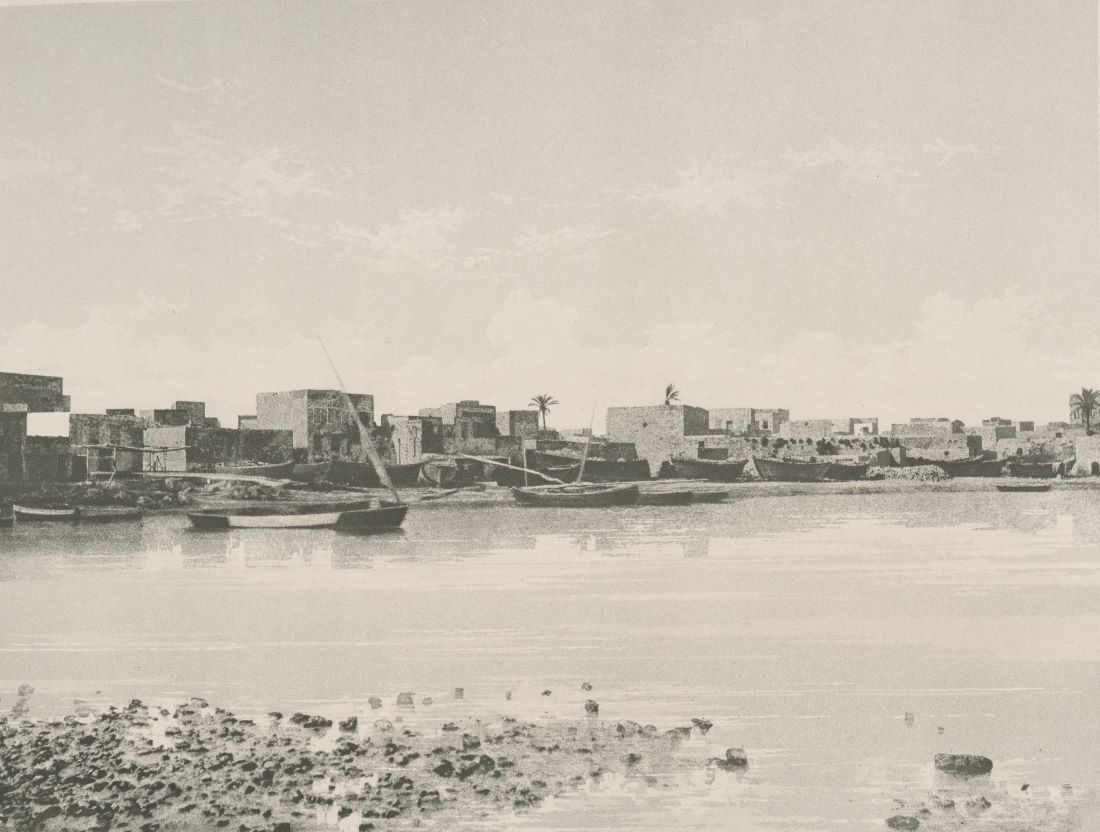
Tyre used its purple wealth to finance a massive commercial empire. The city itself was a masterpiece of ancient engineering, divided into two distinct sectors: a mainland settlement and a heavily fortified island hub boasting two state-of-the-art artificial harbors (the “Sidonian” harbor to the north and the “Egyptian” harbor to the south).
The Tyrians did not merely export the raw dye; they exported expertly finished textiles, garments, and embroidered luxury items. Their ships, constructed from durable Lebanon cedar, crisscrossed the Mediterranean, opening up trade routes that stretched from the Levant to Cyprus, Sicily, North Africa, and even beyond the Pillars of Hercules into the Atlantic.
Wherever Tyrian traders established outposts, they looked for murex populations to expand their monopoly. Their most famous colony, Carthage (founded by the legendary Tyrian princess Dido), would eventually inherit Tyre’s mantle as a Mediterranean superpower, maintaining the lucrative purple trade networks for centuries.
“Born in the Purple”: The Imperial Roman Obsession
When the Roman Republic, and later the Roman Empire, expanded into the eastern Mediterranean, they became completely infatuated with Tyrian purple. For the Romans, the color ceased to be a mere fashion choice and became a strictly regulated status symbol.
Sumptuary Laws and Executive Power
As Rome transitioned from an austere republic to an empire, successive rulers enacted strict sumptuary laws to regulate who could display the color:
-
The Senators: High-ranking magistrates and senators were permitted to wear the toga praetexta, a white toga adorned with a border of Tyrian purple.
-
The Triumphant Generals: Celebrating generals wore the toga picta, a solid purple toga embroidered with gold thread.
-
The Absolute Monopoly: By the time of the late empire, rulers like Nero and Diocletian made it a capital offense—treason punishable by death—for any private citizen to buy, sell, or wear the highest grade of Tyrian purple, known as dibapha (twice-dyed).
It is from this Roman era that we derive the phrase “born in the purple” (Porphyrogenitus), a term used to designate children born to a reigning emperor in a specific palace chamber lined with purple porphyry stone, wrapped in Tyrian purple swaddling clothes.
The Fall of the Fortress and the Evolution of the Craft
Tyre’s immense wealth and strategic position made it a prime target for history’s greatest conquerors. The city withstood legendary sieges by the Assyrians and Babylonians, but its most dramatic geopolitical turning point came in 332 BC, when Alexander the Great arrived at its gates.
Faced with an island fortress that refused to surrender, Alexander executed an audacious engineering feat: he used the debris of the old mainland city to construct a massive mole (a land bridge) through the sea, effectively turning Tyre into a peninsula. After a brutal seven-month siege, Alexander breached the walls, ending Tyre’s era of absolute independence.
Despite the Macedonian conquest and subsequent Roman rule, the purple factories of Tyre continued to operate for centuries. However, the secret of Tyrian purple was not lost in a single cataclysmic event. Instead, by the late medieval period, the specialized knowledge required for large-scale production had largely disappeared due to changing imperial tastes, the high costs of production, and the gradual ecological exhaustion of the murex snail populations along the Levantine coast.
Conclusion: The Crimson Legacy
Today, the modern city of Tyre is a peaceful coastal town, its ancient harbors filled with small fishing boats rather than Phoenician warships. Yet, deep beneath the soil and scattered along the rocky shoreline, modern archaeologists still unearth massive mounds composed entirely of millions of crushed murex shells—the ancient industrial waste of a color that defined empires.
Tyre’s legacy is written not just in the stone ruins of its Roman hippodrome or its ancient Phoenician ports, but in the very language of power we use today. Whenever we associate royalty, luxury, and prestige with the color purple, we are paying a silent, millennia-old tribute to the Phoenician sailors, the small sea snails, and the crimson metropolis that conquered markets more often through commerce than conquest.
Currently Reading


Historical Challenge: Can You Conquer the Past?
Answer more than 18 questions correctly, and you will win a copy of History Chronicles Magazine Vol 1! Take our interactive history quiz now and put your knowledge to the test!