
 By istorija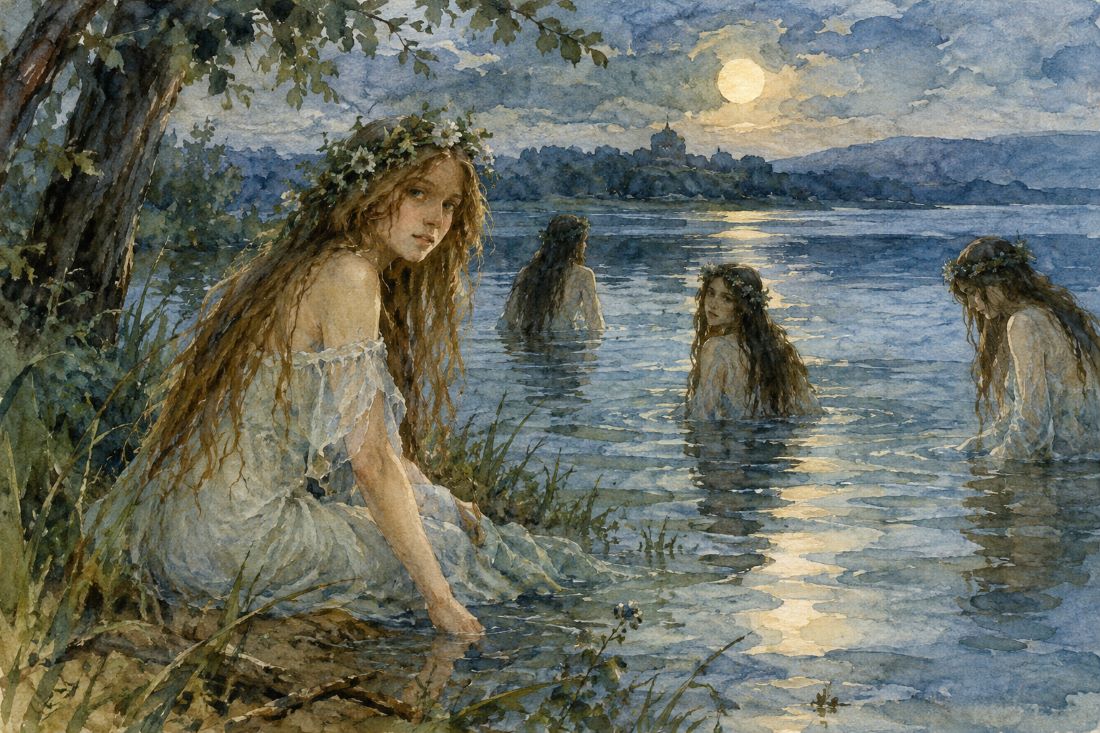
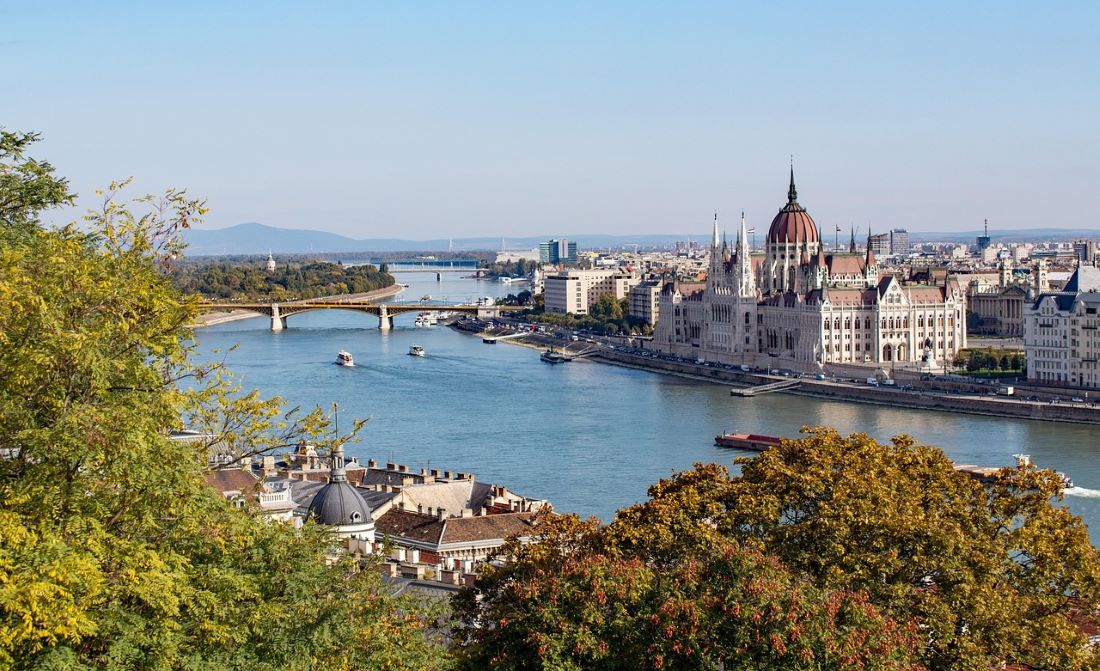
The Danube is the second-longest river in Europe, surpassed only by the Volga. Rising in the Black Forest, it travels for almost 3,000 kilometres before reaching the Black Sea, passing through or along the borders of ten countries.
Few rivers have connected so many different worlds. The Danube has carried Roman soldiers, medieval merchants, Ottoman armies, Habsburg emperors, fishermen, refugees and travellers. Its banks have been home to Germans, Slovaks, Hungarians, Croats, Serbs, Romanians, Bulgarians and many other peoples.
And almost every culture along this enormous river has had stories about what lives beneath its waters.
Among the most haunting are stories of beautiful supernatural women who belong neither entirely to the world of the living nor to that of the dead. Their names changed from one country to another, but their stories often shared the same unsettling idea:
The river was not empty.
The Rusalki of Serbian Folklore
In Serbian and broader South Slavic folklore, the rusalka was imagined as a beautiful female water spirit. She might appear as a young woman with long, loose hair near a river, lake or spring, sometimes singing, dancing or bathing.
But the rusalka was not simply a Slavic version of the modern mermaid. She belonged to a much darker world of folklore, where the boundary between life and death was thin.
In many traditions, rusalki were associated with women who had died unnaturally or prematurely. Some were remembered as drowned girls, including young women who had died before marriage. In other stories, they were women who had been murdered, had taken their own lives, or had died without receiving the proper rites.
The circumstances differed, but the underlying idea was the same: these women had died before their lives had reached their natural conclusion. They remained forever young and beautiful, but their souls could not find peace.
That is what makes the rusalka such a powerful figure. She represents a life that stopped halfway. She never became an old woman, never married, never had children, and never experienced the ordinary future that should have belonged to her. Instead, she remained forever at the age at which she died, with the river becoming both her grave and her home.
Her beauty, however, was part of the danger.
In many Slavic traditions, rusalki could lure men towards the water. They might sing, laugh, dance or simply appear bathing along the riverbank. A man who approached too closely could be dragged beneath the surface, drowned or enchanted and taken into the supernatural world.
There is also a striking gendered element to these stories. The rusalka could be imagined as a young woman whose relationship with men had ended in betrayal, abandonment or tragedy, and the living men who encountered her could become the ones who paid the price.
Her beauty never faded, but neither did her grief.
The Dangerous Days of Duhovi
The connection between rusalki and the Christian calendar is one of the most fascinating parts of the tradition.
Across the Slavic world, the period around Pentecost, known in Serbian as Duhovi, became associated with rusalki and other dangerous supernatural beings. In parts of the Balkans, the period was known as Rusalna nedjelja or connected with rusalije.
Older beliefs had become intertwined with Christian traditions, creating a period when people were particularly cautious around rivers and other natural waters.
In some Serbian traditions, bathing in rivers was avoided around Pentecost. One ethnographic account from the region of Duboko records the belief that the rusalki could enter a person through the river. Elsewhere in the Slavic world, people were warned not to bathe in natural waters during Rusalka Week because the spirits were believed to be roaming near rivers and could attack or drown those who came too close.
For people living beside a river, this was more than a strange superstition. Water was a source of life, but it could also become a boundary between the living and the dead.
The old belief therefore transformed the river, for a few days each year, into a place where the ordinary rules no longer applied.
The Romanian Iele and Rusalii
As the Danube moves south and east, the names change.
Romanian folklore has its own remarkable tradition of supernatural women known as the Iele, while the period around Pentecost is associated with the Rusalii. The resemblance to the Slavic rusalka tradition is striking, although the traditions are not identical.
The Iele are beautiful female supernatural beings associated with forests, open spaces, springs and bodies of water. They appear at night, dance in circles and possess extraordinary powers over human beings. Their mysterious dance, the Hora Ielelor, was something people were better off avoiding.
A man who encountered them could be enchanted, driven mad or even killed. In some Romanian traditions, the Iele were also connected with the souls of girls who had died before marriage.
The Romanian tradition therefore preserves many of the same ideas found further along the Danube: beautiful supernatural women, premature death, dangerous encounters with men and a special connection with Pentecost.
The very word Rusalii refers to the same Christian feast that became closely associated with rusalki in Slavic lands. People traditionally protected themselves with plants such as wormwood and garlic, while certain activities were avoided during this dangerous period.
The names were different, but the fear was remarkably familiar.
The Slovak Water Woman
Further upstream, among the Slovak peoples, folklore offers another variation: the vodná žena, literally the “water woman,” or vodná panna, the “water maiden.”
Unlike the rusalka, the water woman was not always specifically the ghost of a drowned girl. But in some Slovak traditions she could be the spirit of a particular woman who had drowned at that very place.
She was associated with rivers, whirlpools, marshes and deep water, and could lure people — particularly young men — towards the river. In some stories she sang or enchanted those who heard her, while others portrayed her as a dangerous spirit capable of drowning fishermen and swimmers.
Some traditions gave the figure an even stranger purpose. The water woman did not merely want to kill the man she attracted; she wanted him as a husband.
Unable to return to an ordinary human life, the dead woman created her own version of marriage beneath the water.
It is another variation on the same ancient idea: if she could not return to the world of the living, perhaps she could bring someone else into hers.
The Mysterious Donauweibchen
Not every Danube tradition is quite so dark.
In the German-speaking world along the Danube, particularly in Austria, there were stories of the Donauweibchen, literally the “women of the Danube.” Unlike the rusalka, these were more often imagined as water nymphs belonging to the river itself rather than the ghosts of drowned women.
Stories described beautiful female beings living beneath the Danube, sometimes in magnificent underwater palaces. One Austrian tradition tells of the Danube Prince, whose daughters were the river nymphs. Fishermen and travellers could encounter these mysterious beings, while the river itself became a supernatural kingdom hidden beneath its surface.
The difference is revealing.
The Slavic rusalka is often a dead woman who cannot find peace. The Slovak water woman can be the spirit of a drowned woman. The Romanian Iele are beautiful and dangerous supernatural women associated with the liminal world of forests, springs and rivers. The Austrian Donauweibchen, meanwhile, are more often nymphs belonging to the river itself.
Different peoples had different explanations.
But they were all trying to answer the same ancient question:
Who lives beneath the water?
Why Are They So Often Women?
This may be the most interesting question of all.
Rivers were both essential and terrifying. They provided drinking water, fish, transportation and fertile land, but they could also flood villages, overturn boats and swallow people without leaving a trace.
For communities living beside rivers, drowning was a familiar form of death. And when someone disappeared beneath the surface, there was often no body and no explanation — only a mystery.
Folklore gave that mystery a face.
Sometimes it was an old man, a water spirit or a river demon. But in many European traditions, the dangerous water spirit became a woman: beautiful, young, and often strangely familiar.
A woman whose hair floated in the current. A woman who could be heard singing from the riverbank. A woman who had once been human herself.
This last element may be what makes the rusalka so haunting.
She was once one of us.
Perhaps she was a daughter. Perhaps a bride who never became a bride. Perhaps a girl betrayed by someone she loved. Perhaps simply someone who drowned.
Now she belongs to the river.
The Danube as a Border Between Worlds
The Danube is often described as a geographical feature, but for the people who lived beside it, it was much more than that. It was a road, a source of food, a military frontier, a boundary between peoples and an unpredictable force of nature.
It also became a mythological border.
On one side stood the human world: villages, houses, churches, fields and roads. On the other was the underwater world, inhabited by beings who did not completely belong to the world of the living.
And these inhabitants were not necessarily monsters. Some were beautiful, some playful, some could bring fertility, and some were simply lonely. But they remained dangerous because they belonged to a world that humans were never meant to enter.
Perhaps that is why these stories survived for so long.
The Danube carried away bodies, memories and entire generations. People watched the river take someone they knew beneath its surface, but they could not see where that person had gone.
So they imagined another world below: a world of palaces, music and dancing, where drowned girls remained forever young, their beauty never fading and their grief never ending.
And on certain nights, especially around the old festivals of early summer, it was better not to go swimming.
Because according to the old stories, the river was not empty.
The maidens were still there.
Currently Reading


Historical Challenge: Can You Conquer the Past?
Answer more than 18 questions correctly, and you will win a copy of History Chronicles Magazine Vol 1! Take our interactive history quiz now and put your knowledge to the test!