 By istorija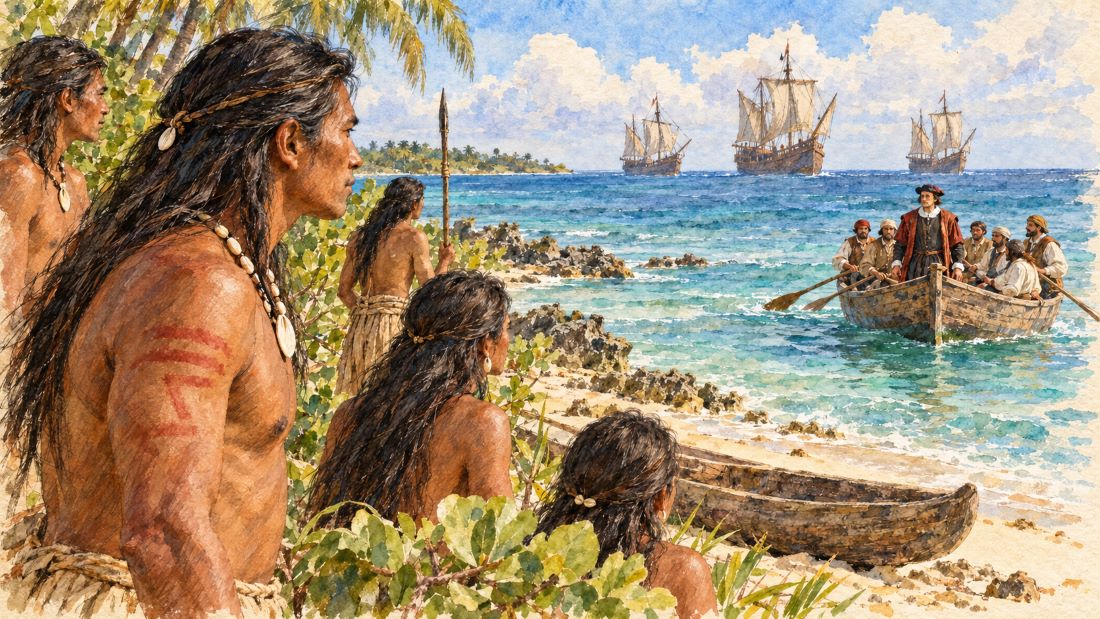
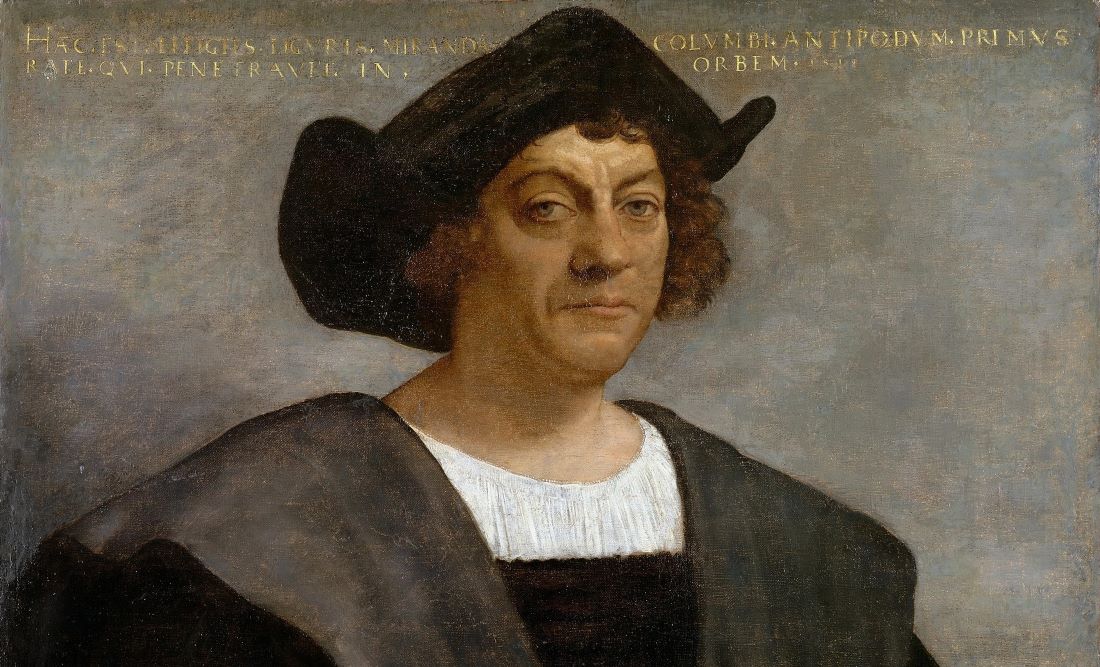
When Christopher Columbus reached the Bahamas on October 12, 1492, he encountered the Lucayans, an Indigenous people belonging to the wider Arawakan-speaking world of the Caribbean. Within a few decades, Indigenous societies across the islands had suffered catastrophic population losses. Enslavement, forced labor, violence, famine, and epidemic disease transformed a thriving region into one of the earliest and most devastating examples of colonial destruction in the Americas.
A World Before Columbus
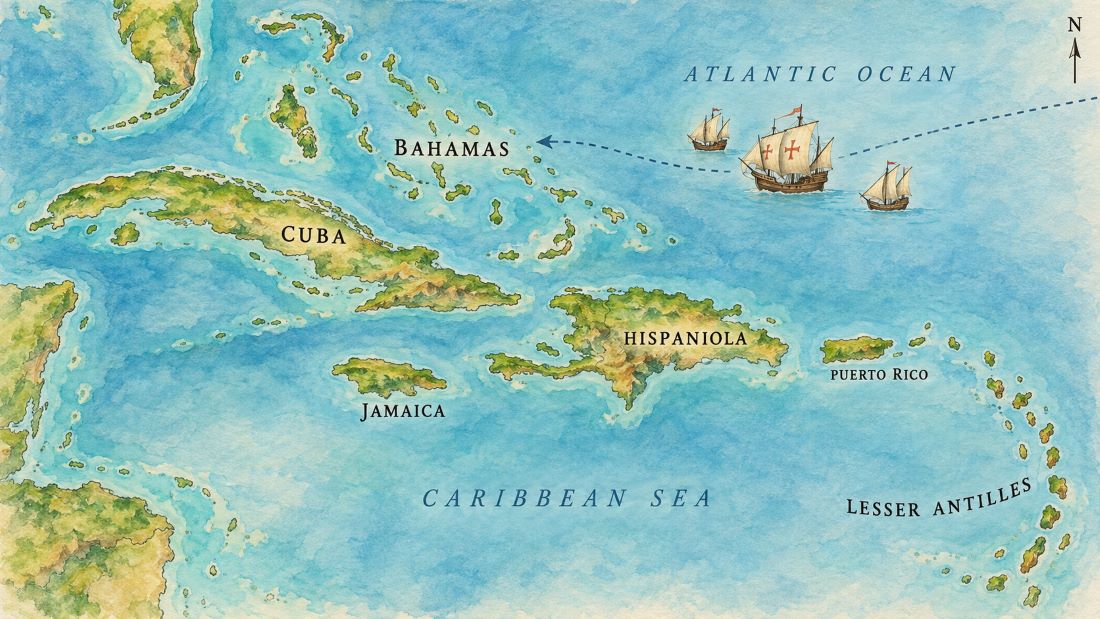
Before 1492, the Caribbean was home to millions of people according to some historical estimates, although the actual population remains disputed. The Arawakan-speaking peoples included the Taíno, who inhabited much of Hispaniola, Jamaica, Puerto Rico, and eastern Cuba, and the Lucayans, who lived in the Bahamas. Other Indigenous communities inhabited the Lesser Antilles.
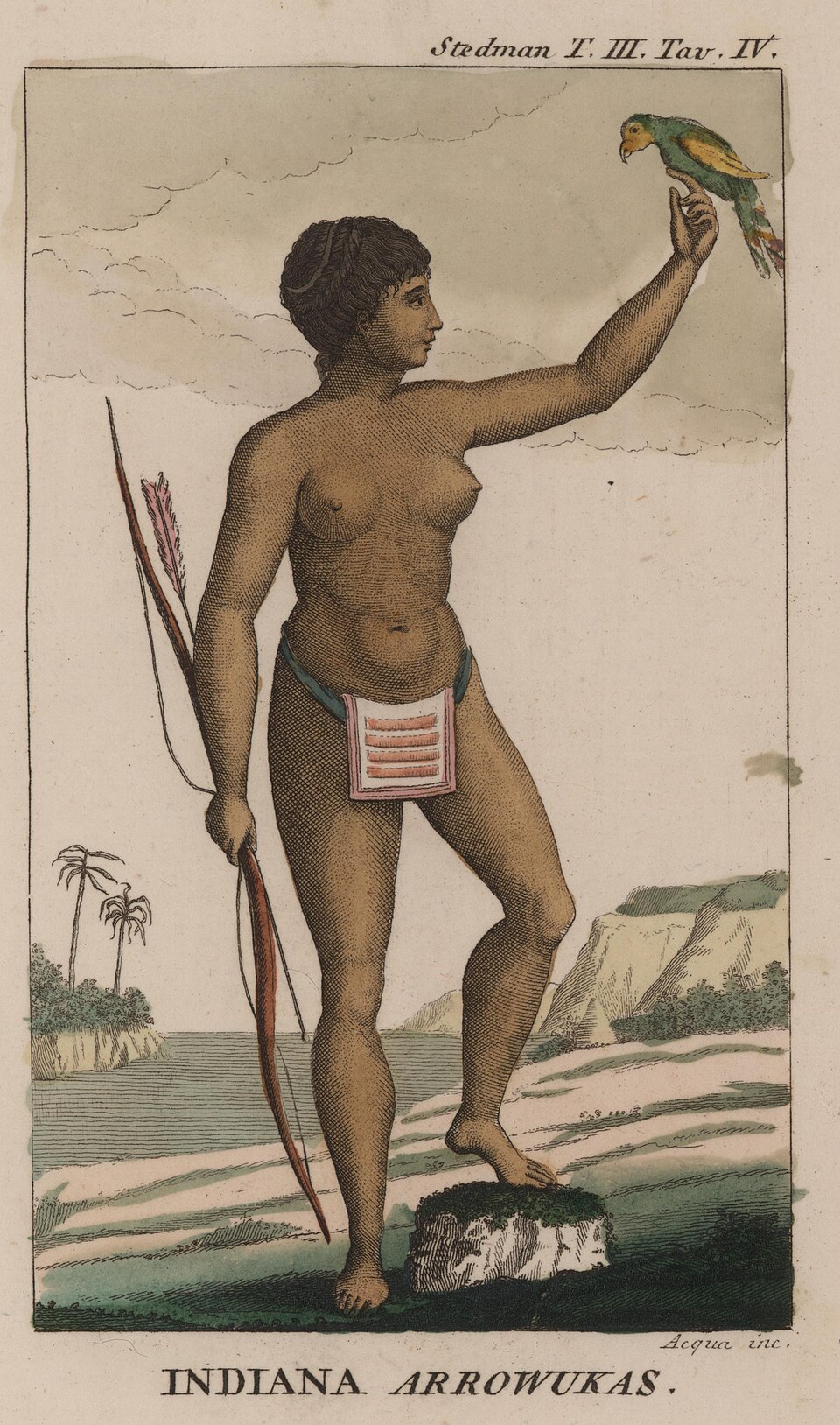
Taíno society was organized around villages governed by leaders known as caciques. More powerful chiefs controlled several settlements, while communal plazas served as places for ceremonies, meetings, and gatherings.
Agriculture sustained these communities. They cultivated cassava, which they processed into bread, as well as maize, sweet potatoes, and other crops. Fishing and gathering supplemented their diet, while skilled canoe traders connected the islands through networks of exchange. Cotton, pottery, gold, feathers, and food were among the goods traded between communities.
Their religious traditions included spiritual beings known as zemis, and their societies possessed established political structures, cultural traditions, and extensive knowledge of the surrounding seas. The Caribbean was not an empty wilderness but an interconnected Indigenous world that had developed over centuries.
Gold, Slavery, and Forced Labor
Columbus returned in 1493 with seventeen ships and approximately 1,500 men, intending to establish a permanent Spanish presence. On Hispaniola, the Spaniards founded a settlement and began searching for gold, while increasingly demanding food, tribute, and labor from the Indigenous population.
When the expected wealth proved difficult to obtain, the colonists intensified their exploitation of local communities. Indigenous people were compelled to collect gold and work in agriculture. Resistance was met with armed force, punishment, and enslavement.
The encomienda system formalized much of this exploitation. Spanish colonists received the right to demand labor or tribute from designated Indigenous communities. Although it was not legally identical to chattel slavery, it frequently subjected Indigenous people to coercive work and severe abuse.
Captives were also transported to Spain and other Caribbean islands. Families were separated, settlements disrupted, and traditional agriculture undermined as more people were forced to serve the colonial economy.
The search for gold, initially encouraged by the gifts and trade of Indigenous communities, became a source of relentless pressure. Those unable to meet Spanish demands faced punishment, while colonial authorities continued to seek new sources of labor.
Disease, Famine, and Demographic Collapse
Violence and forced labor were compounded by epidemic diseases introduced through European contact. Indigenous people had no previous exposure to many of these infections, leaving communities particularly vulnerable.
Disease struck populations already weakened by exhausting labor, inadequate food, and displacement. As people died, fields were left uncultivated and food production declined. The loss of farmers, leaders, and experienced community members further undermined the ability of survivors to recover.
Colonial demands intensified the crisis. Traditional food production was disrupted, families were divided, and people were removed from their homes. Hunger and disease reinforced one another, while continuing exploitation made survival increasingly difficult.
The exact population of the Caribbean before 1492 remains uncertain. Some historical estimates placed the population of Hispaniola alone at several million, while other scholars have proposed much lower figures. The often-cited estimate of four million should therefore be treated cautiously rather than as an established fact.
Whatever the original population, the collapse was extraordinary. Within a few decades, Indigenous communities across the major islands had suffered enormous losses, and many of their established political and social structures had been destroyed.
The Emptying of the Caribbean
The slave trade accelerated the destruction of the Caribbean’s Indigenous populations. The Lucayans of the Bahamas were captured in large numbers and transported to Hispaniola, where the Spanish needed laborers for their mines and plantations. By the early sixteenth century, their communities had been devastated, and within a few decades the Bahamas had lost almost their entire Indigenous population.
As the native workforce of Hispaniola declined, Spanish colonists increasingly turned to neighboring islands for labor. Indigenous people were seized, transported, and forced to work under brutal conditions. Others died from violence, hunger, and epidemic diseases that spread through communities already weakened by colonial exploitation.
The same catastrophe unfolded across the Greater Antilles. Spanish colonization began in Puerto Rico in 1508, Jamaica in 1509, and Cuba in 1511. These dates marked the expansion of colonial control, not the immediate disappearance of every Indigenous inhabitant. Nevertheless, within decades, the Taíno populations of these islands had suffered catastrophic losses.
Hispaniola experienced one of the most devastating demographic collapses. In 1552, Bartolomé de las Casas described the Indigenous population as reduced to a tiny remnant of what he believed had once been millions. His original population estimate is disputed, but his account conveys the scale of the disaster.
The destruction was not caused by a single massacre. Enslavement, forced labor, deportation, warfare, famine, and epidemic disease combined to dismantle Indigenous societies that had flourished for centuries. By the middle of the sixteenth century, much of the Caribbean’s precolonial world had been devastated.
Did the Arawak Become Extinct?
Historical accounts often describe the Arawak or Taíno as having become extinct. This reflects the destruction of their traditional societies, but it does not mean that all their descendants disappeared.
Many Indigenous people survived through intermarriage, adaptation, and incorporation into new colonial communities. Indigenous ancestry persisted even as traditional political structures and cultural practices were severely disrupted.
Modern genetic research has confirmed that Indigenous Caribbean ancestry survives among present-day populations. A major study published in Nature in 2020 identified genetic continuity between ancient Caribbean populations and people living in the region today. Contemporary Taíno cultural revival movements have also renewed attention to Indigenous histories and identities.
The distinction is important: the collapse of a society is not the same as the complete biological disappearance of its people. Nevertheless, the destruction of Indigenous communities, the loss of traditions, and the end of their political independence remain central to the history of the Caribbean.
The Legacy of Columbus’s Arrival
Columbus’s arrival initiated a transformation that Indigenous Caribbean societies could scarcely have anticipated. What began with encounters and exchanges developed into a colonial system driven by the pursuit of gold, land, and labor.
The Spanish conquest devastated Indigenous communities through forced labor, enslavement, violence, displacement, famine, and epidemic disease. Columbus did not personally cause every aspect of this catastrophe, but his voyages opened the way for sustained European colonization and the exploitation that followed.
The consequences extended far beyond the first generation of colonists. Spanish rule reshaped the Caribbean, while the region later became central to plantation economies increasingly dependent on the forced labor of enslaved Africans.
The story of the Arawak and the Taíno is not simply one of a vanished people. It is the story of an Indigenous world violently transformed, of communities that endured extraordinary losses, and of ancestry and identity that survived despite colonial attempts to erase them.
In 1492, the Caribbean was already a populated, interconnected world with its own history. Columbus did not bring civilization to an empty region. The conquest that followed devastated many of the societies that had made the islands their home.
Interesting Facts
- The Taíno were skilled agriculturalists. Cassava bread was a staple food that helped sustain their communities.
- The Lucayans inhabited the Bahamas before Columbus arrived. Their population was devastated by enslavement, forced removal, and disease.
- Encomienda enabled widespread exploitation. Although legally distinct from slavery, it frequently imposed coercive labor on Indigenous communities.
- The original population of Hispaniola remains disputed. Estimates vary widely, making the frequently cited figure of four million uncertain.
- Indigenous Caribbean ancestry survives today. Genetic research challenges the claim that the region’s Indigenous peoples disappeared completely.
Currently Reading
Historical Challenge: Can You Conquer the Past?
Answer more than 18 questions correctly, and you will win a copy of History Chronicles Magazine Vol 1! Take our interactive history quiz now and put your knowledge to the test!