
 By istorija
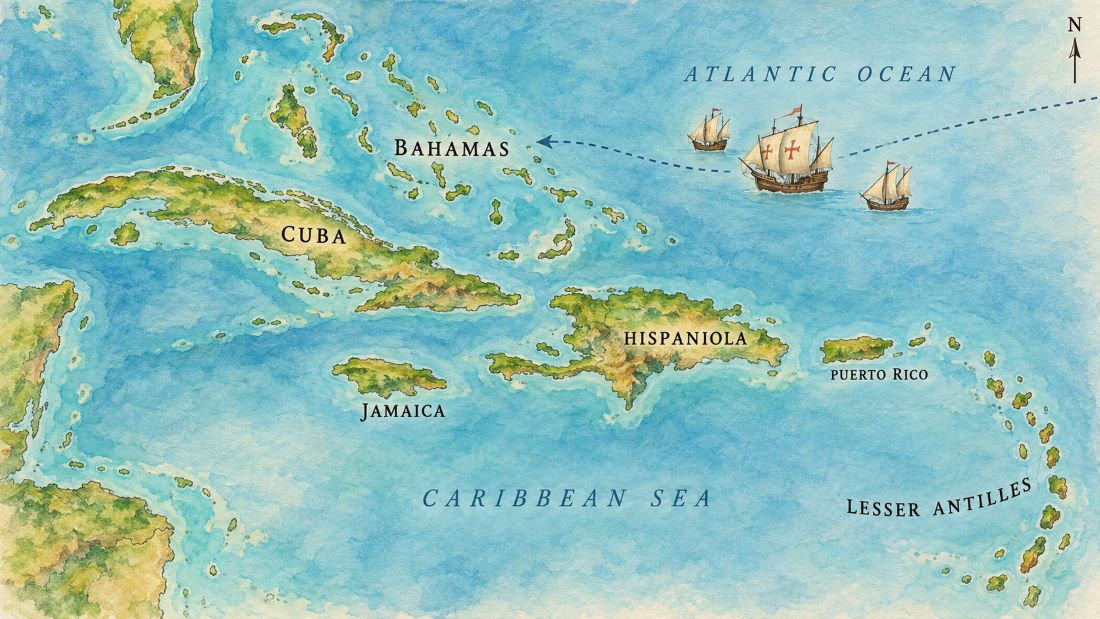
There is something particularly fascinating about the psychological challenges faced by sailors during the great voyages of exploration. Today, crossing an ocean is a matter of navigation, technology, and planning. For sailors in the fifteenth century, however, the open sea was an entirely different experience. Beyond the familiar coastlines, there were no reliable maps, no accurate way to measure longitude, and no certainty about when, or even whether, land would appear. For Christopher Columbus and his crew in 1492, the greatest challenge was not simply finding a new route to Asia. It was keeping men willing to sail into an ocean that seemed to have no end.
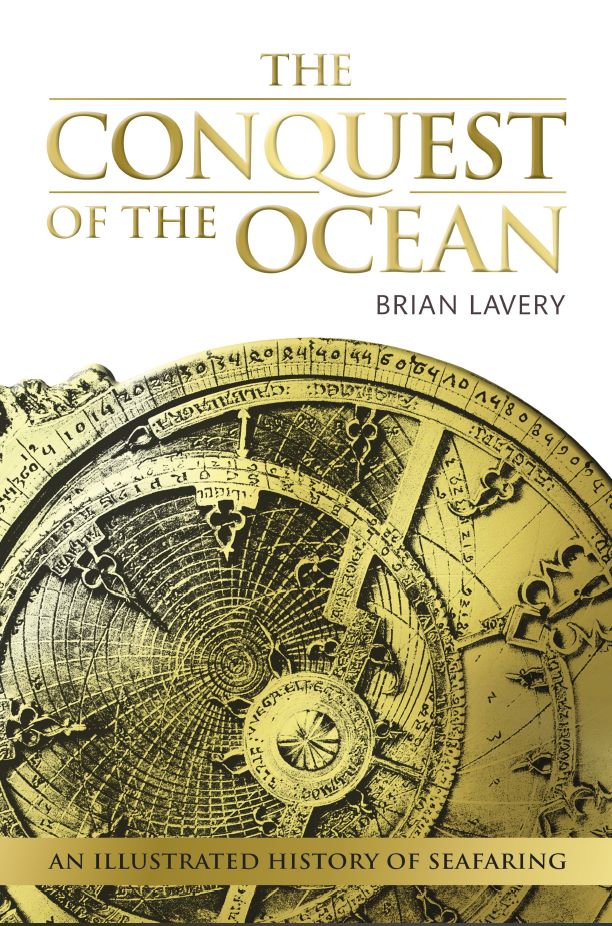
I recently began reading Brian Lavery’s The Conquest of the Ocean, and I have to say that I am genuinely impressed by how good and readable this book is. What I particularly enjoy is its perspective. Lavery does not simply recount the major discoveries and technological developments in maritime history; he frequently brings the reader closer to the people who experienced them. Drawing on ship journals, eyewitness accounts, and other primary sources, he manages to make distant maritime events feel remarkably immediate. While reading, I sometimes have the feeling that I am not simply following a historical narrative but am briefly transported onto the ships themselves, watching events unfold alongside the sailors. His account of Columbus’s first Atlantic voyage offers a particularly compelling example of this approach.
An Ocean Without a Way Back
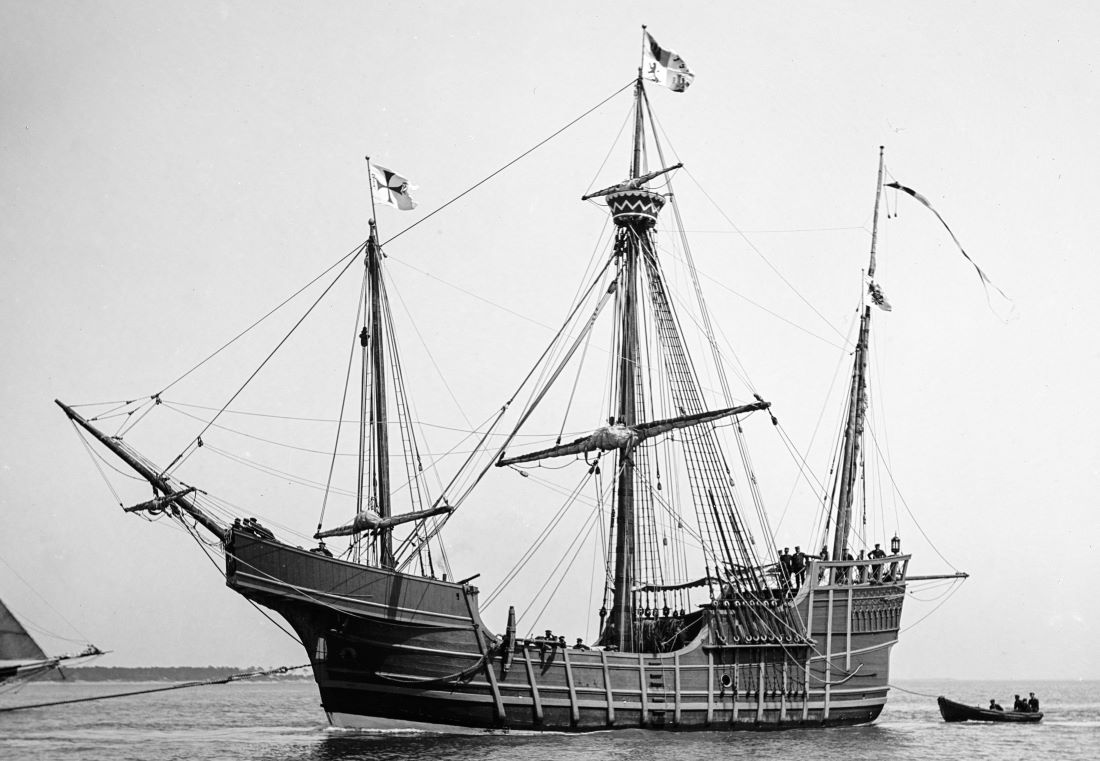
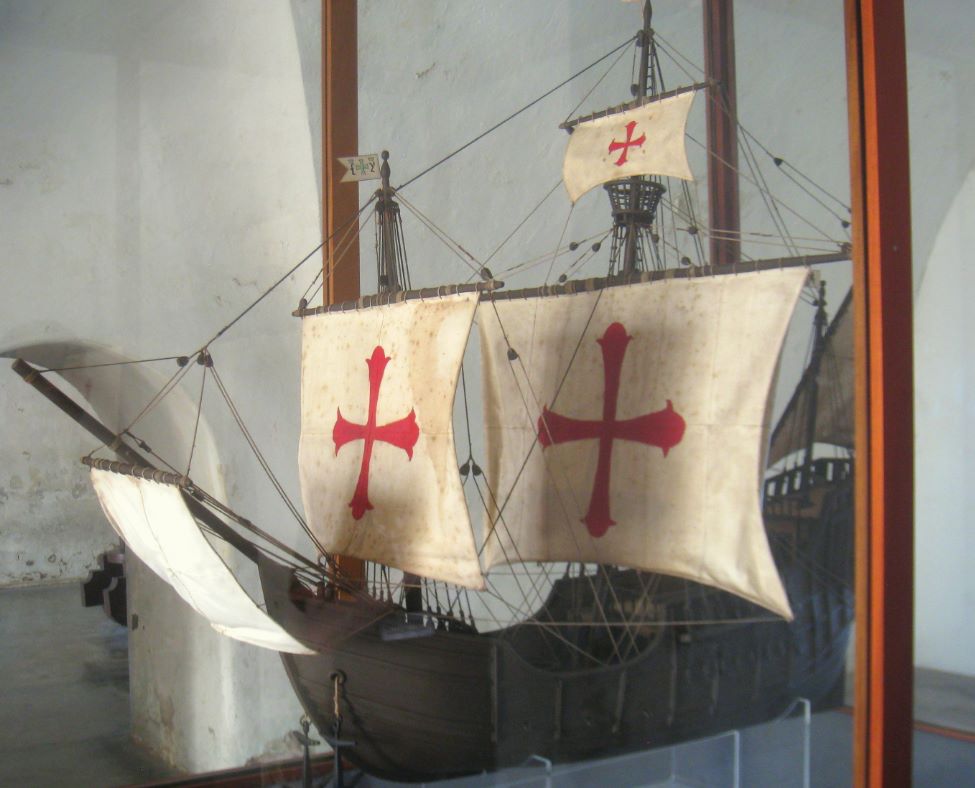
When Columbus departed from the Spanish port of Palos on August 3, 1492, commanding the Santa Maria, accompanied by the Niña and the Pinta, he was embarking on a voyage whose greatest difficulties were not yet fully understood by the men aboard his ships.
After stopping in the Canary Islands for repairs, the expedition headed west into the Atlantic on September 6. The ships gradually disappeared from familiar waters, and the crew entered an environment in which almost everything was uncertain. Columbus believed that sailing west would eventually bring him to Asia, but his calculations significantly underestimated the Earth’s circumference and the distance separating Europe from the lands he hoped to reach.
There was another problem, perhaps even more frightening for ordinary sailors: the wind.
The ships were moving westward with the prevailing easterly trade winds. But what would happen when they wanted to return? The crew had good reason to worry that the same winds carrying them into the Atlantic might prevent them from ever sailing back to Spain. Contrary to the popular image of medieval sailors fearing that they would fall off the edge of a flat Earth, the more immediate concern was much more practical. They were travelling farther and farther from home, and they were not certain that the ocean would allow them to return.
Columbus understood that uncertainty could become dangerous. A voyage of exploration depended not only on navigation and seamanship but also on the willingness of the crew to continue when there was no visible reward for doing so.
Birds as Messengers from Land
One of the most interesting aspects of Columbus’s first voyage was his attention to birds.
In an age without modern navigation equipment, sailors frequently observed the natural world for indications that land might be nearby. Birds were particularly valuable because many species had recognizable habits and ranges. Their appearance could suggest that the ships were approaching islands or coastlines, even when no land was visible on the horizon.
Columbus began recording bird sightings with remarkable regularity after the crew of the Niña reported seeing a tern and a tropicbird. According to his observations, these birds rarely travelled more than approximately 100 miles from land.
This was more than simple curiosity. Every bird sighting offered a possible reason to believe that the expedition was approaching its destination. On another occasion, the crew caught a bird they believed to be a river bird, interpreting its presence as another indication that land might be close. Later, as hope grew harder to sustain, Columbus also recorded the appearance of frigatebirds, noting in his journal that they forced boobies to give up their food and did not range far from land.
For the sailors, these observations were psychologically important. The ocean offered very few familiar reference points. A bird, a floating branch, or a piece of vegetation could suddenly become the most encouraging thing they had seen in weeks.
Yet nature was not always cooperative. Birds could fly far from land, and their presence did not guarantee that a coastline was nearby. The sailors had to interpret uncertain signs, often without knowing whether their conclusions were correct.
Columbus nevertheless continued to use these observations to sustain confidence in the expedition.
The Art of Keeping the Crew Hopeful
Perhaps the most revealing detail of the voyage concerns Columbus’s decision to conceal the actual distance travelled.
The expedition had no reliable way of determining longitude. Sailors estimated their position by calculating the distance and direction travelled, but their measurements were far from precise. Columbus, however, had an additional reason to keep the figures under control.
He deliberately understated the distance covered, recording a shorter journey in the information available to his crew so that they “might not become disheartened” by the growing distance from Spain.
In other words, the admiral was not simply navigating his ships across the Atlantic. He was also managing the expectations and emotions of the men aboard them.
This detail reveals something important about the nature of early ocean exploration. Leadership at sea required more than issuing orders and maintaining discipline. A captain had to understand how fear, exhaustion, uncertainty, and the apparent absence of progress could affect an entire crew.
The longer the ships remained out of sight of land, the more difficult that task became.
By September 19, the pilots of the three ships were already producing different estimates of the distance travelled. The Niña calculated that she had covered approximately 1,760 miles from the Canary Islands, while the Pinta and Santa Maria reported smaller distances. Even among experienced navigators, there was no complete agreement about their position.
Meanwhile, rain suggested to Columbus that islands might lie to the north and south, yet he pressed westward, determined to keep the expedition moving toward mainland Asia.
In a sense, Columbus was navigating two journeys at once: one across the Atlantic, and another through the growing fears and expectations of the men who followed him.
A False Shoreline and a Crew Losing Patience
As September turned into October, the psychological pressure increased.
On September 23, the sea behaved in an unusual way. Although there was little wind, the waves rose considerably. Columbus compared the phenomenon to the biblical opening of the Red Sea. As the storm subsided, Martín Alonso Pinzón, captain of the Pinta, announced that he had sighted land to the southwest.
The news must have been extraordinary. Men climbed into the rigging to look for themselves, and some reportedly fell to their knees in prayer.
But their excitement did not last.
At noon the following day, Columbus acknowledged that what they had mistaken for land was merely a formation of clouds.
It is difficult to imagine the disappointment of sailors who had spent weeks looking at an endless horizon, only to discover that the promised coastline had disappeared. Such incidents were more than minor navigational mistakes. They threatened to undermine the confidence of men who were already questioning the purpose of the voyage.
By October 1, the expedition’s secret calculations showed that the ships had travelled 707 leagues—over 2,800 miles—without finding land.
The crew was becoming increasingly restless. According to the account preserved in the ship’s journal, the sailors could “bear no more” and began complaining about the length of the voyage.
This was the moment when the psychological dimension of Columbus’s expedition became especially important. The distance between Europe and the Caribbean was not simply a geographical problem. It was a test of endurance, trust, and authority.
Floating Branches and the Promise of Land
In the following days, the ships continued sailing southwest. Then, on October 11, the crew noticed several objects floating in the water: a stick with an iron tip, a small board, and pieces of vegetation.
These were different from the birds they had been observing. They were tangible objects that suggested the presence of human activity or nearby land.
Columbus recorded that the men “breathed again and rejoiced.”
He also promised a silk doublet and an annual reward of 10,000 maravedís to the first sailor who sighted land. The promise was a practical incentive, but it also served a psychological purpose. It gave the crew something immediate to anticipate after weeks of uncertainty.
During the night of October 12, a sailor finally shouted that he could see land.
This time, it was real.
The expedition had reached an island in the Bahamas, which Columbus named San Salvador. After more than a month crossing the Atlantic, the ships had finally arrived at land that was unknown to the Europeans aboard them.
The moment marked the end of one of the most psychologically demanding stages of the voyage. The birds, floating vegetation, uncertain sightings, and carefully managed expectations had all formed part of a long struggle to keep the expedition moving westward.
More Than a Voyage of Discovery
Columbus’s first Atlantic voyage is usually remembered for its geographical consequences and its role in opening the way for European expansion into the Americas. Yet the experience of the men aboard the Santa Maria, Niña, and Pinta offers another perspective on this historical event.
It reminds us that exploration was not only about discovering new lands. It was also about managing people in circumstances where familiar knowledge offered few answers. Columbus had to interpret the natural world, calculate distances with limited instruments, maintain discipline, and preserve the confidence of sailors who increasingly feared that they might never see Spain again.
Birds became potential messengers from land. Floating branches became reasons for renewed optimism. Even the distance recorded in the ship’s journal became a tool for managing morale.
There is something profoundly human about this aspect of the expedition. Long before modern navigation systems, weather forecasts, and reliable maps, sailors depended on observation, experience, and hope. Their understanding of the ocean was incomplete, and sometimes their greatest resource was simply the belief that land was somewhere ahead.
Reading accounts like these is one of the reasons maritime history can be so fascinating. Behind the famous names, dates, and discoveries were ordinary people facing extraordinary uncertainty, trying to make sense of an immense ocean while trusting that the person leading them knew where they were going.
And sometimes, all it took to keep that hope alive was the sight of a bird on the horizon.
Which detail from Columbus’s first crossing stands out most to you—or do you have a favorite book on maritime history to recommend?
Source: Brian Lavery, The Conquest of the Ocean.
Currently Reading


Historical Challenge: Can You Conquer the Past?
Answer more than 18 questions correctly, and you will win a copy of History Chronicles Magazine Vol 1! Take our interactive history quiz now and put your knowledge to the test!