
 By istorija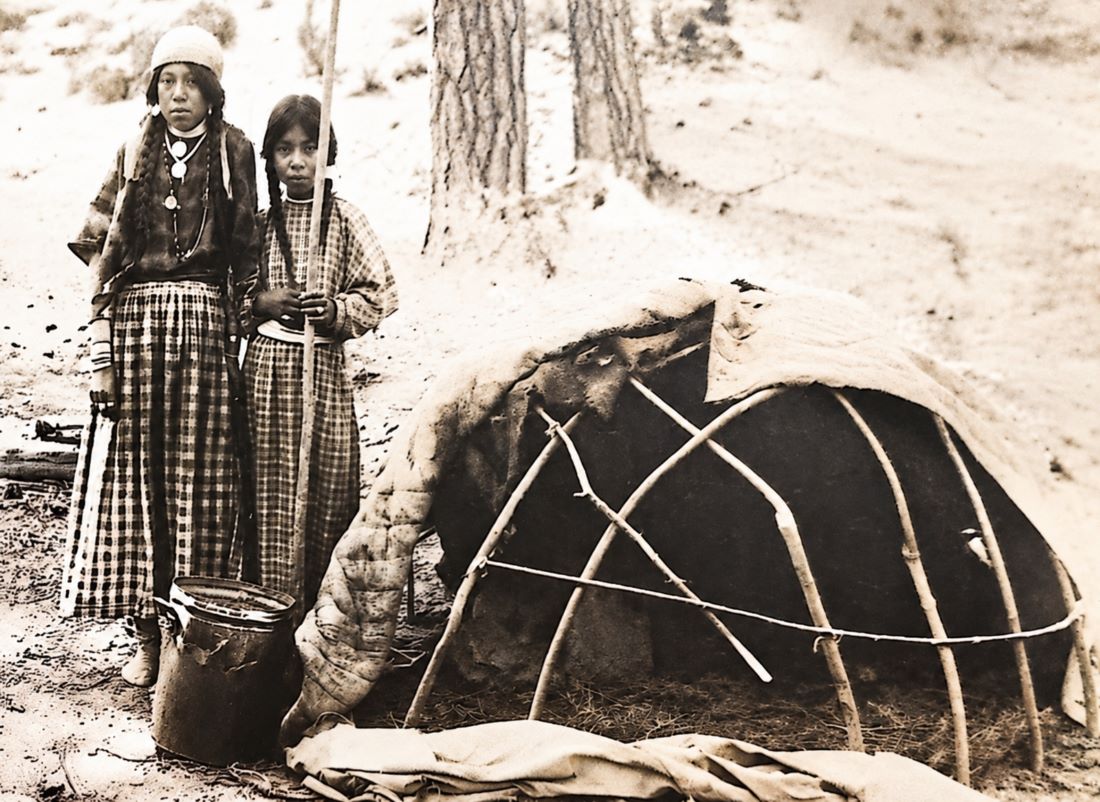
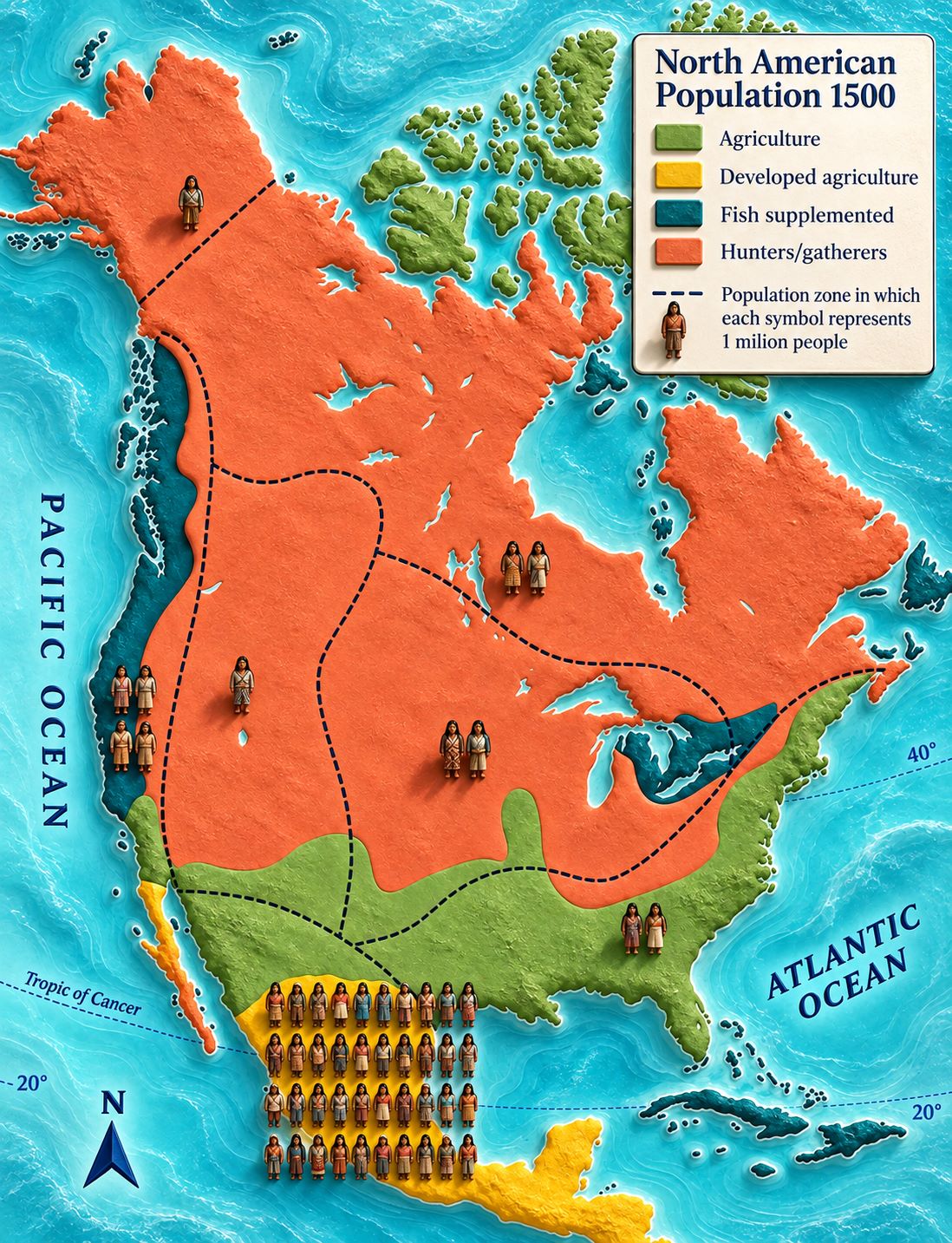
Before European ships appeared on the horizons of the Americas in 1492, North America was home to a remarkable diversity of peoples, cultures, and political systems. Far from being an empty wilderness, the continent contained agricultural communities, sophisticated urban centers, powerful confederacies, and extensive trade networks connecting societies across vast distances.
The precise population of the Americas before European contact remains disputed. Some estimates suggest that approximately 75 million people lived across North and South America, most of them south of the Rio Grande. The population north of Mexico is even more controversial. In the early twentieth century, anthropologist James Mooney estimated that only 1.5 million Indigenous people lived in the region. In 1966, Henry F. Dobyns challenged such low figures, arguing that epidemic diseases had killed enormous numbers of people before European settlers reached many areas. He proposed that as many as 18 million people might have lived north of Mesoamerica in 1492. Douglas Ubelaker later offered a more conservative estimate of approximately seven million for the northern region, including Alaska, Canada, and Greenland.
Whatever the actual figures, Indigenous societies were far more complex than early colonial accounts often suggested. Hundreds of languages were spoken, and communities ranged from small mobile bands to agricultural chiefdoms, city-states, and powerful nations. The Pueblo settlements of the Southwest, the great earthwork centers of the Southeast, the farming communities of the Eastern Woodlands, and the civilizations of Mesoamerica and the Andes all reflected distinct histories and ways of life.
Trade routes connected these societies by land, river, and sea, carrying raw materials, food, tools, and ideas. These networks sustained cultural exchange and political relationships across the continent. After 1492, however, the same connections that had enriched Indigenous societies would also help spread a devastating new threat.
The Invisible Advance of Pathogens
European expansion brought more than military conquest and territorial dispossession. It also introduced infectious diseases that devastated many Indigenous populations.
For thousands of years, the peoples of the Americas had developed largely apart from the populations of Europe, Asia, and Africa. Many communities had little previous exposure to diseases such as smallpox and measles. When these infections arrived, they could spread rapidly through susceptible populations, producing mortality on a devastating scale.
Smallpox became one of the most destructive diseases associated with European colonization. Measles, influenza, and other infections also contributed to repeated demographic crises. Historical accounts mention numerous additional diseases, although the precise identity of some early epidemics remains uncertain.
Crucially, disease did not always follow the advance of European armies and settlements. Indigenous trade networks connected distant communities, allowing infections to spread inland, sometimes ahead of European explorers themselves.
Smallpox reached the Caribbean and then central Mexico in 1520, during the Spanish invasion of the Aztec Empire. The disease contributed to the suffering and demographic disruption accompanying the conquest.
The expedition of Hernando de Soto, which traveled through the southeastern part of North America between 1539 and 1543, provides another striking example. Spanish accounts describe settlements whose size and condition varied considerably. Henry Dobyns argued that epidemics may have reached Florida from Spanish Cuba through Indigenous trading connections before de Soto began his expedition. The explorer subsequently encountered abandoned villages, some of which may have been affected by earlier population losses.
The precise causes of these abandoned settlements remain difficult to establish. Warfare, migration, and political changes could also explain their condition. Nevertheless, the possibility that disease had spread beyond the immediate reach of Europeans illustrates how epidemics could transform Indigenous societies before direct colonial rule was established.
A Wave of Devastation
The demographic consequences of epidemic disease varied across North America, but some communities suffered catastrophic losses. Repeated outbreaks often coincided with warfare, displacement, and the disruption of established economies.
Florida and the Southwest
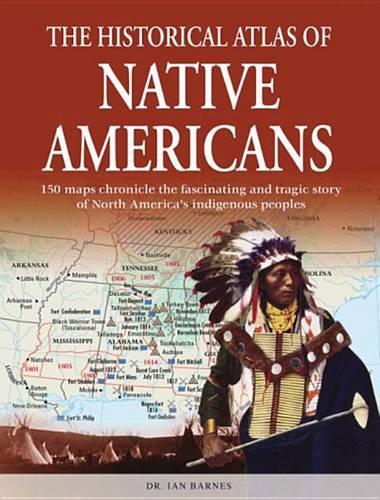
The Timucua peoples of Florida have been estimated to have numbered approximately 150,000 before European contact. According to figures cited by Ian Barnes in The Historical Atlas of Native Americans, their population had declined by approximately 98 percent by the end of the seventeenth century. Epidemics contributed to this collapse alongside Spanish colonial policies, warfare, and attacks on Indigenous communities.
The Apalachee of northern Florida experienced similarly severe losses. Their population has been estimated at between 25,000 and 30,000 in the early seventeenth century, falling to approximately 8,000 by the end of the century.
Farther west, the Pueblo peoples of the Southwest also suffered a dramatic demographic decline. Barnes cites estimates of approximately 130,000 inhabitants across 150 Pueblo settlements in 1539, compared with only 6,440 people in eighteen settlements by 1706. Although such figures depend on the methods and geographical boundaries used, they illustrate the immense disruption experienced by Indigenous communities.
The Pueblo peoples survived these disasters, preserving their identities and communities despite Spanish colonial pressure. Their revolt of 1680, which temporarily drove Spanish authorities out of much of New Mexico, demonstrates that demographic catastrophe did not eliminate Indigenous resistance.
New England and the Seventeenth-Century Epidemics
Between 1616 and 1619, a devastating epidemic struck Indigenous communities along the northeastern coast of North America. The disease responsible remains disputed, although it is frequently described in historical accounts as a plague. A 2010 study proposed leptospirosis as an alternative explanation, but this remains a hypothesis rather than an established diagnosis.
The outbreak reduced some communities shortly before the arrival of English settlers. When the Pilgrims established their colony at Plymouth in 1620, they encountered a region already affected by severe population losses. Some English colonists interpreted the circumstances as evidence of divine providence, believing that God had cleared the land for their settlement. Such interpretations obscured the human catastrophe that had preceded their arrival.
The epidemics continued. Barnes’s chronology identifies thirteen major outbreaks across North America during the seventeenth century, attributed to diseases including smallpox, measles, influenza, diphtheria, and scarlet fever. Among the outbreaks he records are those affecting New England and the Great Lakes in 1633, 1637, and 1639, followed by further epidemics in subsequent decades.
The precise causes and geographical extent of individual outbreaks are not always certain. Nevertheless, their cumulative effects could be devastating. Survivors of one epidemic might face another before their communities had recovered, leaving fewer people to cultivate crops, care for children, maintain settlements, and preserve traditional knowledge.
The Eighteenth-Century Epidemics
The eighteenth century brought further waves of disease. Barnes records smallpox outbreaks spreading toward New England between 1715 and 1721, reaching the Hudson Bay region in 1738–1739, and returning to New England in 1746. Further outbreaks affected the Great Lakes between 1750 and 1752, from 1755 to 1760, and between 1762 and 1766. Smallpox also spread across wide areas of North America between 1779 and 1783, with later outbreaks in Alaska, Canada, and Pueblo communities.
Measles, influenza, and diphtheria added to the burden. The timing and identity of some historical epidemics remain uncertain, but the broader pattern reveals how repeatedly Indigenous communities were exposed to infectious disease over several generations.
The consequences extended beyond population loss. Epidemics could weaken agricultural production, disrupt trade, and undermine the political relationships that sustained Indigenous nations. Communities already suffering from disease were often less able to resist territorial encroachment or recover from subsequent crises.
The Shoshone and Arikara illustrate these consequences. According to Barnes, smallpox severely weakened the Shoshone in 1781, and by the 1790s they and their Flathead and Kutenai allies had been pushed out of parts of Montana. In 1778, the Arikara reportedly lost approximately 80 percent of their population to smallpox. Barnes states that their surviving communities consolidated thirty-two villages into two and retreated north toward the Cheyenne River.
These losses weakened the Arikara’s position in a region where competition with neighboring peoples, including the Sioux, was intensifying. Disease did not determine every political outcome, but it could profoundly alter the balance of power between nations.
The Destruction of Social and Spiritual Life
The effects of epidemic disease extended far beyond mortality figures. Communities depended on relationships between generations, shared knowledge, and established responsibilities. When large numbers of people died, these foundations could be severely damaged.
The Loss of Knowledge
Elders, teachers, healers, and religious leaders played essential roles in preserving oral histories, practical knowledge, and cultural traditions. Their deaths could interrupt the transmission of knowledge that had developed over generations.
A Wampanoag observer, describing the consequences of an epidemic on Martha’s Vineyard in 1645, reportedly lamented:
“A long time ago they had wise men which in a grave manner taught the people knowledge, but they are dead and their wisdom is buried with them.”
The words capture one of the most profound consequences of epidemic disease: when knowledgeable individuals died, their experience and wisdom could disappear with them.
The Breakdown of Families and Communities
Epidemics could leave children without parents, families without caregivers, and settlements without enough people to maintain food production. The deaths of hunters, farmers, and those responsible for preparing or distributing food could threaten the survival of people who had escaped infection.
Indigenous medical traditions varied considerably between societies and included extensive knowledge of local plants and treatments. However, unfamiliar epidemic diseases presented challenges that local medical practices were not necessarily equipped to manage.
Barnes describes a traditional treatment used by some Indigenous peoples in which a sick person entered a heated sweat lodge before plunging into cold water. He argues that this could worsen the condition of someone suffering from smallpox. This particular example should not be generalized to all Indigenous medical traditions, but it illustrates the difficulties communities faced when confronting unfamiliar infections without effective treatments.
The Loss of Political Power
Demographic decline also transformed relationships between Indigenous nations. Communities weakened by disease could struggle to defend their territories, maintain alliances, or resist neighboring powers and European expansion. Abandoned settlements and disrupted trade networks could further undermine their political influence.
Yet Indigenous peoples were not passive victims. Many survived through adaptation, resistance, and the formation of new alliances. The history of epidemic disease is therefore not simply one of disappearance, but also of survival under extraordinary pressure.
Conclusion: Disease and the Colonial Conquest
The European conquest of North America is often remembered through military campaigns, weapons, treaties, and the expansion of settlements. Yet these visible forces were accompanied by an invisible biological catastrophe.
Infectious diseases sometimes reached Indigenous communities before European armies or settlers arrived. The resulting population losses could weaken political institutions, disrupt agricultural production, and undermine the relationships that sustained Indigenous societies. In some regions, these changes made subsequent colonial expansion easier.
Disease, however, did not operate in isolation. Warfare, land dispossession, forced migration, enslavement, and food shortages compounded its effects. Epidemics could weaken a community, while the loss of territory and economic resources made recovery more difficult. Together, these forces transformed the political landscape of North America.
Nor did every Indigenous nation experience the same fate. Some maintained considerable power for generations after contact, while others suffered severe losses and territorial displacement. Many communities preserved their identities and continued to resist colonial rule.
The catastrophe was therefore not simply a story of disease replacing military conquest. It was a story of biological disaster interacting with political violence and colonial expansion, often with devastating consequences for the peoples of North America.
Currently Reading
Historical Challenge: Can You Conquer the Past?
Answer more than 18 questions correctly, and you will win a copy of History Chronicles Magazine Vol 1! Take our interactive history quiz now and put your knowledge to the test!