
 By istorija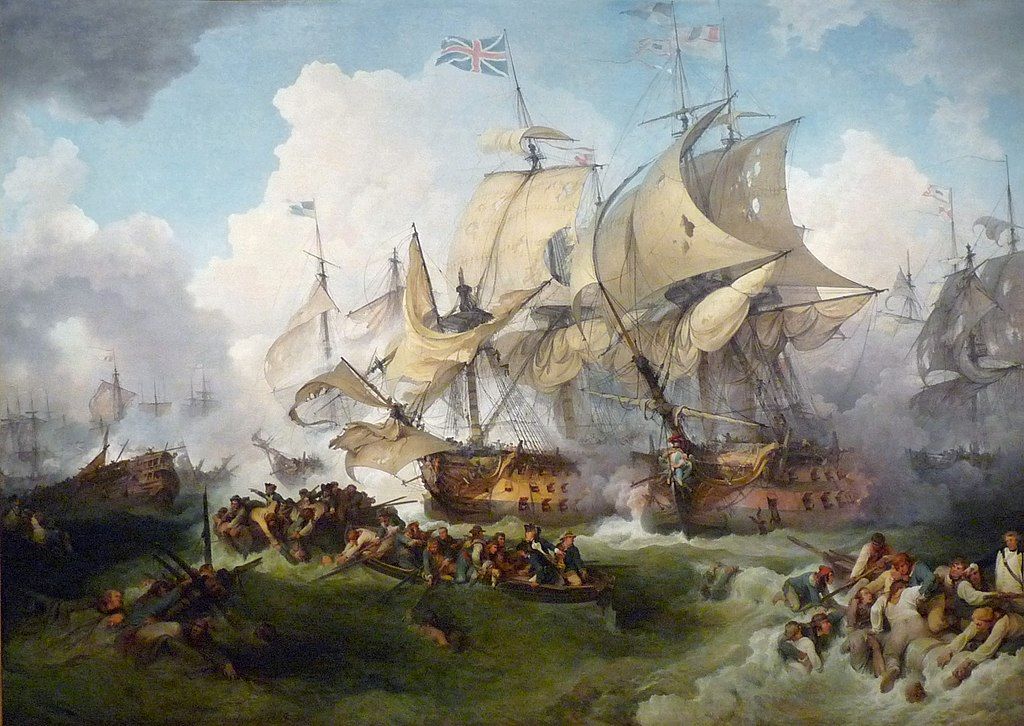
The battle known as The First of June stands as one of those pivotal confrontations that decisively shaped the course of history. Unfolding during the peak of the French Revolution, it was intrinsically linked to the critical transport of much-needed provisions to a France ravaged by hunger. As a history student, we were often tasked with exploring such ‘what if’ scenarios. This battle, with its surrounding narrative, presents an ideal subject for such speculation. It not only altered the trajectory of the revolution but also highlighted the strategic importance of naval power in determining the fate of nations.
1794: France on the Brink of Desperation
In 1794, France found itself in a deep economic and social crisis. The country was plagued by severe food shortages, and the value of its currency had plummeted. This economic turmoil was a direct consequence of the ongoing French Revolution, which had led to widespread instability and uncertainty. Due to the revolution, traditional trade relationships were disrupted, and France struggled to import the necessary food supplies. The situation was so dire that the country teetered on the edge of widespread famine, affecting millions of its citizens.

Responding to this crisis, the Committee of Public Safety, the de facto government at the time, took drastic measures. They dispatched Admiral Van Stabel to the United States with the authority of a minister to secure food supplies. This mission was critical to alleviating the acute hunger back home. Van Stabel’s successful negotiation led to the assembly of a fleet of 170 ships. This fleet, eventually filled with essential foodstuffs, represented a beacon of hope for a nation grappling with the prospect of starvation. This endeavor was a significant logistical achievement and a crucial step in addressing the immediate needs of a nation under the grip of both political and economic upheaval.
The Battle of The First of June
The Battle of The First of June, a landmark naval engagement of the French Revolutionary Wars, exemplifies the strategic complexity of warfare at sea. On one side, Admiral Lord Richard Howe led the British Channel Fleet with a line of 34 battleships, driven to intercept a critical grain convoy from the United States. Opposing him was Rear Admiral Louis Thomas Villaret-Joyeuse, commanding the French Atlantic Fleet of 26 battleships, later reinforced to 30. The French fleet’s objective, under the stern directive of the Committee of Public Safety, was singular: ensure the safe passage of the grain convoy to alleviate the dire famine in France. The stage was set for a dramatic showdown in the vast expanses of the Atlantic Ocean.
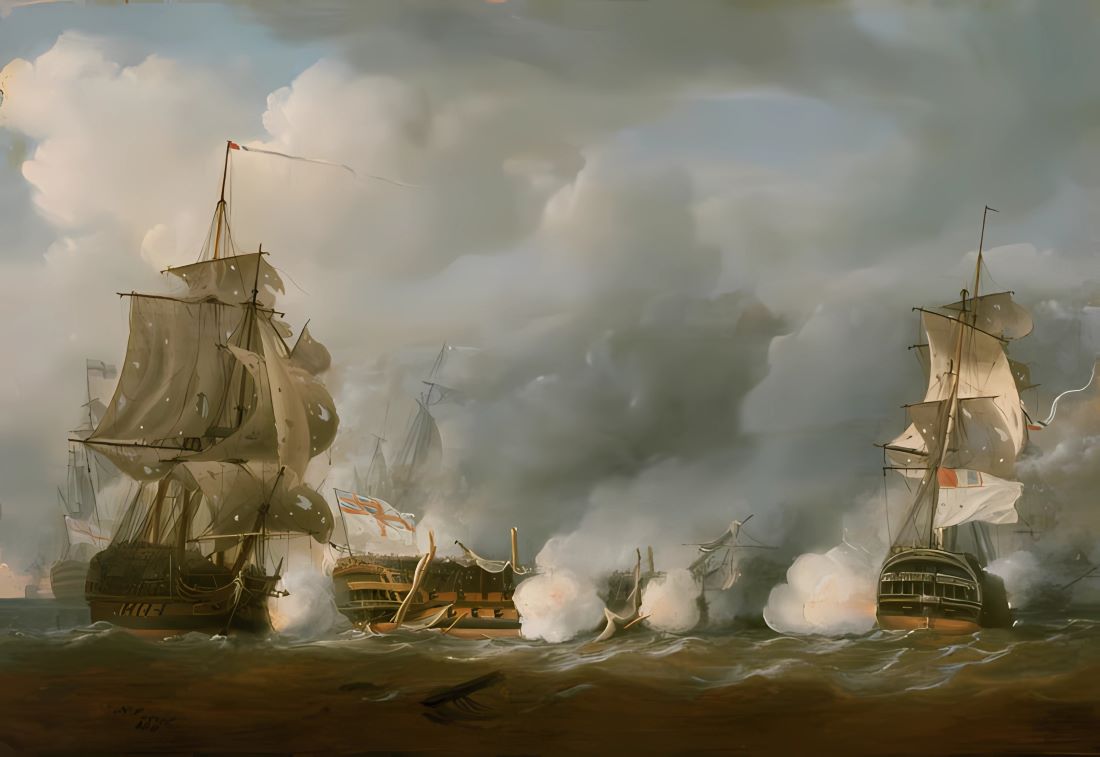
The battle commenced with initial skirmishes on May 28, 1794, but it was on the clear morning of June 1st that the conflict reached its zenith. Howe’s unconventional tactic to break through the French line led to intense individual ship duels, a notable one being between the Brunswick and the Vengeur. The British fleet, though technically victorious, capturing six French ships and sinking the Vengeur, had not managed to deter the French from their vital mission. The grain convoy, undisturbed by Howe’s fleet, successfully reached Brest, marking a strategic triumph for the French. This battle, resulting in around 7,000 casualties on the French side and 1,000 for the British, underscored the resilience of the French navy and its capacity for strategic success even amidst the turmoil of the Revolution.
The First of June’s Legacy
The Battle of The First of June, while a tactical defeat for the French, emerged as a strategic victory with far-reaching consequences for the French Revolution. The French Navy’s primary mission under Rear Admiral Louis Thomas Villaret-Joyeuse was to ensure the safe passage of a crucial grain convoy from the United States to France. This convoy was vital for alleviating the severe famine that threatened the stability of Revolutionary France. Despite suffering heavy losses against the British fleet commanded by Admiral Lord Richard Howe, the French Navy successfully protected the convoy, enabling its safe arrival in France. This accomplishment was crucial in sustaining the revolution and bolstering the morale of the French people during a period marked by internal and external strife.
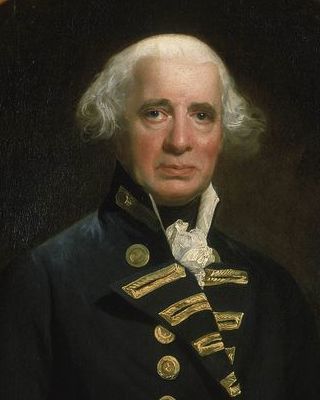
On the British side, the battle was celebrated as a significant naval victory and was known as “The Glorious First of June.” Admiral Howe’s fleet achieved a clear tactical success, capturing or destroying several French ships and inflicting substantial casualties. This victory showcased the dominance of the Royal Navy and was a significant morale booster for Britain. However, the strategic objective of intercepting and preventing the French grain convoy from reaching its destination was not achieved. This outcome underscored the complexity of naval warfare, where tactical victories do not always translate into strategic success. The battle thus stands as a pivotal event in naval history, highlighting the dual aspects of tactical and strategic outcomes in warfare.
Currently Reading


Historical Challenge: Can You Conquer the Past?
Answer more than 18 questions correctly, and you will win a copy of History Chronicles Magazine Vol 1! Take our interactive history quiz now and put your knowledge to the test!