 By istorija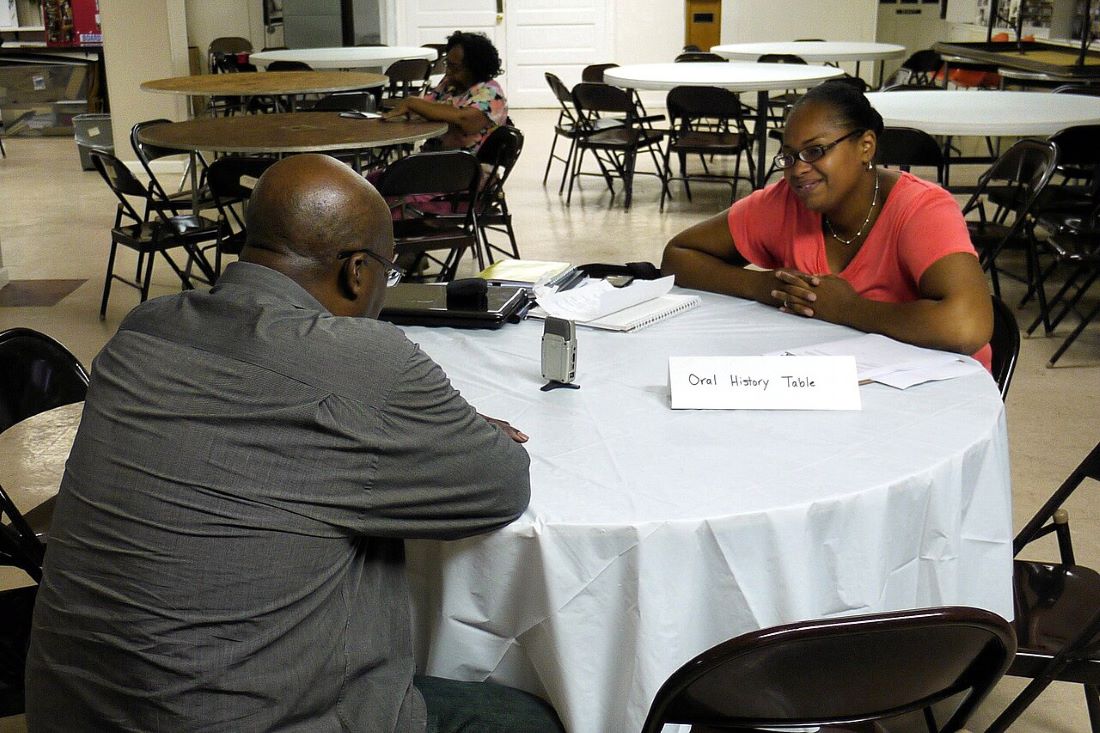
For as long as humans have possessed the capacity for speech, they have passed down accounts of their past. Long before the invention of the printing press or the formalization of the archival profession, historical consciousness was preserved through spoken word, ritual storytelling, and recitation. Today, oral history has transitioned from an ancient practice into a highly sophisticated, rigorous academic discipline.
Yet, as it has grown in prominence, it has sparked profound epistemological debates. Where does oral history fit within the traditional hierarchy of historical evidence? Is it a primary source, a tertiary interpretation, or a fluid, unstable reflection of human memory?
By examining its historical trajectory, from antiquity through its institutionalization in the United States, its deployment in Holocaust documentation, and its current application in modern digital projects in Southeast Europe, we can fully appreciate why oral history remains one of the most vital, democratic, and complex tools in contemporary historiography.
The Epistemological Question: Primary Sources and the Mechanics of Memory
To evaluate oral history, one must first confront the traditional taxonomy of historical sources. In classical training, historians rely on a rigid classification: primary sources represent firsthand, contemporary accounts of an event (such as official records, diaries, and letters), while secondary sources comprise the subsequent analyses written by scholars.
Within this framework, contemporary methodologists increasingly recognize oral testimony as a distinct class of primary source material. It is a recorded, structured dialogue where an eyewitness recalls their direct personal experience for an interviewer. It provides what historians call the history of subjectivity, not just what happened, but how individuals experienced, interpreted, and felt those events.
However, utilizing oral history requires rigorous methodological caution. Unlike static paper documents, human memory is a dynamic psychological process. Modern historiography acknowledges that memory is subject to distortion, trauma, post-event reconstruction, and the subtle influence of collective cultural narratives over time. Therefore, oral history does not replace traditional archival research; rather, it functions alongside it. Memory itself becomes an object of historical analysis, allowing researchers to explore how societies and individuals reconstruct their past in the present.
Deep Roots: From Classical Antiquity to the American Frontier
While modern oral history relies on digital repositories, the method itself is deeply rooted in the origins of historical inquiry. Herodotus relied extensively on oral accounts collected during his travels to construct his foundational narratives of the Greco-Persian Wars. Centuries later, the great West African Griots maintained centuries of complex dynastic history entirely through oral performance, utilizing strict mnemonic training to preserve ancestral lineages and treaties.
The American Tapestry: Indigenous Nations and the WPA Project
In the United States, oral tradition holds a foundational status. For hundreds of Native American nations, oral history was—and remains—a primary mechanism for transmitting legal frameworks, land boundaries, and historical events across generations. While early Western scholars frequently dismissed these tribal histories as mere folklore, modern interdisciplinary research combining geology and archaeology has demonstrated that indigenous spoken accounts accurately recorded catastrophic environmental events, such as volcanic eruptions and earthquakes, that occurred thousands of years ago.
A similar imperative to capture the voices of the unrecorded shaped modern American archiving. During the colonial period and subsequent centuries, marginalized populations—enslaved African Americans, frontier laborers, and immigrant groups—left behind few diaries or letters. In the 1930s, the Works Progress Administration (WPA) addressed this archival silence by launching an ambitious project to interview thousands of formerly enslaved individuals. Despite the systemic biases of the era’s interviewers, these narratives fundamentally revised the historiography of American slavery, demonstrating that without the spoken word, the history of the marginalized would remain incomplete.
Bearing Witness: The Holocaust and the Post-War Paradigm
The institutionalization of oral history as a vital moral and scientific imperative occurred in the wake of the Second World War, driven by the urgent need to document the Holocaust.
As the Nazi concentration camps were liberated, historians faced a catastrophic archival challenge. The perpetrators had systematically destroyed paper trails, and the bureaucratic language used in surviving German documents (such as Sonderbehandlung or “special treatment”) was explicitly designed to mask mass murder. To reconstruct the internal reality of the genocide, the historical community had to rely on the voices of the survivors.
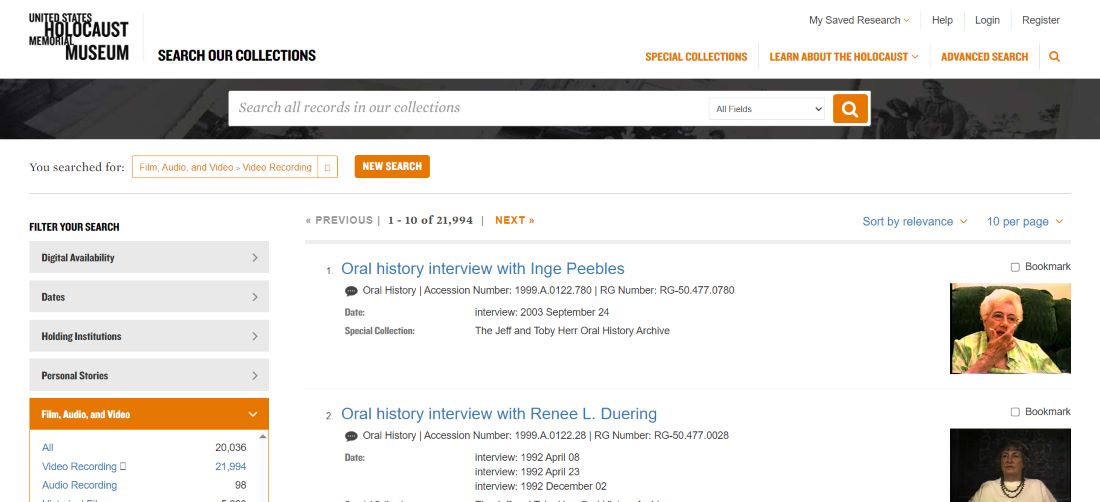
Institutions like Yad Vashem in Jerusalem and the United States Holocaust Memorial Museum (USHMM) in Washington, D.C., recognized that oral testimonies were essential to countering historical revisionism and denial. A watershed moment in this movement came in 1994, when filmmaker Steven Spielberg founded what would become the USC Shoah Foundation. Spurred by his experience filming Schindler’s List, Spielberg launched a monumental effort that recorded over 55,000 video testimonies of survivors and witnesses.
Today, through its cutting-edge IWitness educational platform, the Shoah Foundation has digitized and indexed these accounts, making them searchable by keywords, locations, and dates. This massive undertaking, alongside initiatives like the Fortunoff Video Archive, provided an unassailable body of primary evidence—contextualizing the cold statistics of bureaucratic destruction with the nuanced, lived realities of human survival, and pioneering the template for modern digital archives.
The Digital Evolution: The Memorial Center of the Republic of Srpska
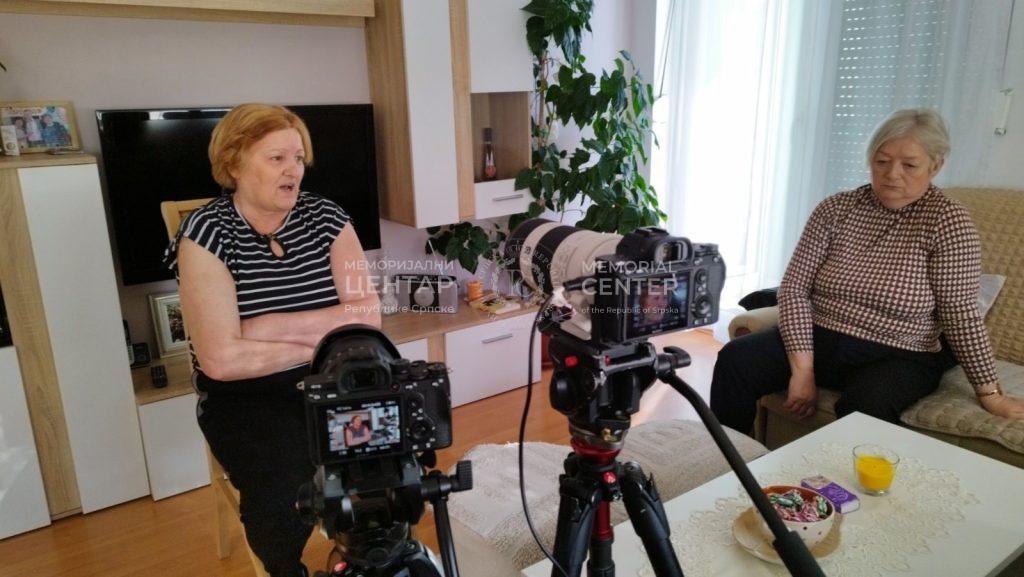
In the twenty-first century, the digital revolution has transformed oral history from a localized archival practice into an accessible, multimedia-driven discipline. This modern approach is characterized by large-scale digitization, structural indexing, and public accessibility. An important regional example of this methodology in Southeast Europe is currently being developed by the Memorial Center of the Republic of Srpska.
Focusing on preserving the memory of the historical suffering of the Serbian people during the breakup of Yugoslavia, the center has established a dedicated digital oral history platform. The project reflects contemporary standards of digital history through several key practices:
-
Systematic Scale: Within its first year of operation, the initiative has compiled approximately 2,000 video testimonies from survivors, eyewitnesses, and descendants, creating a significant repository of personal narratives from the region.
-
Archival Contextualization: Addressing the traditional critique of oral history as isolated or unverified, each testimony on the platform is integrated with accompanying primary documents, supplementary historical resources, and specific contextual frameworks.
-
Public Accessibility: The repository is managed via a modern web interface, allowing researchers, educators, and the public to search, cross-reference, and analyze the material remotely.
By combining personal testimonies with verifiable documentary evidence, this regional initiative illustrates the current direction of digital oral history—anchoring individual memory within a transparent, verifiable historical framework.
Conclusion: The Living Archive
Oral history emphasizes that history is not merely a collection of official treaties and state documents, but a complex fabric woven from individual human lives.
Whether examining the ancient oral maps of indigenous nations, documenting the survival strategies of Holocaust survivors, or analyzing the expanding digital repositories in Southeast Europe, oral history fulfills a critical democratic function. By acknowledging both the value of the human voice and the psychological limitations of memory, modern historians can build a more inclusive, critical, and resilient archive of our shared past.
Currently Reading
Historical Challenge: Can You Conquer the Past?
Answer more than 18 questions correctly, and you will win a copy of History Chronicles Magazine Vol 1! Take our interactive history quiz now and put your knowledge to the test!