
 By istorija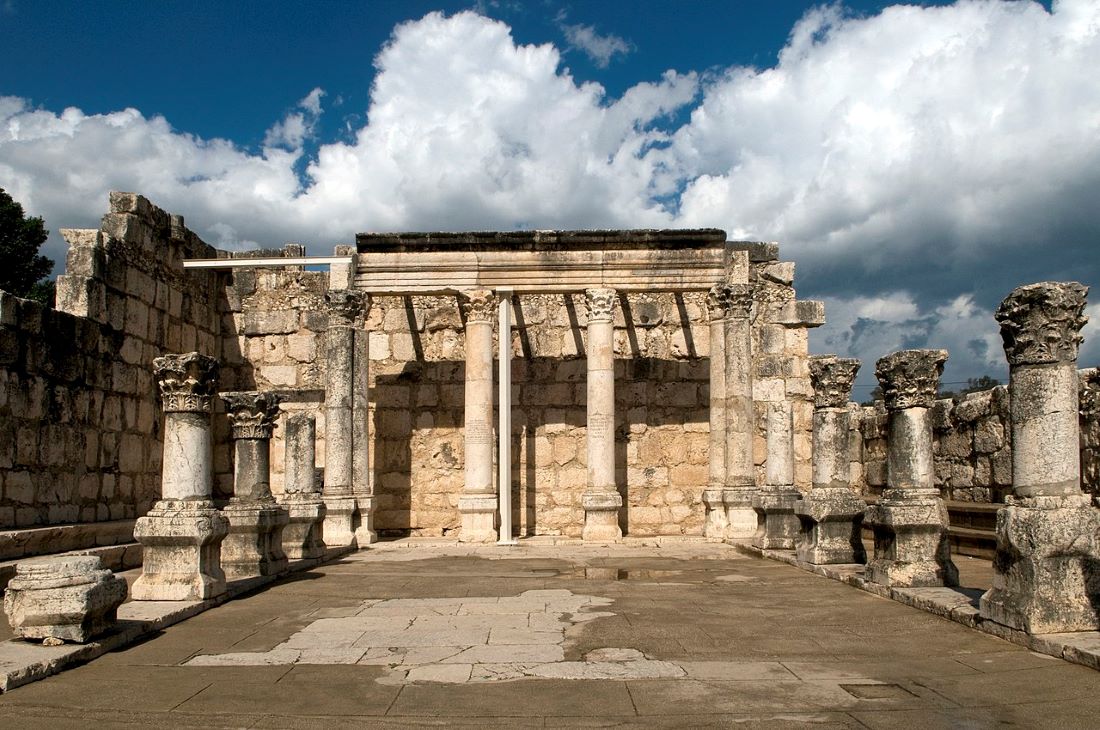
For millions of people around the world, Jerusalem and Bethlehem stand as the twin pillars of biblical history. Yet, if you were to measure the cradle of the Christian movement by the sheer number of miracles performed and the raw hours Jesus spent teaching, a different, long-abandoned location takes center stage.
Nestled on the northwestern shores of the Sea of Galilee lie the ruins of Capernaum (historically known as Kefar Nahum or Talhum). Deserted since the eighth century AD, this ancient fishing town was once the vibrant epicenter of Jesus’ Galilean ministry. It was here that he recruited his first disciples, delivered some of his most radical discourses, and performed the majority of his recorded healings. Matthew’s Gospel goes so far as to call it Jesus’ “his own city.”
Yet, despite its profound spiritual significance, Capernaum vanished into a jungle of shrubs, thorns, and myth for nearly a millennium. How did a bustling trade hub turn into a ghost town, and what secrets have modern archaeologists unearthed from beneath its black basalt soil?
A Strategic Lakeside Melting Pot
To understand Capernaum’s prominent role in the New Testament narrative, one must look at its geography and economics. It was not an isolated, monastic retreat. On the contrary, Capernaum was a vital toll-station and commercial outpost situated along the Via Maris—the famous international highway that linked Egypt, Syria, and Mesopotamia.
Fishermen, merchants, and Roman officials constantly passed through its streets. Local fishermen traded their daily catch, while tax collectors—including a local official named Levi before he became the disciple Matthew—levied duties on goods traversing the frontier. This bustling, cosmopolitan environment provided Jesus with an ideal platform to rapidly spread a message meant for the wider world. It was right here, among the local fishing boats, that Jesus recruited Simon (Peter), his brother Andrew, and the brothers James and John.
The Lost Town Rediscovered
Following the Muslim conquest and a series of devastating regional earthquakes, Capernaum was gradually abandoned, and nature quickly reclaimed the site. For centuries, its exact location was lost to history, existing only as a name in sacred texts.
The silence was finally broken in 1838 when the American explorer and biblical geographer Edward Robinson correctly identified the shoreline ruins as Capernaum. Realizing the immense historical stakes, a Franciscan order purchased the land in the late 19th century, shielding the ruins from destruction and opening the door for systematic 20th-century archaeological excavations.

What the archaeologists found was a town settled since the second century BC. Interestingly, Capernaum did not participate in the catastrophic Jewish wars against the Roman Empire, escaping the era completely unscathed. It reached the absolute zenith of its architectural and economic greatness in the fourth century AD, before entering a steady decline by the time of the seventh-century Arab invasion.
The Synagogue Controversy: Limestone vs. Basalt
Among Capernaum’s greatest archaeological treasures are the remains of a stunning white stone synagogue situated at the highest point of the town. Its highly elaborate, ornate appearance and detailed relief carvings—such as one depicting the Ark of the Covenant borne on a wheeled carriage—suggest a remarkably wealthy Jewish population at the time of its construction.
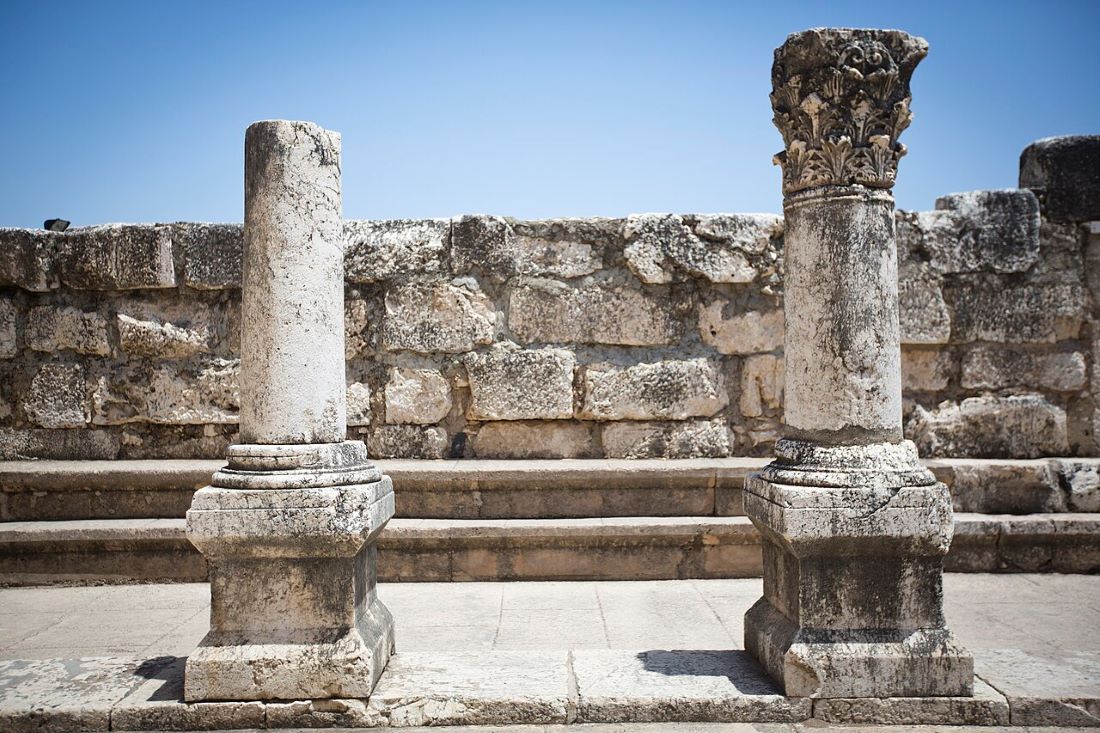
However, this striking white limestone building dates to the third or fourth century AD—meaning it is not the exact structure where Jesus famously cast out an unclean spirit or preached the Bread of Life discourse.
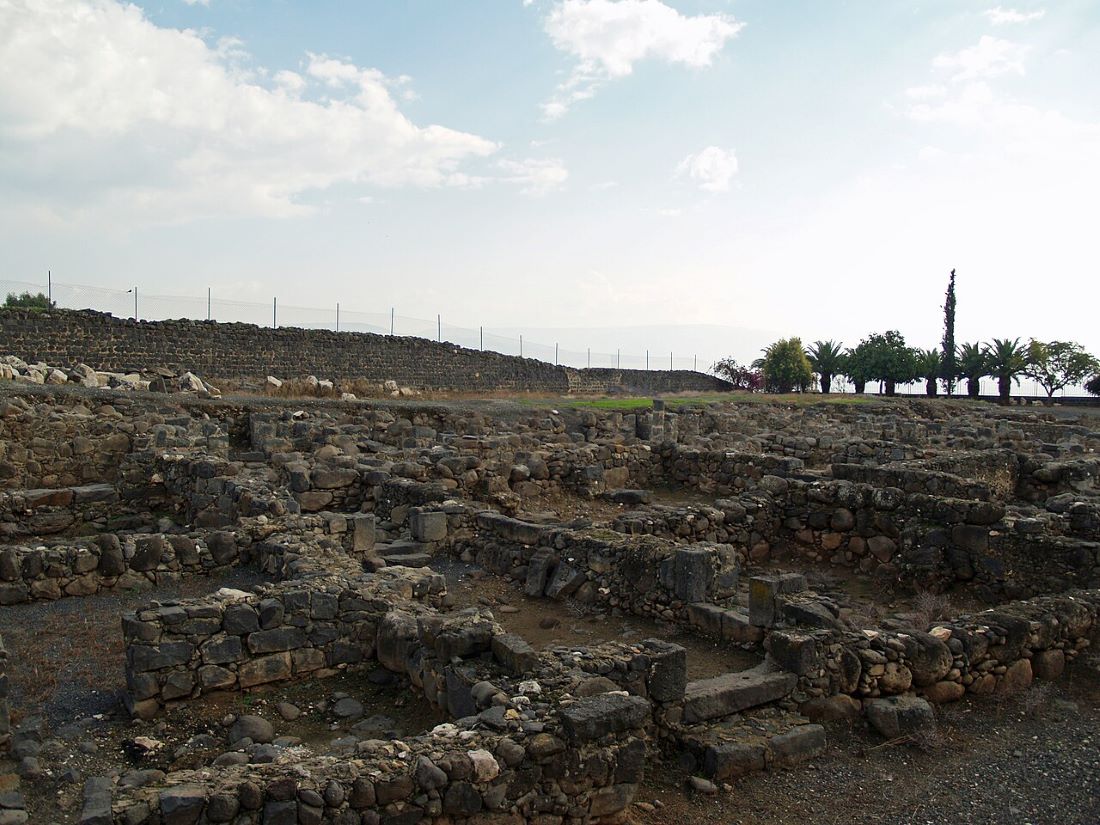
Instead, excavations revealed a fascinating structural layering: this magnificent late-Roman synagogue was built directly on top of the dark, black basalt foundations of an older, first-century building. Archaeologists are highly confident that these lower, dark foundations belong to the very first-century synagogue described in the Gospels.
The Insula of Saint Peter: Legend or Reality?
Perhaps the most gripping mystery of Capernaum lies just a short distance from the synagogue, where archaeologists uncovered the remains of an ancient residential complex, or insula. Since antiquity, a powerful oral tradition maintained that a specific house within this block belonged to Apostle Peter—the home where Jesus healed Peter’s mother-in-law of a severe fever.
When Franciscans excavated this specific domestic residence, they discovered a compelling historical evolution that strongly supports the ancient tradition:
-
The First-Century Domestic Home: The site began as a simple, hostel-style residence. However, within the first century AD, one specific central room was singled out. Its rough dirt floor was smoothed over with a high-quality limestone floor, and its walls were meticulously coated with plaster. Its arched roof stood out from the surrounding complex, indicating it had ceased functioning as a standard family home and had transitioned into a communal gathering space.
-
The Pilgrim Inscriptions: By the fourth century, pilgrims were actively visiting this room. A famous nun named Egeria, who traveled the Holy Land between 381 and 384 AD, noted in her journals that the house of the prince of the apostles had been turned into a church. Excavators found early Christian graffiti and inscriptions scratched directly into the wall plaster, further confirming its use as an early domus-ecclesia (house-church).
-
The Octagonal Church: In the middle of the fifth century, this original house-church was pulled down to make way for a formal, monumental octagonal Byzantine church built directly over the sacred room. The builders specifically centered the inner octagon over the exact plastered room of the first-century house, cementing its status across generations.
While no one can definitively prove Peter’s name was on a first-century deed, the archaeological sequence demonstrates that the earliest Christians treated this humble basalt room with absolute reverence, marking it as a sacred landmark within living memory of the Apostles themselves.
Conclusion: The Warning in the Dust
Capernaum stands as a profound testament to the fluid nature of history. It was a place of vibrant faith, a thriving global crossroads, and a stage for events that would rewrite the global calendar. Yet, many who lived within its walls remained deeply dismissive of Jesus’ message, prompting him to issue a stern, strongly-worded warning regarding the town’s spiritual complacency.
Ultimately, Capernaum’s fate was not one of violent destruction, but of quiet oblivion. Today, the white limestone columns rising against the blue backdrop of the Sea of Galilee serve as a magnificent monument to an era when a small, lakeside fishing village was, for a brief moment, the literal center of a burgeoning world movement.
Currently Reading

Historical Challenge: Can You Conquer the Past?
Answer more than 18 questions correctly, and you will win a copy of History Chronicles Magazine Vol 1! Take our interactive history quiz now and put your knowledge to the test!