
 By istorija
When we open a history textbook, we usually expect to learn “what actually happened.” But the deeper we go into the discipline of history, the clearer it becomes that the answer is far more complicated than it first appears. History is not simply a collection of facts. It is an interpretation of the past, created by human beings with all their biases, ideologies, and limitations.
What Is History as a Discipline?
History as a systematic field began in ancient Greece with two foundational figures:
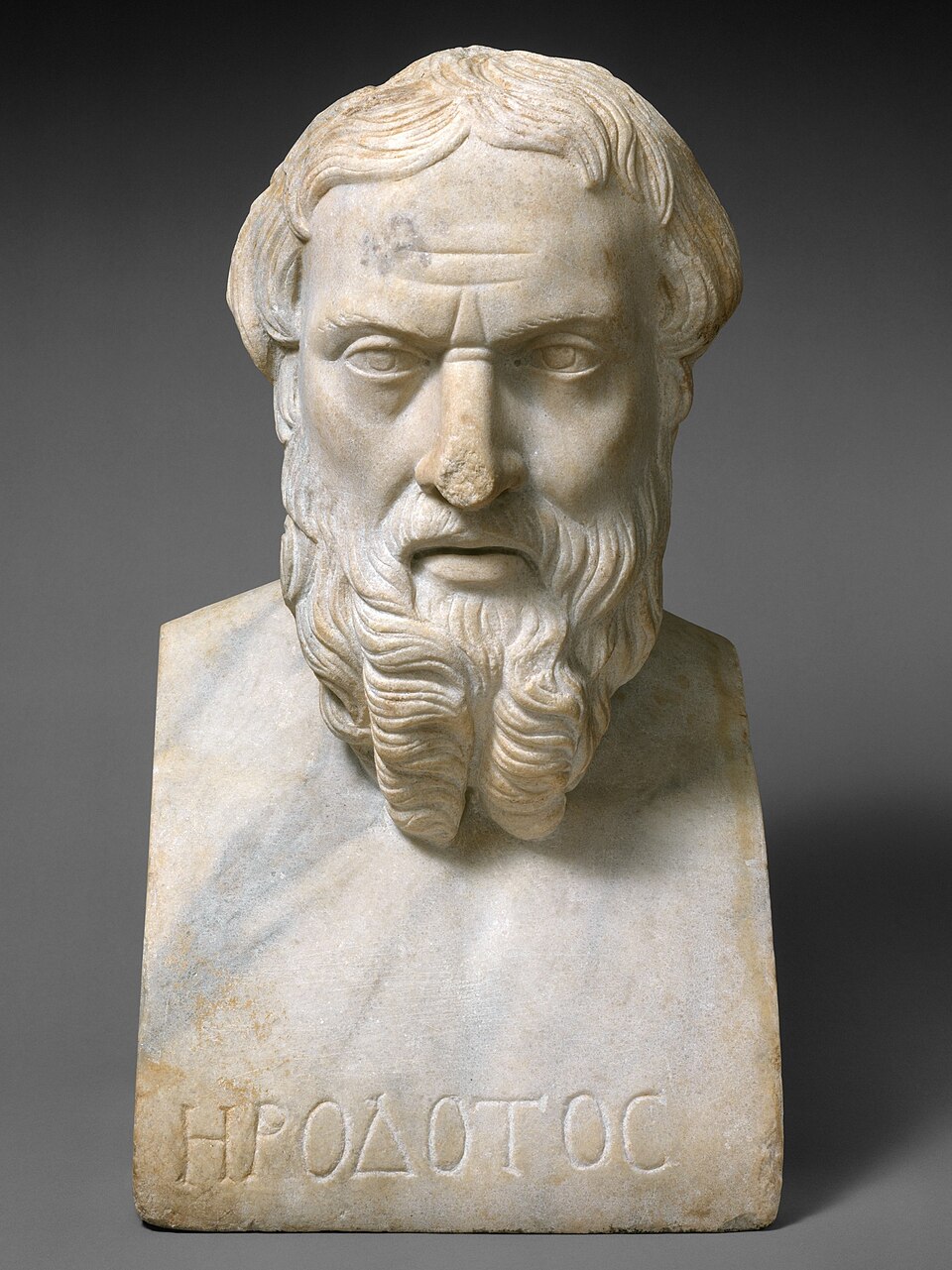
- Herodotus (c. 484–425 BCE), often called the “Father of History,” wrote The Histories, an account of the Greco-Persian Wars that also included vast amounts of geographical, ethnographic, and cultural information. His approach was vivid and sometimes anecdotal, showing openness to different cultures.
- Thucydides (c. 460–400 BCE), author of The Peloponnesian War, took a stricter, more rational approach. He sought objectivity, critically examined sources, and tried to uncover the underlying causes of events rather than merely describing them. Many consider him the father of “scientific” history.
From that point onward, the writing of history evolved through many schools: 19th-century positivism (“history as it actually was” – Leopold von Ranke), Marxist materialism, and the postmodern theories of the 20th century.
History as Construction
One of the most important shifts in modern historiography occurred in the second half of the 20th century. Many theorists, particularly from post-structuralist and postmodern traditions, began arguing that history is not a mirror of the past, but a construction.
According to this view:
- History is not the past itself, but the story we tell about the past.
- Every historian chooses which sources to use, which facts to emphasize, and which to omit.
- The resulting narrative is always colored by the historian’s personal, cultural, ideological, and national perspective.
As the French historian Michel de Certeau put it: “History is a practice that produces what we call the past.”
In other words — there is no such thing as “pure” history. There are only interpretations of the past written by people living in a specific time and society.
Nationalism, Pseudoscience, and the Threat to History
The problem becomes even more serious when history is taken over by states, ideologies, or nationalist movements. Almost every country has its own version of “national history” in which its own victims are emphasized and others’ are minimized, or its own heroes are glorified while neighbors are demonized.
Examples are plentiful:
- Nationalist narratives in the Balkans, where each side has its own version of medieval and modern history.
- Soviet historiography, which for decades rewrote the past according to the Party line.
- Revisionist attempts in various countries to downplay or deny crimes committed during World War II.
- Conspiracy theories presented as “alternative history” (Holocaust denial, claims of alien help in building the pyramids, or pseudohistorical narratives about the origins of peoples).
Pseudoscience in history thrives precisely because most people lack the tools to distinguish serious historiography from ideologically driven construction. When the state or a political group controls education, textbooks, and media, the line between science and propaganda becomes dangerously thin.
Why This Matters Today
In an era when disinformation, “alternative facts,” and deep polarization have become everyday realities, the ability to distinguish good history from bad is not merely an academic issue — it is essential for the survival of a rational society.
Real history is always imperfect, always partial, and always open to new interpretations based on new evidence. But it strives for intellectual honesty. Pseudohistory, by contrast, selects evidence that suits its purpose and ignores what does not.
We are not learning “real” history in the sense that there exists one absolute, unchanging truth. We are learning interpretations of the past written by human beings — with all their strengths and weaknesses.
The task of serious education is not to serve us ready-made answers, but to teach us how to read sources critically, recognize biases, and distinguish facts from constructions.
Only in this way can we resist the manipulation of the past — whether it comes from nationalists, ideologues, or conspiracy theorists.
Currently Reading

Historical Challenge: Can You Conquer the Past?
Answer more than 18 questions correctly, and you will win a copy of History Chronicles Magazine Vol 1! Take our interactive history quiz now and put your knowledge to the test!