
 By istorija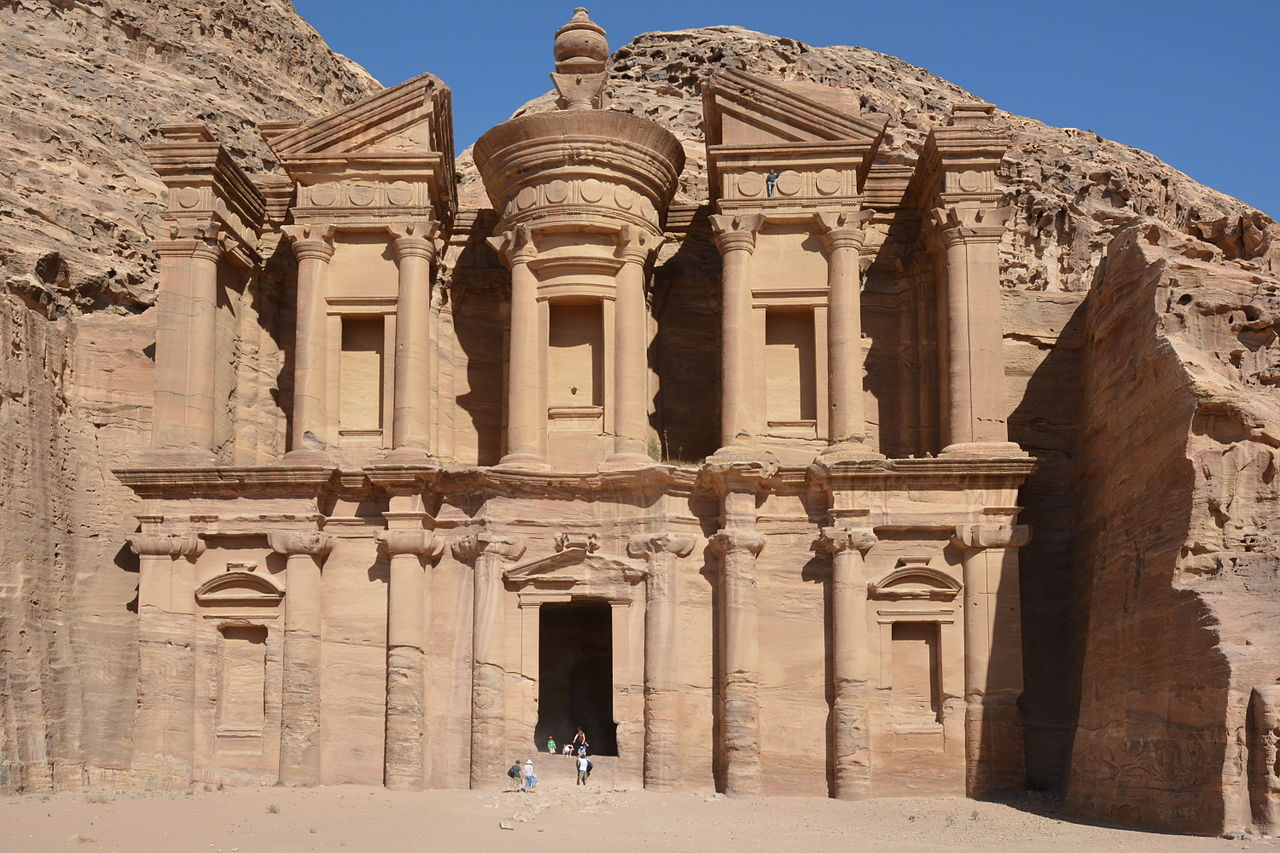
Few places on Earth capture the imagination quite like Petra in southern Jordan. Carved directly into towering rose-red sandstone cliffs, this ancient city continues to astonish visitors with its dramatic beauty, architectural sophistication, and the sheer engineering genius of the people who built it. In 1985, UNESCO declared Petra a World Heritage Site, and in 2007 it was named one of the New Seven Wonders of the World. But behind its breathtaking façades lies the remarkable story of the Nabataeans — a people who turned a harsh desert into one of the most prosperous trading hubs of the ancient world.
Who Were the Nabataeans?
The Nabataeans were a nomadic Arab people who gradually settled in the region of modern southern Jordan, northern Saudi Arabia, and the Negev Desert from the 4th century BCE onward. Unlike many of their neighbors, they did not rely primarily on agriculture or conquest. Instead, they became the greatest caravan traders of their time.
They controlled key sections of the lucrative Incense Route, transporting frankincense, myrrh, spices, silk, and other luxury goods from Arabia and the Indian Ocean to the Mediterranean markets of Egypt, Syria, and Greece. Their strategic position allowed them to dominate this trade for centuries, amassing enormous wealth.
What made the Nabataeans truly exceptional, however, was their mastery of water management in one of the driest regions on Earth.
The Engineering Marvel: Petra’s Hidden Water System
Petra lies in a narrow valley surrounded by steep mountains, receiving very little rainfall. Yet the Nabataeans transformed this arid landscape into a thriving city capable of supporting up to 30,000 inhabitants at its peak.
Their greatest achievement was an incredibly sophisticated hydraulic system:
- They carved hundreds of kilometers of channels, tunnels, dams, cisterns, and reservoirs directly into the rock.
- They built elaborate water conduits that collected rainwater from surrounding mountains and directed it into the city through a network of terracotta pipes and gravity-fed channels.
- One of the most impressive features is the Siq — the dramatic 1.2 km narrow gorge that serves as the main entrance to Petra. Along its walls, the Nabataeans carved a complex water channel system that brought fresh water directly into the city center.
- They constructed large cisterns and reservoirs that could store enough water to survive long droughts.
This mastery of hydrology allowed them to grow gardens, orchards, and even public fountains in the middle of the desert — a feat that astonished both ancient visitors and modern engineers.
The City of Petra – Architecture and Urban Planning
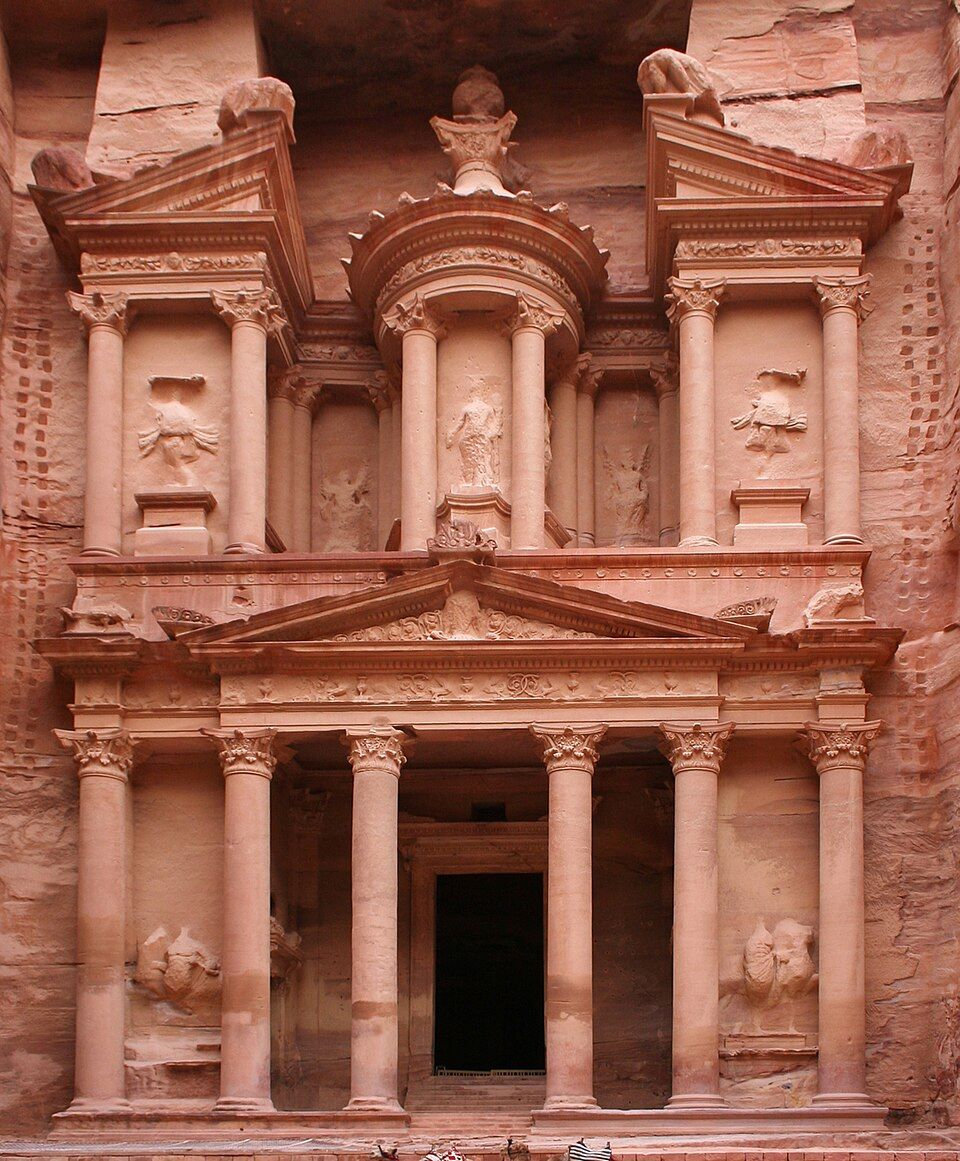
Petra reached its golden age between the 1st century BCE and the 1st century CE under kings such as Aretas III and Aretas IV. The city’s most famous structures were carved directly into the rose-colored sandstone cliffs:
- Al-Khazneh (The Treasury): The iconic façade most people recognize from films like Indiana Jones and the Last Crusade. It is believed to have been a royal tomb or temple.
- The Monastery (Ad Deir): A massive structure high on the mountain, featuring an enormous urn on top.
- The Royal Tombs, the Great Temple, the Roman Theatre, and the Colonnaded Street.
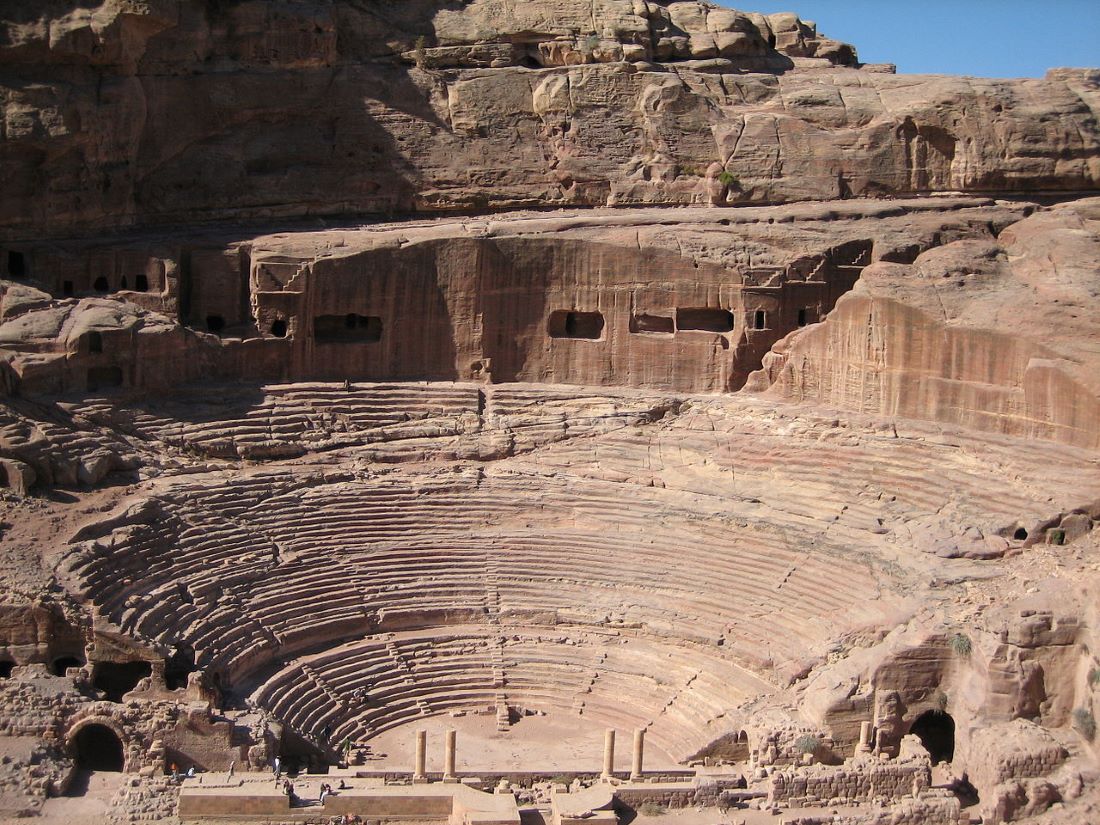
The Nabataeans blended influences from Hellenistic, Egyptian, Assyrian, and local Arabian styles, creating a unique architectural language. Their rock-cut tombs and temples demonstrate extraordinary precision and artistic skill.
The Decline of Petra
Petra’s decline began in the 2nd century CE after the Roman Emperor Trajan annexed the Nabataean Kingdom in 106 CE, turning it into the province of Arabia Petraea. While the city continued to flourish for some time, two major factors sealed its fate:
- The rise of new trade routes (especially maritime routes to India) reduced the importance of overland caravan trade.
- A series of devastating earthquakes (notably in 363 CE) destroyed much of the city’s infrastructure, including its delicate water system.
By the 7th–8th century, Petra had largely been abandoned and forgotten by the outside world, known only to local Bedouin tribes until its rediscovery by Swiss explorer Johann Ludwig Burckhardt in 1812.
Why Petra Still Captivates Us
Petra is much more than a beautiful archaeological site. It stands as a testament to human ingenuity — proof that a relatively small desert people could master their harsh environment through intelligence, organization, and engineering brilliance. The Nabataeans created a wealthy, cosmopolitan city in a place where most would have seen only barren rock and sand.
Today, Petra remains a powerful symbol of resilience and creativity. Walking through the Siq and suddenly seeing Al-Khazneh emerge from the rock is an experience that continues to leave visitors speechless more than 2,000 years after it was built.
Currently Reading

Historical Challenge: Can You Conquer the Past?
Answer more than 18 questions correctly, and you will win a copy of History Chronicles Magazine Vol 1! Take our interactive history quiz now and put your knowledge to the test!