
 By istorija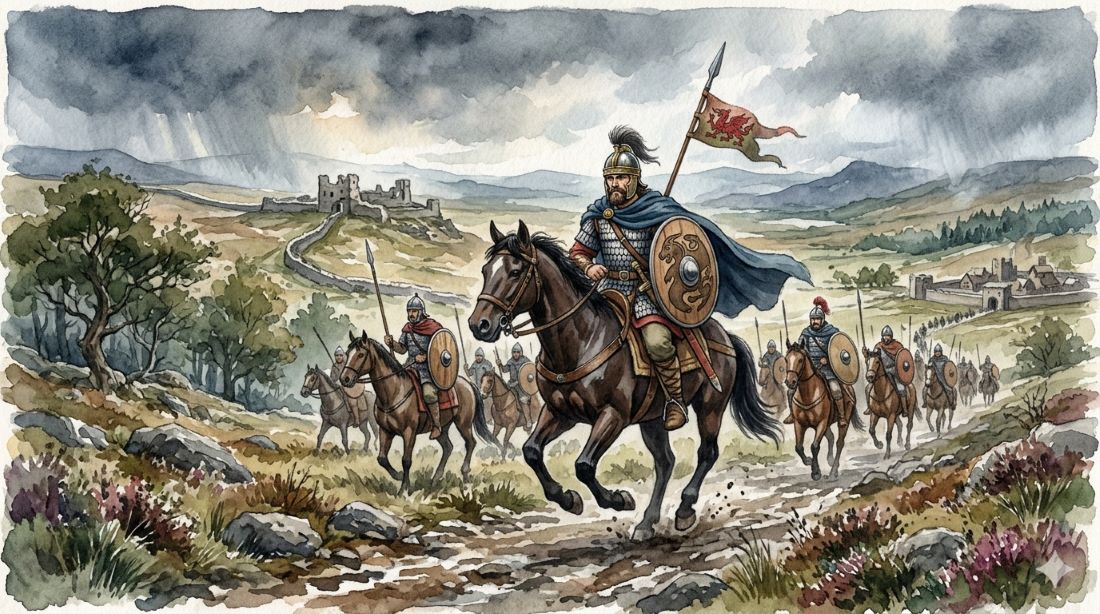
The legend of King Arthur—the noble British king who pulled the sword from the stone, gathered the Knights of the Round Table at Camelot, quested for the Holy Grail, and defended his realm against Saxon invaders—has captivated audiences for over a millennium. From medieval romances to modern films and TV series, Arthur embodies ideals of chivalry, justice, and heroic resistance. But beneath the myth lies a persistent question: Was there ever a real King Arthur, or is he purely a literary and folkloric creation?
The academic consensus in the 21st century is clear: there is no definitive proof that a historical figure named Arthur matches the legendary king. Most specialists on post-Roman Britain view him as a mythological or folkloric figure, likely an amalgamation of various war leaders, oral traditions, and later inventions. Yet the debate continues, fueled by sparse early references and tantalizing archaeological hints.
The Earliest Sources: Glimpses in Dark Age Texts
The search for a historical Arthur begins with the few surviving written records from the 5th–10th centuries, a period often called the “Dark Ages” due to limited documentation.
- Gildas (c. 500–570 AD): In De Excidio et Conquestu Britanniae (“On the Ruin and Conquest of Britain”), the British cleric Gildas describes the chaos after Roman withdrawal and praises Ambrosius Aurelianus as a leader who rallied the Britons against Saxon invaders. He mentions the Battle of Badon (Mons Badonicus) as a major British victory around 500 AD but credits it to Ambrosius, not Arthur. Gildas never names Arthur at all, despite railing against contemporary British kings.
- Bede (c. 731 AD): The Anglo-Saxon historian’s Ecclesiastical History of the English People follows Gildas closely on the post-Roman period but adds nothing about Arthur.
- Nennius (Historia Brittonum, c. 829–830 AD): This Latin compilation, attributed to a Welsh cleric, is the first text to explicitly name Arthur. It describes him as a dux bellorum (war leader), not a king, who fought 12 battles against the Saxons, culminating in Badon where he allegedly killed 960 men single-handedly while carrying the Cross. Nennius lists Arthur’s battles (including Cat Coit Celidon and Guinnion) but scholars widely regard the work as unreliable—mixing folklore, exaggeration, and borrowed material.
- Annales Cambriae (Welsh Annals, compiled c. 10th century): This chronicle records two entries: “516: The Battle of Badon, in which Arthur carried the Cross of our Lord Jesus Christ for three days and three nights on his shoulders, and the Britons were victorious.” And “537: The Battle of Camlann, in which Arthur and Medraut [Mordred] fell.” These are the earliest datable mentions linking Arthur to specific events, but the dates are inconsistent with other sources and likely interpolated or legendary.
These early texts provide the only potential “historical” anchors, but none are contemporary eyewitness accounts. They date centuries after the supposed events (late 5th–early 6th century) and show clear signs of myth-making.
The Medieval Amplification: Geoffrey of Monmouth and Beyond
The Arthur we recognize today largely stems from Geoffrey of Monmouth‘s Historia Regum Britanniae (c. 1136–1139). Geoffrey transformed the sparse warrior of Nennius into a powerful king ruling from Camelot, wielding Excalibur, advised by Merlin, betrayed by Mordred, and fighting Romans and giants. He claimed to translate an ancient Welsh book (now lost or invented), but scholars dismiss his work as pseudo-history—blending folklore, classical tropes, and political propaganda to glorify British (Welsh/Breton) heritage against Norman rule.
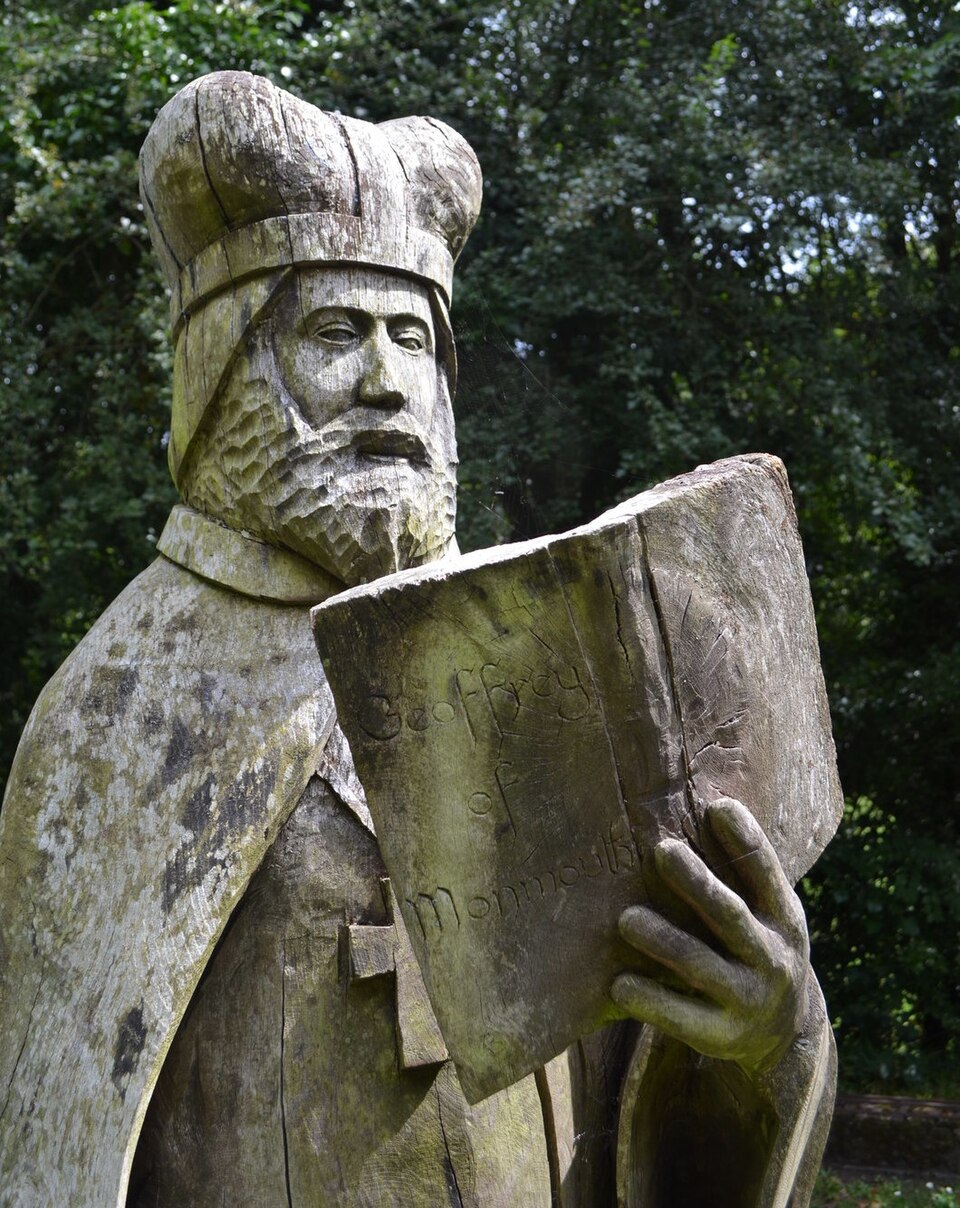
Later writers built on Geoffrey: Chrétien de Troyes added Lancelot and the Grail quest (late 12th century); Thomas Malory’s Le Morte d’Arthur (1485) synthesized the tales into the familiar chivalric epic. These medieval romances are literature, not history—full of anachronisms like plate armor, courtly love, and the Round Table.
Arguments For a Historical Kernel
Some scholars argue Arthur may have roots in reality:
- A Romano-British war leader (perhaps called Artorius or a Celtic name like Arthwys) who coordinated resistance against Anglo-Saxon incursions around 500 AD.
- Possible prototypes: Riothamus (“high king”), a late 5th-century British leader who campaigned in Gaul; Ambrosius Aurelianus (mentioned by Gildas); or even Lucius Artorius Castus, a 2nd-century Roman officer (though chronologically too early).
- Archaeological sites: Tintagel (Cornwall) shows high-status 5th–7th century imports (Mediterranean pottery/glass), suggesting a powerful center—possibly linked to “Camelot.” A 6th-century stone inscribed “Artognou” (possibly a variant of Arthur) was found there.
- The name Arthur became popular in the 6th century among British elites, perhaps inspired by a famous figure.
Historians like Geoffrey Ashe (1980s) proposed Riothamus as a model, and some recent works (e.g., on Athrwys of Gwent) revisit Welsh royal genealogies.
Why the Consensus Rejects a Historical Arthur
Despite these hints, the majority view (Nicholas Higham, 2018; consensus in Wikipedia and academic sources up to 2025–2026) is that Arthur is unhistorical:
- No contemporary records (5th–6th century) mention him. Gildas, a near-contemporary, ignores him entirely.
- Early references (Nennius, Annales) are late, unreliable, and show legendary accretion (e.g., killing 960 men alone).
- No archaeological evidence confirms battles, Camelot, Excalibur, or a unified kingdom under Arthur. Post-Roman Britain shows fragmented chiefdoms, not a centralized monarchy.
- The legend grows exponentially over centuries—mirroring how folklore embellishes real events (e.g., Robin Hood).
- Modern DNA and settlement studies show gradual Anglo-Saxon migration/integration, not the cataclysmic invasion requiring a single savior-hero.
As Nicholas Higham notes in King Arthur: The Making of the Legend (2018), Arthur likely emerged as a folkloric champion to inspire resistance and identity in a fragmented post-Roman world.
Conclusion: Myth More Powerful Than History?
King Arthur probably never existed as the legendary king. He is best understood as a composite figure—perhaps inspired by real warlords like Ambrosius or Riothamus—whose deeds were exaggerated into a national myth during centuries of cultural and political need. The legend’s endurance lies not in historical fact but in its resonance: a symbol of unity, heroism, and lost golden age.
Yet the search continues—new digs at Tintagel or re-evaluated texts keep the question alive. Arthur remains “the once and future king,” more alive in imagination than in archives.
Currently Reading

Historical Challenge: Can You Conquer the Past?
Answer more than 18 questions correctly, and you will win a copy of History Chronicles Magazine Vol 1! Take our interactive history quiz now and put your knowledge to the test!