
 By istorija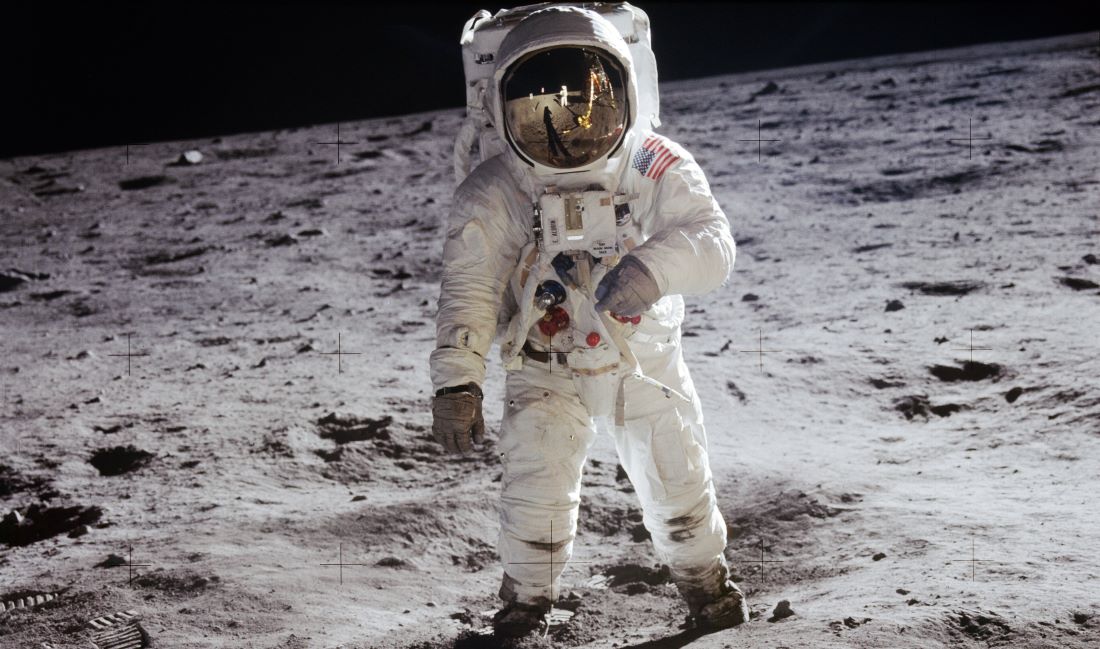
On July 20, 1969, Neil Armstrong stepped onto the lunar surface and uttered the immortal words:
“That’s one small step for man, one giant leap for mankind.”
Buzz Aldrin joined him shortly after, and together they spent about two and a half hours exploring the Sea of Tranquility, collecting samples, setting up experiments, and planting the American flag. The event was watched live by an estimated 650 million people worldwide – the largest television audience in history at the time. Six more Apollo missions followed, with 12 astronauts walking on the Moon between 1969 and 1972.
This remains one of humanity’s greatest engineering and scientific feats: a 400,000-person effort, billions of dollars invested, and technology pushed to its limits during the height of the Cold War space race. Yet, almost from the moment Armstrong’s boot touched the regolith, doubts emerged. By the mid-1970s, fueled by post-Watergate skepticism and books like Bill Kaysing’s We Never Went to the Moon (1976), conspiracy theories exploded. Claims range from the landings being staged in a Hollywood studio (often linked to Stanley Kubrick) to the entire program being a massive government hoax to beat the Soviets.
In this article, we examine the established facts, the most persistent conspiracy claims, and – crucially – the overwhelming evidence that debunks them, including modern orbital imagery from multiple nations and the scientific implausibility of a sustained cover-up.
The Established Facts: What Really Happened
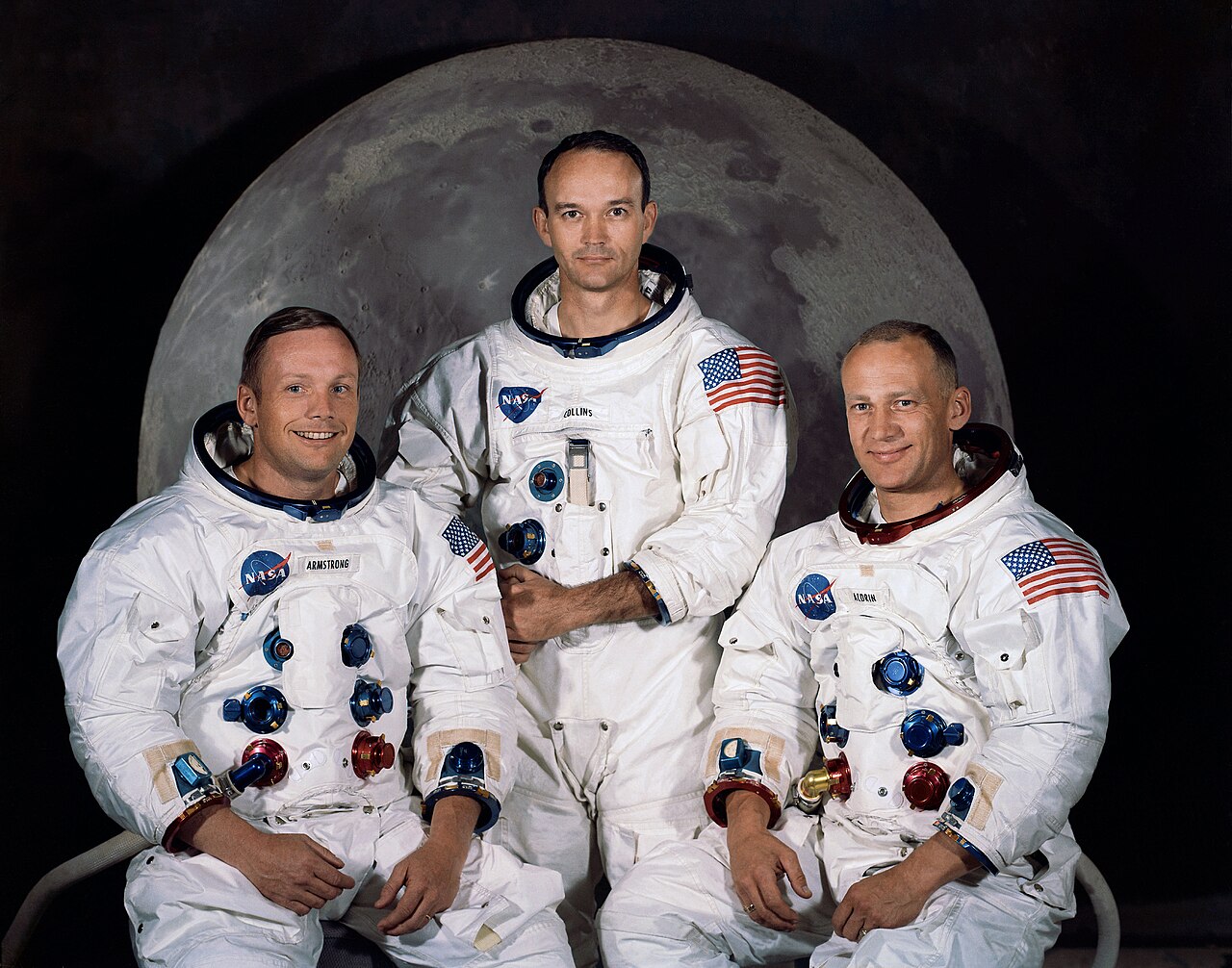
The Apollo program launched 11 crewed missions to the Moon (Apollo 7–17, skipping 13’s landing due to an oxygen tank explosion). Apollo 11 was the first successful landing, followed by Apollos 12, 14, 15, 16, and 17. Key evidence includes:
- 382 kilograms of lunar rock and soil samples, studied by scientists worldwide and confirmed to have unique isotopic signatures, solar wind implantation, and no terrestrial weathering.
- Laser ranging retroreflectors placed by Apollo 11, 14, and 15 (plus Soviet Lunokhod rovers) – still used today by observatories to bounce lasers off the Moon and measure Earth-Moon distance to millimeter precision.
- Thousands of hours of telemetry, photos (over 8,000 from Apollo alone), and 16mm film footage showing phenomena impossible to fake in 1969 (e.g., dust behavior in vacuum/low gravity, hammer-feather drop on Apollo 15).
- Independent tracking by global observatories, including Soviet facilities that monitored the missions in real time.
The missions were not secret – they involved public launches, live broadcasts, and international monitoring.
Major Conspiracy Theories
-
The Van Allen Radiation Belts Would Have Killed the Astronauts One of the most cited arguments: Earth is surrounded by the Van Allen belts – zones of trapped high-energy particles (protons and electrons) held by the magnetic field. Conspiracists claim passing through them would deliver lethal radiation doses.
Debunk: The belts are hazardous for prolonged exposure, but Apollo trajectories were carefully planned. The spacecraft followed a high-inclination path that skimmed the thinner edges, spending only about 1–2 hours total transiting the belts (often less for the most intense regions). Shielding from the spacecraft’s aluminum hull and the short transit time limited exposure to roughly 1–2 rads for the entire round trip – comparable to a few chest X-rays and far below lethal levels (300+ rads in a short period). Actual dosimeter readings from the missions confirm this low exposure. NASA scheduled flights during periods of low solar activity to avoid flares.
-
No Stars in Photos / Waving Flag / Inconsistent Shadows Photos show no stars in the sky, the flag appears to “wave,” and shadows don’t align perfectly – supposedly proof of studio lighting.
Debunk: The lunar surface is brightly lit by direct sunlight with no atmosphere to scatter light, so camera exposures were set for the bright foreground – washing out faint stars (just like daytime photos on Earth). The flag had a horizontal rod to hold it extended; “waving” occurs only when astronauts twist the pole (in vacuum, no air resistance means it moves longer). Shadows appear non-parallel due to uneven terrain, wide-angle lenses, and reflected light from the lunar module and Earth – all reproducible in physics simulations.
-
The Entire Thing Was Filmed in a Studio Claims often point to “anomalies” in footage or allege Kubrick directed it post-2001: A Space Odyssey.
Debunk: Faking six landings with 1960s technology (slow-motion dust arcs, 1/6th gravity physics, vacuum effects) would require effects far beyond what was possible then. Thousands of contractors, scientists, and international observers would have to maintain perfect silence – more implausible than the landings themselves.
-
Other “Proofs” No blast crater under the lunar module, identical backgrounds in “different” locations, etc. – all explained by low thrust in vacuum, wide-angle photography, and regolith properties.
Why These Theories Lack Foundation: Independent Verification from Rivals
The strongest rebuttal comes from non-U.S. sources that had every incentive to expose a hoax during the Cold War:
- The Soviet Union tracked Apollo missions in real time via deep-space facilities (e.g., in Crimea and Ussuriysk). Soviet leaders and cosmonauts (like Alexei Leonov) publicly acknowledged the achievement – the USSR congratulated the U.S. and never claimed a fake, despite having the means (radio interception, telescopes) to detect fraud. If it were staged, the Soviets would have shouted it from the rooftops to humiliate their rival.
- Modern Orbital Imagery from multiple nations confirms the sites:
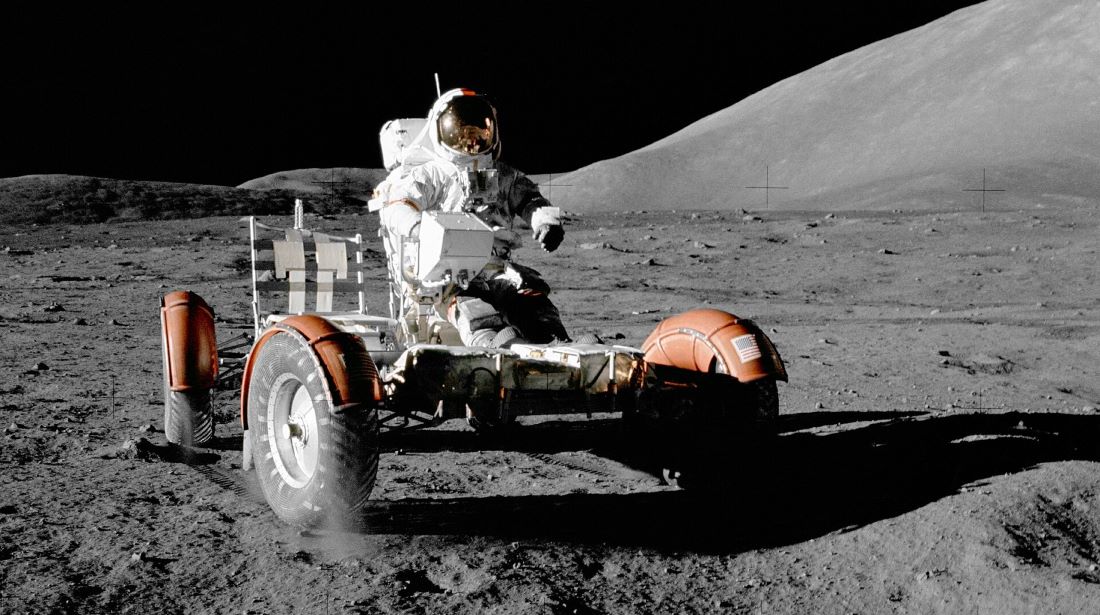
- NASA’s Lunar Reconnaissance Orbiter (LRO) (2009–present) imaged all six Apollo sites in high resolution: descent stages, rover tracks, footprints, discarded equipment, and even the flags (Apollo 11–17 except one).
- India’s Chandrayaan-2 orbiter (2019–present) captured clear overhead views of Apollo 11 and 12 sites, showing landers and surface disturbances.
- China’s Chang’e missions (e.g., Chang’e 2 and later orbiters) and Japan’s Kaguya have photographed or mapped the sites indirectly, with no contradictions.
- These are adversarial or neutral nations (China, India, former USSR allies) – none have claimed the sites are fake.
A hoax would require fooling not just the U.S. public, but the entire global scientific community – including enemies with spy satellites and tracking tech – for over 50 years. That’s logistically impossible without leaks.
What If It Were Faked? The Bigger Picture
Even hypothetically, sustaining such a deception would dwarf the Manhattan Project in secrecy demands – yet no credible whistleblowers have emerged with proof. The scientific legacy (lunar samples, retroreflectors, geological insights) continues to benefit humanity.
The Apollo landings stand as verified history. Conspiracy claims often stem from distrust in institutions rather than evidence. The real story – human ingenuity overcoming immense challenges – is far more inspiring than any hoax narrative.
Currently Reading


Historical Challenge: Can You Conquer the Past?
Answer more than 18 questions correctly, and you will win a copy of History Chronicles Magazine Vol 1! Take our interactive history quiz now and put your knowledge to the test!