
 By istorija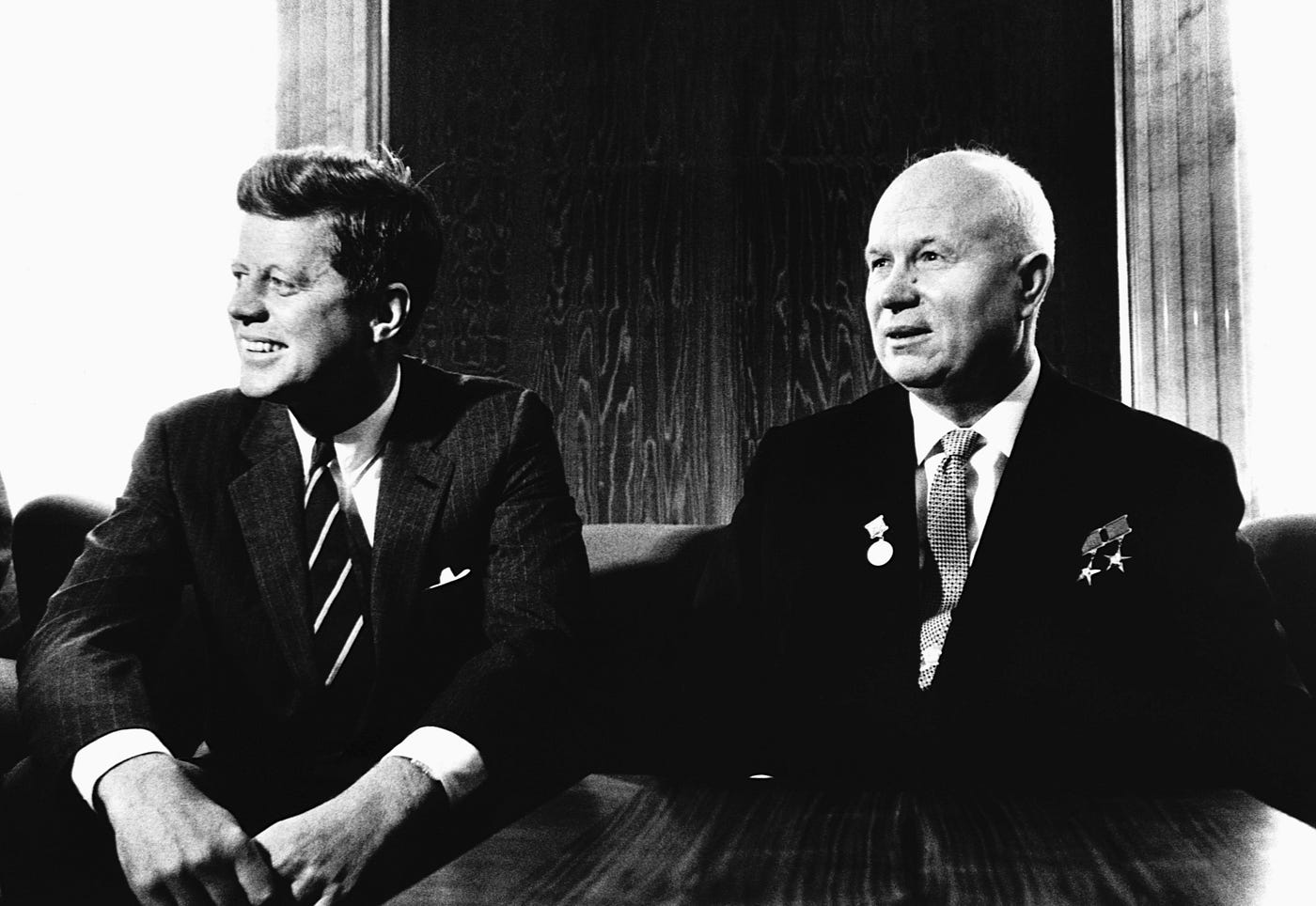
The Cuban Missile Crisis of October 1962 remains the closest the world has ever come to full-scale nuclear war. For thirteen tense days, the United States and the Soviet Union stood on the brink of a conflict that could have killed hundreds of millions of people and fundamentally altered human civilization. For decades, the crisis has been portrayed as a masterful example of Kennedy’s cool-headed diplomacy prevailing over Khrushchev’s recklessness. Newer declassified documents, oral histories, and scholarly research have revealed a far more dangerous and precarious situation than previously understood.
The Road to Confrontation
In the summer of 1962, Soviet Premier Nikita Khrushchev made a secret and extraordinarily risky decision: to deploy medium- and intermediate-range nuclear missiles in Cuba, just 90 miles from the American mainland. The move was intended to protect Fidel Castro’s revolution from another U.S.-backed invasion (after the failed Bay of Pigs in 1961) and to balance the strategic nuclear imbalance favoring the United States.
By mid-October 1962, American U-2 spy planes photographed Soviet missile sites under construction in western Cuba. On October 16, President John F. Kennedy was informed. The United States now faced Soviet nuclear weapons capable of striking most of the continental U.S. within minutes.
The Thirteen Days – Moments of Extreme Danger
The crisis unfolded in phases of escalating tension:
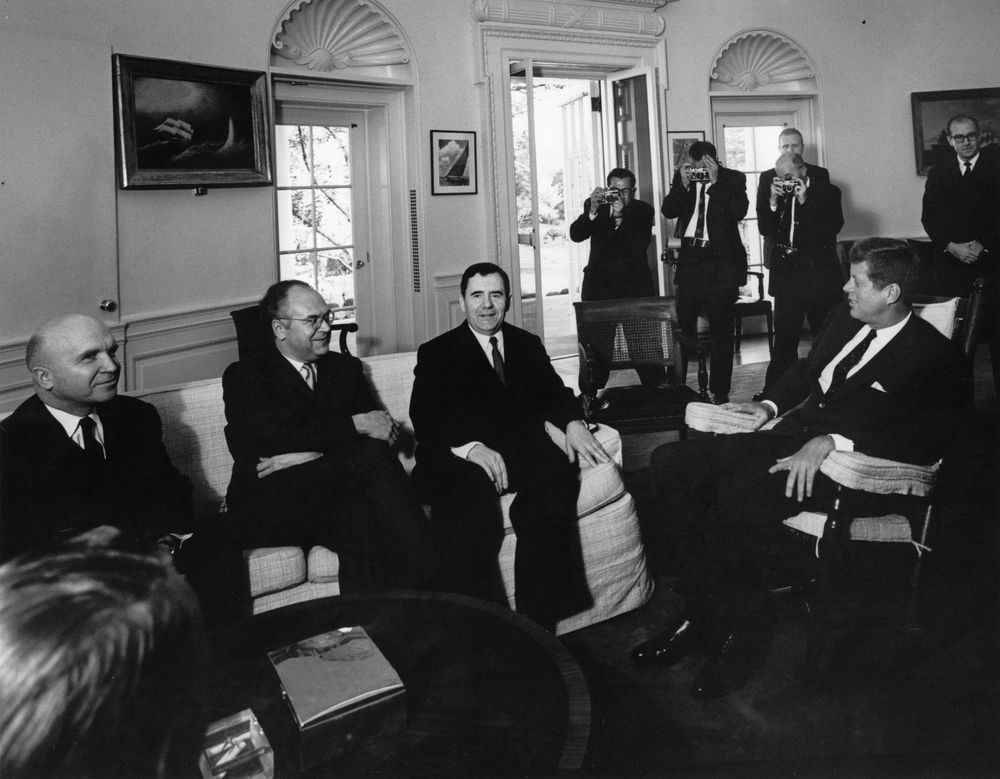
- October 16–22: Kennedy and his advisors (EXCOMM) debated options ranging from diplomatic pressure to surgical airstrikes and full invasion. The military strongly favored an attack.
- October 22: Kennedy announced a naval “quarantine” (a polite term for blockade) of Cuba on national television. The world watched as Soviet ships approached the quarantine line.
- October 24–27: This was the most dangerous period. Several incidents brought the world terrifyingly close to war:
- A Soviet submarine, B-59, was depth-charged by U.S. ships and nearly fired a nuclear torpedo. Only the intervention of Vasily Arkhipov, the second-in-command, prevented a launch that could have triggered nuclear war.
- An American U-2 spy plane was shot down over Cuba on October 27, killing pilot Major Rudolf Anderson. U.S. military leaders pushed hard for retaliation.
- Another U-2 accidentally flew into Soviet airspace over Alaska, nearly causing Soviet fighters to intercept it.
Declassified documents show that on October 27, 1962 — known as “Black Saturday” — many of Kennedy’s advisors believed nuclear war was almost inevitable.
How Close Did We Actually Come?
Recent scholarship and newly released archives paint an even more alarming picture:
- The Soviet forces in Cuba possessed tactical nuclear weapons (short-range missiles and nuclear warheads for cruise missiles) that local commanders were authorized to use in case of a U.S. invasion. Kennedy and his advisors were unaware of this at the time.
- Had the U.S. launched airstrikes or an invasion (both seriously considered), it is highly likely that Soviet forces would have used nuclear weapons in response, triggering a rapid escalation.
- The naval blockade came within minutes of direct confrontation with Soviet submarines armed with nuclear torpedoes.
- Both leaders were under intense domestic pressure. Khrushchev faced hardliners in Moscow, while Kennedy dealt with hawkish generals and political opponents.
Historians such as Michael Dobbs (One Minute to Midnight) and Aleksandr Fursenko & Timothy Naftali (“One Hell of a Gamble”) conclude that the crisis was far more dangerous than the public realized at the time. Some analysts now assess that the probability of nuclear war during those thirteen days was between 30% and 50% — terrifyingly high for an event involving the fate of humanity.
The Resolution and Its Lessons
On October 28, Khrushchev agreed to withdraw the missiles in exchange for a public U.S. pledge not to invade Cuba and a secret agreement to remove American Jupiter missiles from Turkey. The world breathed a collective sigh of relief.
The crisis led to the establishment of the Moscow–Washington hotline and the signing of the Partial Nuclear Test Ban Treaty in 1963. It also instilled in both superpowers a healthy fear of nuclear confrontation that helped maintain stability for the rest of the Cold War.
Final Reflection
We were never just “one button push” away from Armageddon in the Hollywood sense, but we were dangerously close to a chain of events that could have spiraled out of control. The Cuban Missile Crisis stands as a sobering reminder of how quickly rational leaders, operating under incomplete information and intense pressure, can stumble into catastrophe.
The fact that humanity survived 1962 was due to a combination of diplomacy, luck, and individual courage — most notably Vasily Arkhipov’s refusal to authorize a nuclear torpedo launch. It was not inevitable. It was a very near miss.
Currently Reading


Historical Challenge: Can You Conquer the Past?
Answer more than 18 questions correctly, and you will win a copy of History Chronicles Magazine Vol 1! Take our interactive history quiz now and put your knowledge to the test!