
 By istorija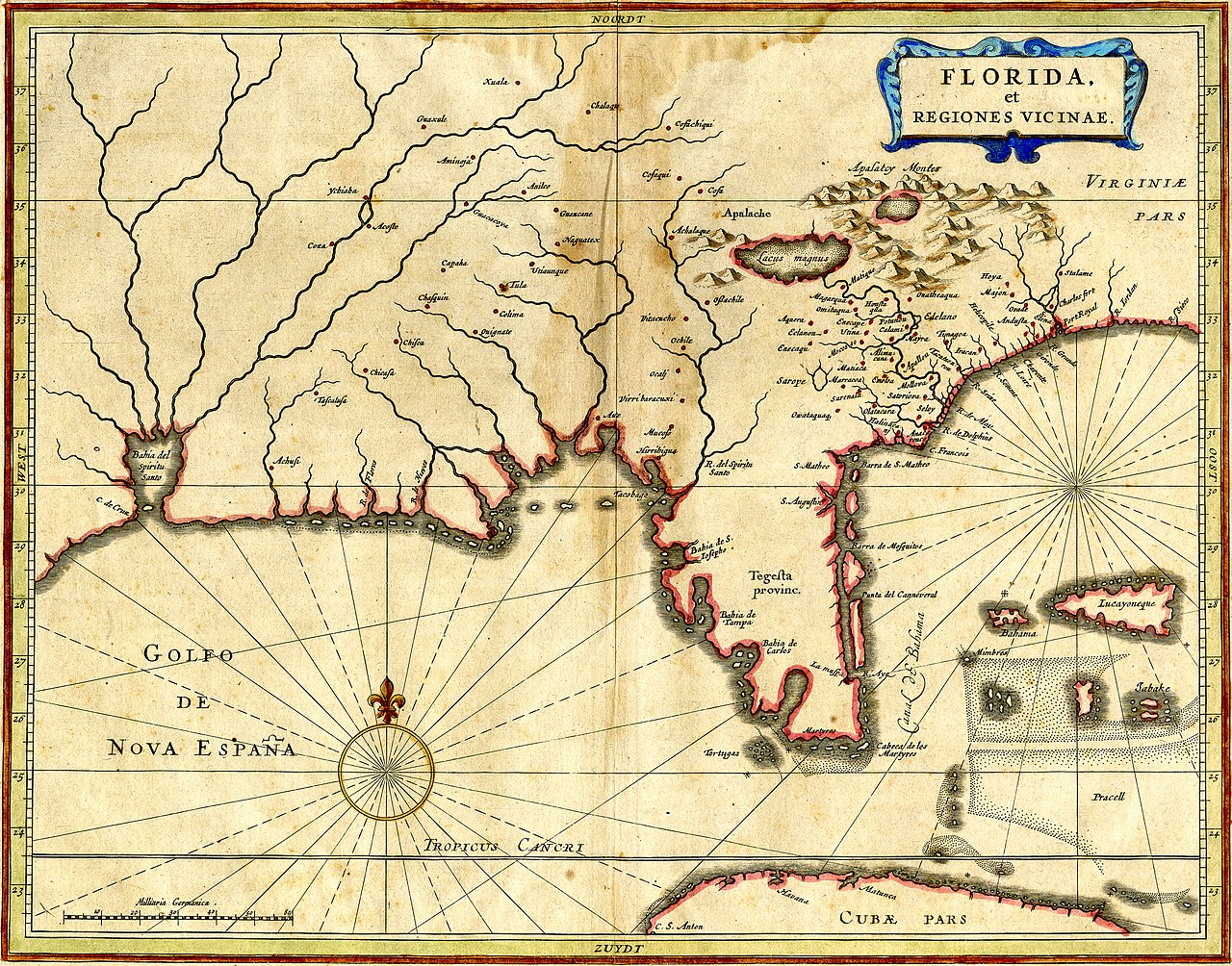
In September 1696, a small group of English Quakers and their companions were shipwrecked off the coast of Spanish Florida. Their leader, Jonathan Dickinson, later published a remarkable firsthand account of what they witnessed in the isolated Spanish outpost of St. Augustine and the surrounding Indian towns. What emerges is a vivid portrait of a struggling colonial frontier, a place marked by hardship, fragile alliances, and quiet resilience.
Arrival in a Struggling Garrison
After their shipwreck, the English survivors were brought to San Agustín (St. Augustine). Dickinson described it as a modest, somewhat run-down settlement of about three-quarters of a mile in length. The houses were scattered, many old and half-inhabited, surrounded by orchards filled with oranges, lemons, figs, and peaches. At the northern end stood a large stone fortification with bastions, though far fewer than the planned fifty-two guns were actually mounted.
The male inhabitants were almost all soldiers, paid by the King of Spain and the Church of Rome. A sentinel earned 150 pieces of eight per year, but supplies from Havana had not arrived for nearly three years. Food, clothing, and basic necessities were in short supply. Only ammunition and salt remained in any abundance.
Meeting the Governor
Upon their arrival, the English were brought before the Spanish governor. He received them with cautious hospitality. Dickinson recorded the governor’s words:
“The Governour offered us the freedom of what his house afforded, withall gave us a Charge to be careful in going abroad, especially of some persons that did not effect our Nation: We promised to be ruled and submit to the Governours pleasure for our Liberty.”
The governor warned them to be wary when moving around town, particularly near those who harbored ill feelings toward the English. Despite the political tension between England and Spain, he extended basic courtesy and protection. The English promised to behave and submit to his rules for their own safety.
Life in the Indian Towns
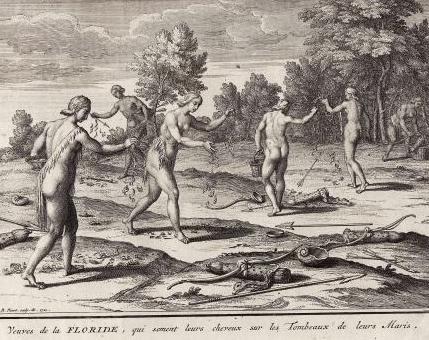
The English were also taken to nearby Native American towns under Spanish influence, such as St. a Cruce and St. Marys. They were lodged in large circular “war houses”, communal structures used for dancing, feasting, and accommodating strangers. Dickinson noted the hospitality they received:
“We had plenty of Casseena drink and such Victualls as the Indians had provided for us… The Women natives of these Towns cloth themselves with the Moss of Trees, making Gowns and Petticoats thereof which at a distance or in the Night look very neat.”
The presence of a friar, a church with bells, and regular attendance at devotion showed the strong missionary influence. Indian boys attended school in the church, with the friar acting as their teacher. The English were struck by the orderliness and kindness they encountered, even in these frontier mission towns.
A Colony on the Edge
Dickinson’s account paints Spanish Florida as a precarious outpost. The long delay in supplies had created genuine hardship. The colony depended heavily on its alliances with local Native tribes, maintained through the mission system. Yet it remained vulnerable to English expansion from Carolina. Within a few years, South Carolina would launch direct attacks on St. Augustine and its surrounding missions, accelerating the decline of Spanish control in the region.
Jonathan Dickinson’s narrative offers a rare English perspective on late 17th-century Spanish Florida, a frontier colony struggling with isolation, shortages, and the constant shadow of rival powers. It reveals a world where European authority was fragile, where survival often depended on careful diplomacy with Indigenous peoples, and where daily life was shaped by both hardship and unexpected acts of kindness.
The account reminds us that history is not only written by victors, but sometimes by shipwrecked strangers who simply recorded what they saw.
Dickinson’s account became a “bestseller” of its time because, in addition to the adventure, it offered a spiritual message of divine providence that saved the Quakers from “savages” and “papists” (as Quakers called Catholics at the time).
Currently Reading
Historical Challenge: Can You Conquer the Past?
Answer more than 18 questions correctly, and you will win a copy of History Chronicles Magazine Vol 1! Take our interactive history quiz now and put your knowledge to the test!