
 By istorija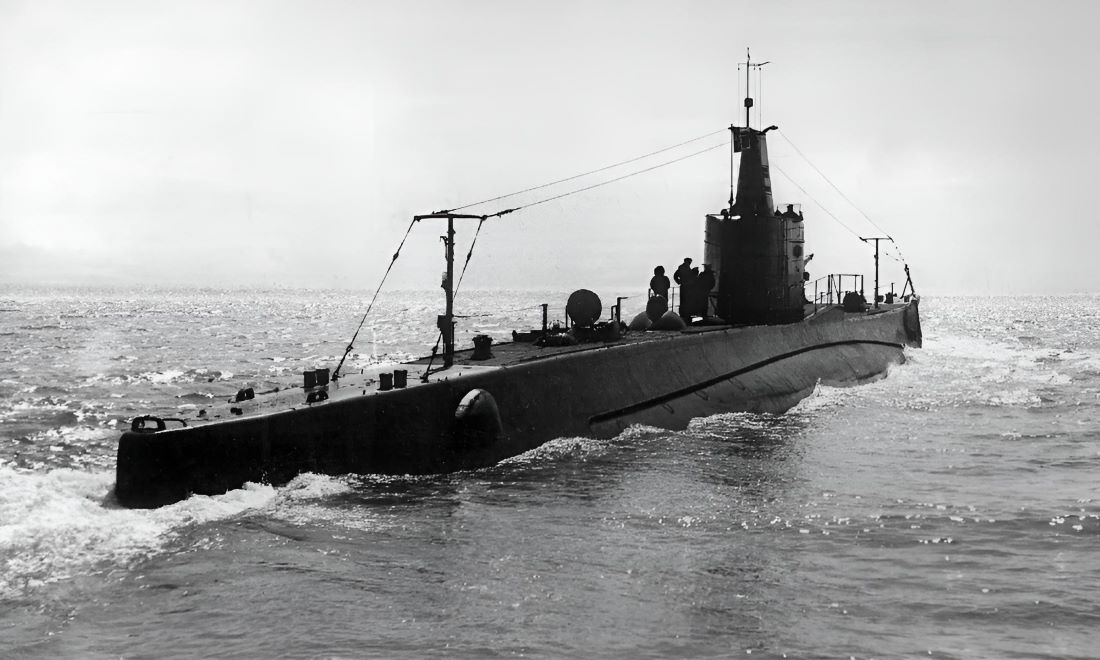
At first glance, the title of this blog might seem odd. After all, Leonardo da Vinci, the famed Italian polymath, lived from 1452 to 1519, while New York City didn’t begin to take shape until much later, with its founding in 1624. How could Leonardo da Vinci, a Renaissance genius, have any connection to an attack on New York? The answer lies in a different Leonardo da Vinci—an Italian submarine named after the famous figure, active during World War II. This submarine, built to serve the Italian Navy, embarked on a daring mission that would one day involve the consideration of a strike on New York City.
The Italian Submarine Leonardo da Vinci: History and Design
The Leonardo da Vinci submarine, launched in 1939, was part of the Regia Marina’s (Italian Navy) extended fleet during World War II. It belonged to the Marconi class, a group of long-range submarines capable of traveling great distances. Named after one of Italy’s most iconic historical figures, the submarine carried significant symbolism as Italy’s naval efforts expanded beyond the Mediterranean into the Atlantic.
Leonardo da Vinci was designed for covert operations and long-range strikes. It quickly became one of the most successful submarines in the Italian fleet, sinking over 120,000 tons of Allied shipping during the war. This success can be attributed to its advanced design and the skill of its crew. Under the command of Carlo Fecia di Cossato, the submarine achieved notoriety for its efficiency and accuracy, cementing its place in history as Italy’s deadliest submarine of the conflict.
Planning the Attack on New York
One of the most audacious missions ever considered by the Italian Navy involved the Leonardo da Vinci preparing for an attack on New York City. During World War II, Italy sought to disrupt Allied shipping and communication lines, and New York, as a hub of American power, was a tantalizing target. The idea was to take the war to American soil, creating chaos and fear through a symbolic strike on one of the most important cities in the world.
The feasibility of such an attack, however, was questionable. Though Leonardo da Vinci had impressive range capabilities, navigating across the Atlantic without detection and launching a successful strike would have required not only superior planning but also extraordinary luck. The logistical challenges, including fuel supply, evading Allied patrols, and ensuring the submarine’s survival after an attack, made the mission highly improbable. Ultimately, while plans were considered, the idea of attacking New York never materialized into action, as the submarine’s resources were directed toward more achievable goals.
The Mysterious Disappearance of Leonardo da Vinci
Despite its initial success, the submarine met a tragic end. In May 1943, Leonardo da Vinci embarked on what would be its final mission. It disappeared without a trace in the Atlantic Ocean, with its exact fate remaining a mystery for some time. Various theories emerged regarding its loss, but it wasn’t until postwar investigations that historians pieced together the most likely scenario.
The British frigate HMS Active and destroyer HMS Ness are believed to have intercepted and destroyed the submarine on May 23, 1943, off the coast of Spain. The exact location of the submarine’s wreckage remains unknown, but the sinking of Leonardo da Vinci marked the end of one of the Italian Navy’s most formidable vessels. Although it never launched its attack on New York, the submarine’s legacy as a significant force during World War II lives on in naval history.
In the end, Leonardo da Vinci was both a symbol of Italian naval ambition and a reminder of the limits of that ambition, as the reality of war ultimately overcame its grander plans.
Currently Reading


Historical Challenge: Can You Conquer the Past?
Answer more than 18 questions correctly, and you will win a copy of History Chronicles Magazine Vol 1! Take our interactive history quiz now and put your knowledge to the test!