
 By istorija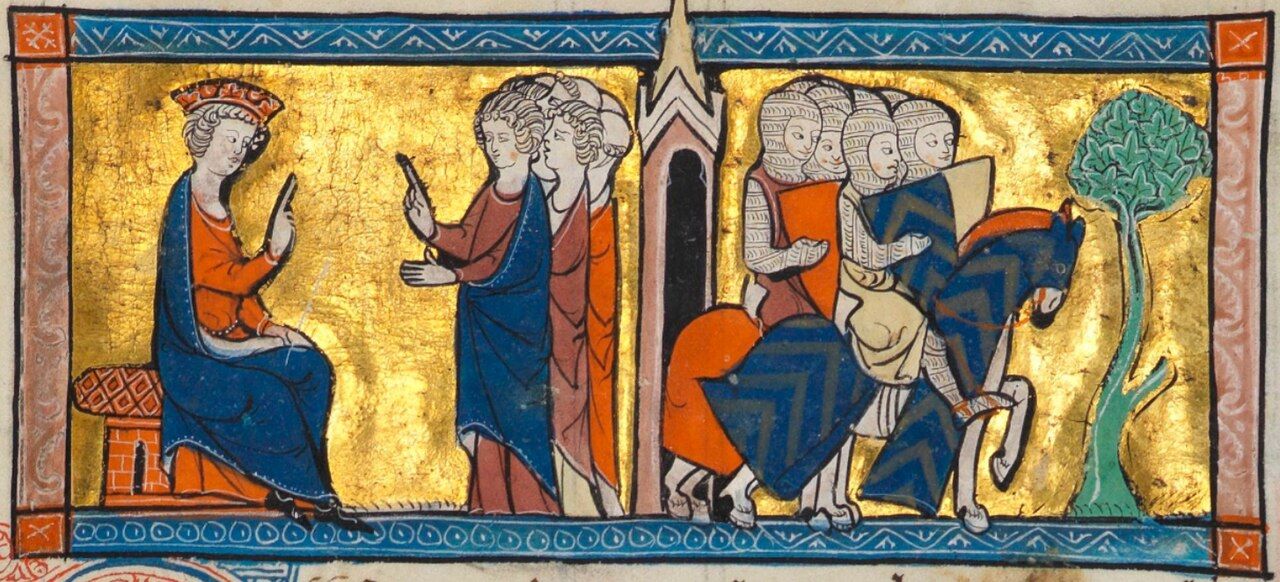
The rise of the Knights Templar was one of the most remarkable developments of the medieval world, transforming a small brotherhood of warrior-monks into one of the most powerful religious and military institutions in Latin Christendom. Their origins lay in the turbulent decades following the First Crusade (1096–1099), when European crusaders captured Jerusalem and established several fragile Christian states in the Levant. Although the conquest created the Kingdom of Jerusalem, the region remained dangerous for pilgrims traveling from the Mediterranean ports to the holy sites. Banditry and raids were common along these routes, particularly on the road between Jaffa and Jerusalem.
The Foundation of the Order and Hugues de Payens
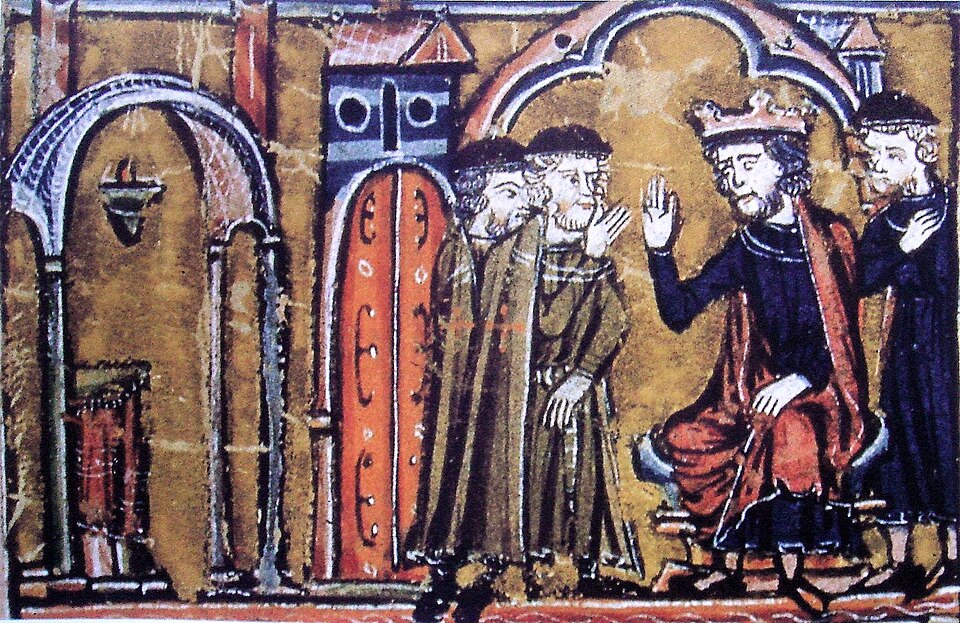
Around 1119, a small group of knights led by Hugues de Payens, a French nobleman from Champagne, founded a new religious brotherhood dedicated to protecting Christian pilgrims. The group initially consisted of only nine knights. They pledged vows of poverty, chastity, and obedience, similar to those taken by monks, but their mission was martial rather than contemplative. King Baldwin II of Jerusalem granted them quarters in a wing of the royal palace on the Temple Mount, believed at the time to be the site of the ancient Temple of Solomon. From this association came their formal name: the Poor Fellow-Soldiers of Christ and of the Temple of Solomon, later shortened to the Knights Templar.
In their earliest years, the order remained small and relatively obscure. The turning point came in the late 1120s, when Hugues de Payens traveled to Europe seeking recognition and support. His efforts coincided with growing enthusiasm for the crusading movement and with the influence of powerful churchmen who saw the value of a permanent military order in the Holy Land. The most important supporter of the Templars was Bernard of Clairvaux, one of the leading spiritual authorities of the twelfth century and a central figure of the Cistercian reform movement. Bernard defended the concept of a monastic military order in his treatise De laude novae militiae (“In Praise of the New Knighthood”), portraying the Templars as a new form of Christian warrior who fought not for personal glory but for the defense of the faith.
Ecclesiastical Recognition and the Rule of the Templars
Formal ecclesiastical recognition came in 1129 at the Council of Troyes in Champagne. At this council, church authorities approved the Templar rule, a set of regulations governing the conduct of the order. The rule combined elements of monastic discipline with the practical needs of a military organization. Members lived communally, observed strict obedience, and renounced personal property, while also maintaining the martial training required for warfare in the Levant.
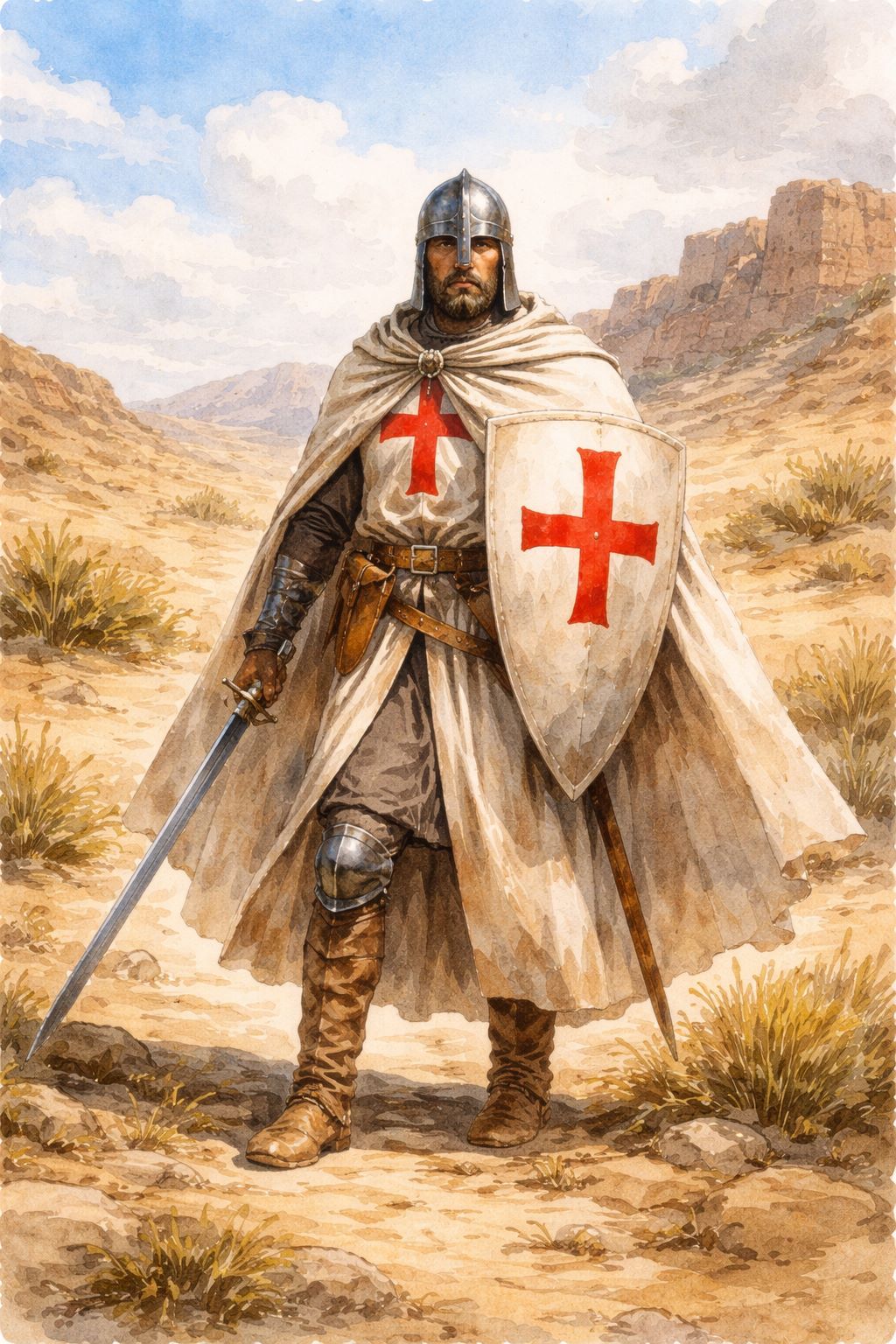
After receiving official recognition, the order expanded rapidly. Donations from European nobles and monarchs allowed the Templars to acquire land, castles, and financial resources across Christendom. Their distinctive white mantle, later marked with a red cross, became a widely recognized symbol of the order. Recruitment spread throughout France, England, the Iberian Peninsula, and the Italian states, while their military presence in the Holy Land grew steadily.
Several early leaders played a decisive role in shaping the order’s development. Hugues de Payens served as the first Grand Master from the foundation of the order until his death around 1136. Under his leadership, the Templars secured both papal and aristocratic patronage. His successor, Robert de Craon, continued this process of institutional consolidation. During Robert’s tenure, the order obtained crucial privileges from the papacy, including exemptions from local episcopal authority. These privileges were later reinforced by papal bulls such as Omne Datum Optimum, issued by Pope Innocent II in 1139, which granted the Templars the right to answer directly to the pope and allowed them to retain spoils captured in battle against non-Christians.
Early Expansion and the Rise of Templar Influence
These privileges significantly strengthened the order’s independence and wealth. By the mid-twelfth century, the Templars had become a major military force in the crusader states. They constructed and maintained a network of formidable fortresses, including strongholds along key frontier regions. Their disciplined cavalry units were often deployed at the most dangerous points of battle, where their reputation for strict discipline and religious devotion made them among the most respected warriors of the crusading armies.
The early decades of the Knights Templar thus witnessed the transformation of a small brotherhood into a powerful transnational institution. Through a combination of religious legitimacy, aristocratic patronage, and military effectiveness, the order established itself as a permanent pillar of the crusading movement. By the middle of the twelfth century, the Templars were no longer merely protectors of pilgrims but one of the most influential military and financial organizations in medieval Europe and the eastern Mediterranean.
Historical Challenge: Can You Conquer the Past?
Answer more than 18 questions correctly, and you will win a copy of History Chronicles Magazine Vol 1! Take our interactive history quiz now and put your knowledge to the test!