
 By istorija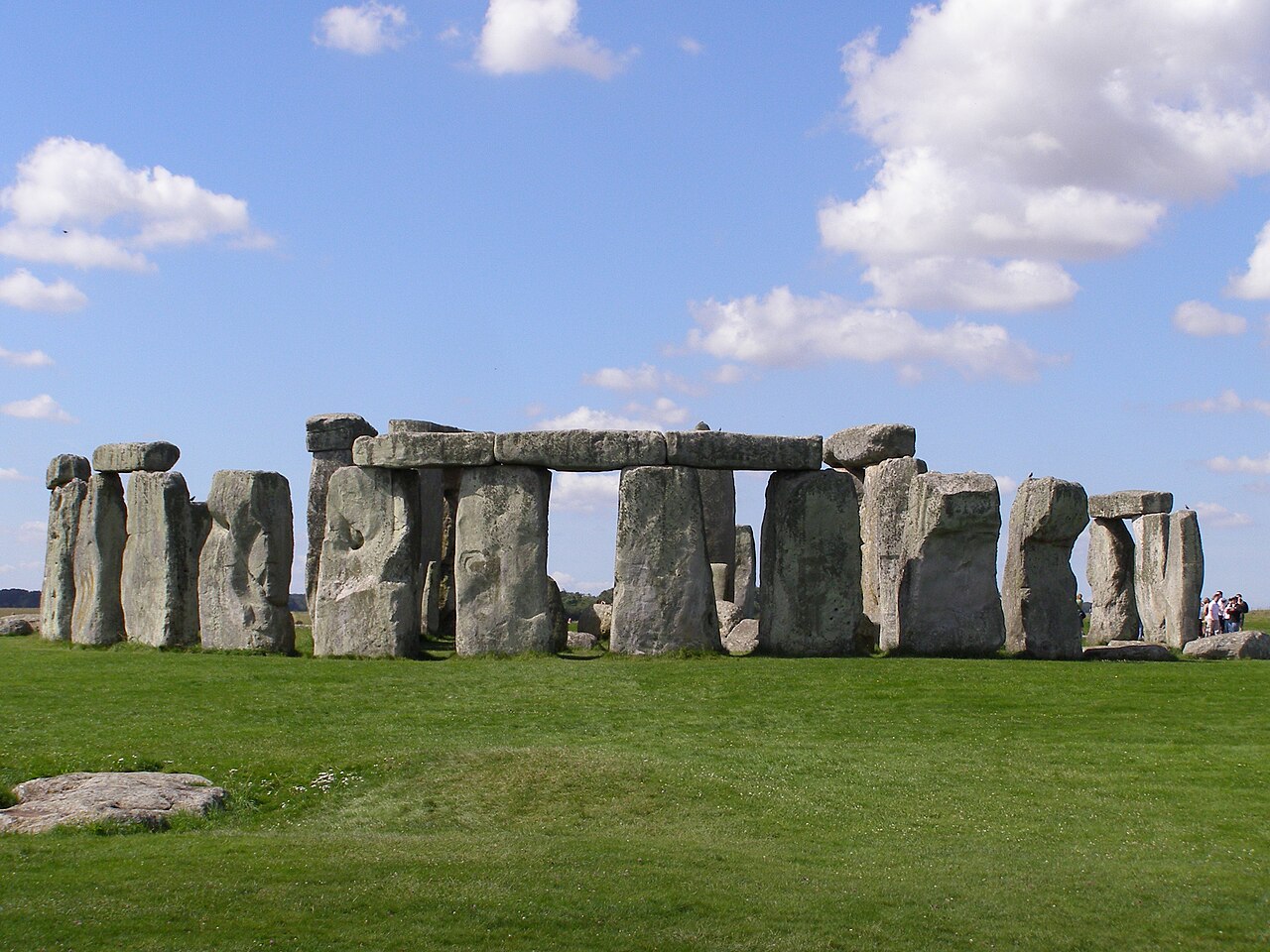
For centuries, when people stood before the towering megaliths of Stonehenge, they asked the same basic question: Who built this? Was it the Druids? The Romans? Merlin the Wizard? Or, as internet conspiracy theories love to claim, visitors from another world?
Today, archaeology has largely answered the “who.” We know it was constructed by sophisticated Neolithic farming communities over 4,500 years ago.
But as the “who” became clearer, a far more mind-boggling mystery emerged—one that modern science is only now beginning to unravel. The true mystery of Stonehenge isn’t who built it.
It’s how and why Neolithic humans transported giant multi-ton stones across hundreds of miles of unforgiving wilderness, crossing rough terrain and treacherous sea channels, long before the invention of the wheel.
Imagine This Journey
Imagine asking a farming community without draft animals, iron tools, or wheeled vehicles to transport a six-ton block of sandstone across the British Isles.
Not six miles.
Not sixty.
Nearly five hundred miles.
You would need to navigate dense primeval forests, swollen rivers, and open ocean currents. You would need to organize teams of hundreds of workers, feed them over months of travel, and ensure the stone survived the journey intact.
Yet the evidence strongly suggests that Neolithic communities achieved exactly that.
The Two Types of Giant Stones
To understand the sheer scale of Stonehenge’s construction, you first have to realize that the monument is not made from a single type of rock. It is an assembly of two entirely different geological materials sourced from radically different locations.
    [ THE MIGHTY SARSENS ]
    Weight: Up to 30 tons each
    Origin: Marlborough Downs (~20 miles / 32 km away)
    Purpose: The iconic outer ring and giant trilithons.

    [ THE MYSTERIOUS BLUESTONES ]
    Weight: 2 to 5 tons each
    Origin: Preseli Hills, Wales (~140 miles / 225 km away)
    Purpose: The smaller inner horseshoe and circle.
Hauling 30-ton Sarsen stones 20 miles across Wiltshire was already an astonishing feat of collective muscle. But moving the smaller “bluestones” over 140 miles from western Wales to southern England was an unprecedented logistical challenge.
The Game-Changer: The Altar Stone Mystery
If moving stones from Wales sounded impressive, recent scientific breakthroughs have completely rewritten the record books.
At the very heart of Stonehenge sits a massive six-ton sandstone block known as the Altar Stone. For over a century, geologists assumed it was just another bluestone brought along from Wales.
They were wrong.
In a landmark study, researchers analyzed the chemical fingerprint—specifically the mineral grains of zircon, apatite, and rutile—within the Altar Stone. The results sent shockwaves through the archaeological community: the Altar Stone did not come from Wales.
Its unique mineral composition matched deposits in the Orcadian Basin of northeastern Scotland—at least 465 miles (750 km) away from Salisbury Plain.
This single discovery strongly suggests that Late Neolithic Britain possessed far more interconnected trade and communication networks than previously recognized. Rather than isolated communities, Britain appears to have shared cultural links spanning the entire island.
Debunking the Myth: Aliens vs. Neolithic Logistics
Whenever history presents a feat that seems impossible, pop culture defaults to lazy explanations: Aliens built it. Lost ancient magic lifted the stones.
The truth, however, is far more compelling. It points to remarkable human determination, social organization, and practical engineering.
    [ PROPOSED TRANSPORT METHODS ]

    Timber Trackways  ===> Wooden rails greased with animal fat to reduce ground friction.
    Sledges & Rollers ===> Heavy timber sledges hauled by organized teams of workers.
    Coastal Seaways   ===> Large skin-hull boats or rafts navigating coastal waters.
To move a 6-ton stone across 465 miles, many researchers believe sea-based transport was the most plausible route. Transporting heavy cargo by water along the eastern coast would have avoided dense inland forests and marshes.
Experimental archaeology has demonstrated that such waterborne transport was physically possible using timber rafts or lashed vessels. While far from easy, it was achievable with Neolithic technology and expert seamanship.
What Most People Get Wrong About Stonehenge
-
❌ “Stonehenge was built all at once in a single massive effort.”
✔ Reality: It was constructed in multiple phases over roughly 1,500 years, starting as a simple earthwork enclosure around 3000 BCE.
-
❌ “Glaciers moved the stones naturally during the Ice Age.”
✔ Reality: Geological evidence shows no glacial striations or mixed debris; mineral patterns confirm the stones were specifically selected and moved by humans.
-
❌ “The Druids built Stonehenge.”
✔ Reality: Stonehenge was largely completed by 1500 BCE—at least a thousand years before Celtic Druids appear in historical records.
Why Did They Do It? Leading Theories
Why would a society spend incredible resources to bring stones from Wales and Scotland to Salisbury Plain when suitable local stone was available much closer?
Because moving stones from hundreds of miles away was a deliberate choice, archaeologists have proposed several key theories to explain the motivation behind it:
Theory A: Symbolic Unification
One influential interpretation suggests that bringing megaliths from Wales, Scotland, and England to a central sanctuary served as a symbolic act of alliance or spiritual unity among distant Neolithic groups.
Theory B: Ancestral and Sacred Landscapes
Many researchers propose that Neolithic peoples viewed certain rocks as carrying sacred power or connection to ancestral homelands. Bringing stones from Wales or Scotland transferred that ancestral presence to the sacred landscape of Salisbury Plain.
Theory C: Astronomical and Seasonal Alignment
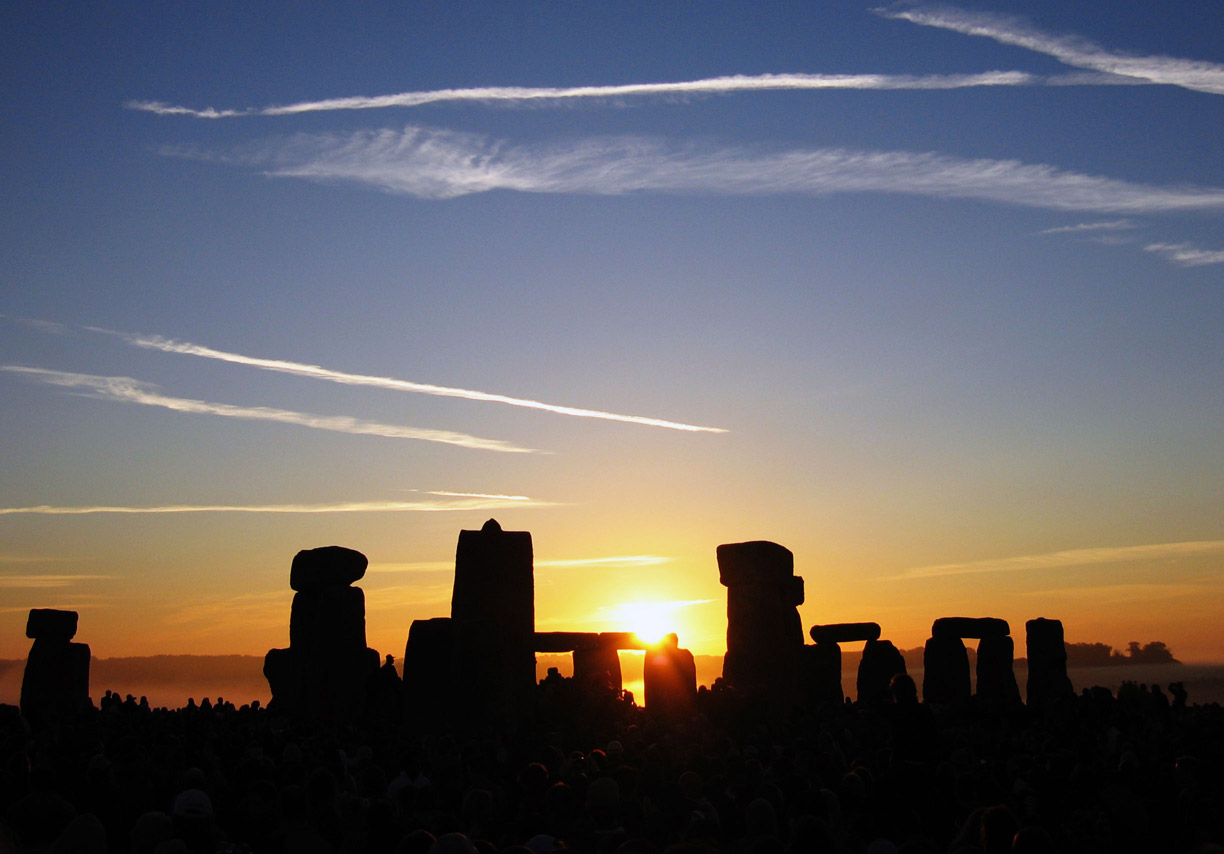
Stonehenge was precisely aligned with the summer solstice sunrise and winter solstice sunset. The site likely functioned as a central ceremonial arena, linking agricultural calendar cycles with sacred ancestral rites.
Frequently Asked Questions (FAQ)
Why didn’t they just use local stone instead?
High-quality sandstone was available much closer to Salisbury Plain, making the decision to bring stones from Wales and Scotland a deliberate, symbolic choice. Researchers believe the specific origins of these distant stones carried deep ancestral, spiritual, or political significance that local stone simply could not provide.
How did scientists trace the Altar Stone to Scotland?
Geologists used mineral isotopic dating (U-Pb zircon analysis). By analyzing the age of tiny mineral grains inside the sandstone, they matched its unique geological age signature directly to Old Red Sandstone formations in northeastern Scotland.
How heavy are the stones at Stonehenge?
The largest Sarsen stones weigh up to 30 tons. The smaller bluestones weigh between 2 and 5 tons, while the Scottish Altar Stone weighs approximately 6 tons.
Could the stones have been moved by Ice Age glaciers?
Current geological evidence makes this highly unlikely. Glacial movement leaves distinct striations and mixed debris patterns. The stones at Stonehenge show clear marks of human shaping and selective geological sourcing.
Conclusion: The True Legacy of Neolithic Britain
The mystery of Stonehenge is no longer about mythical wizards or extraterrestrial forces. The real story revealed by modern science is one of human connectivity.
When we look at Stonehenge today, we are not looking at isolated rocks placed by primitive tribes. We are looking at a monument that reflects remarkable human effort, shared beliefs, and long-distance connections spanning hundreds of miles across Britain.
They didn’t need magic to move mountains. They used organization, engineering, and incredible human willpower.
Currently Reading


Historical Challenge: Can You Conquer the Past?
Answer more than 18 questions correctly, and you will win a copy of History Chronicles Magazine Vol 1! Take our interactive history quiz now and put your knowledge to the test!