
 By istorija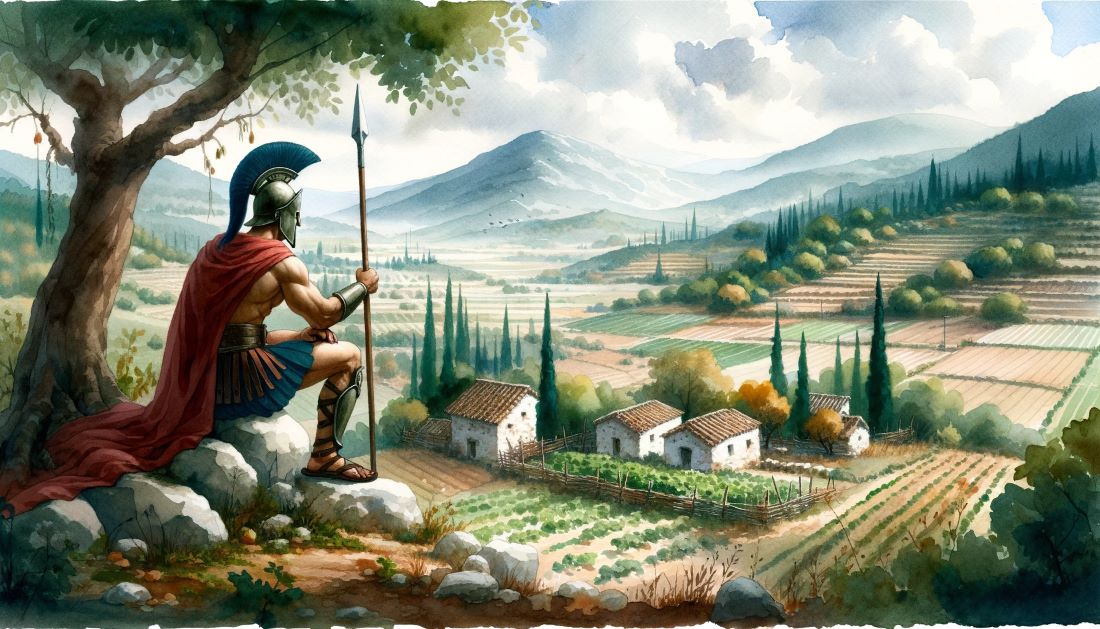
The question “Were the Spartans gay?” frequently appears in online discussions, memes, and even some documentaries, often fueled by the 2006 film 300. The short answer is: no, not in the way the modern term “gay” is understood today. The long answer reveals a far more complex, nuanced, and culturally alien reality of ancient Greek sexuality, masculinity, and military life.
Ancient Greece did not recognize modern sexual categories such as “heterosexual,” “homosexual,” or “bisexual.” Sexual behavior was judged primarily by role (active vs. passive), age difference, and social context, not by the gender of one’s partner. What we today call homosexuality was, in many Greek city-states, institutionalized — but always within strict social rules.
Let’s examine Sparta, Athens, and Thebes using ancient sources and modern scholarship to understand what actually happened.
Sparta: The Most Militarized Society in Greece
Spartan society was uniquely designed for war. From the age of seven, boys were removed from their families and placed in the agoge — a brutal state-run military training system. They lived in barracks, endured harsh discipline, and formed extremely close bonds with their comrades.
- Pederasty in Sparta: There is clear evidence that older warriors formed mentorship relationships with younger boys. These relationships often had an erotic component, but their primary purpose was educational and military. The older man (erastes) was expected to teach the younger (eromenos) courage, loyalty, and combat skills. Xenophon, who lived among Spartans, confirms this practice existed, though he insists it was more about mentorship than physical desire.
- Adult male relationships: Sources suggest that intense, lifelong bonds between adult Spartan warriors were common and socially approved. Plutarch notes that Spartan soldiers fought more fiercely when their lovers were beside them. However, there is no evidence that Spartans identified as “gay” or that exclusive same-sex attraction was the norm. Most men were expected to marry and produce children for the state.
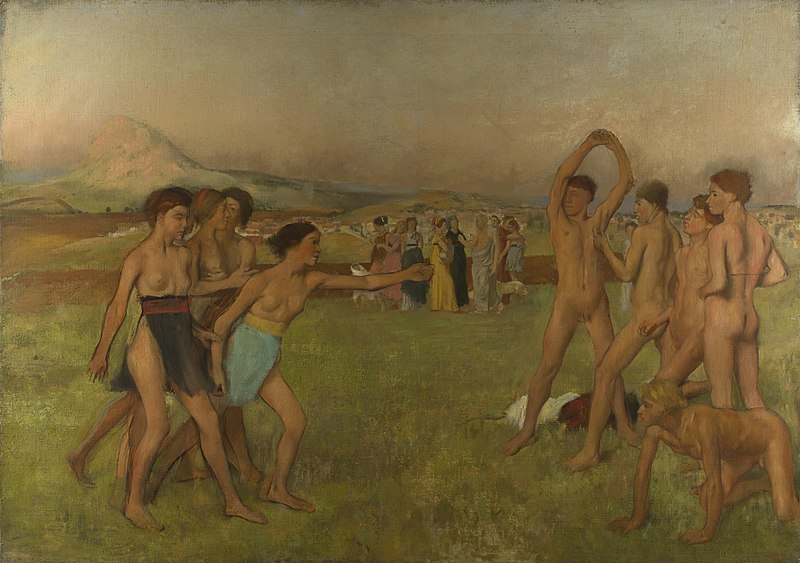
- Spartan women: Unusually for ancient Greece, Spartan women enjoyed significant freedom, physical education, and property rights. This focus on producing strong warriors extended to both sexes.
Spartan sexuality was state-controlled and subordinated to the needs of the military collective. Physical relationships between men were tolerated and sometimes encouraged when they strengthened unit cohesion — but they were never the defining feature of a man’s identity.
Athens: The Intellectual and Cultural Center
Athens offers the richest literary evidence of pederasty. In Plato’s Symposium and Phaedrus, same-sex desire between an older mentor and a younger beloved is presented as a noble path to virtue and philosophical growth.
- Athenian pederasty was highly ritualized and class-based.
- It was generally expected to end when the younger man grew a full beard.
- Adult male-male relationships existed but carried social stigma if one partner took the passive role.
Athenian men were expected to marry women and produce legitimate heirs, while same-sex relationships often existed alongside heterosexual marriage.
Thebes: The Sacred Band – The Most Famous Example
The most striking case is The Sacred Band of Thebes (378–338 BCE) — an elite military unit composed of 150 pairs of male lovers. According to Plutarch, the Thebans believed that men fighting beside their lovers would fight more bravely to protect and impress them. The Sacred Band was undefeated until the Battle of Chaeronea in 338 BCE, where they were annihilated by Philip II of Macedon and his son Alexander the Great.
This unit demonstrates that, in certain Greek city-states, institutionalized same-sex relationships were seen as militarily advantageous. However, even here the relationships followed the older/younger model and served a clear civic purpose.
Key Takeaways – What “Gay” Meant in Ancient Greece
- Ancient Greeks did not have a concept of sexual orientation as an identity.
- Same-sex acts were common, especially in military and educational contexts, but they were usually age-structured (pederasty).
- Exclusive, lifelong same-sex preference (what we call homosexuality today) was rare and sometimes viewed as unusual or excessive.
- Sparta emphasized military utility above all. Sexual relationships between warriors were tolerated when they strengthened the phalanx, but reproduction and state service remained the highest duty.
- Being the passive partner as an adult male was generally considered shameful in most Greek societies.
Modern Misconceptions
Today’s projection of 21st-century labels onto ancient Sparta is anachronistic. Spartans were not “gay” in the modern sense — they were products of a militarized, collectivist society that used every tool, including erotic bonds, to produce the best possible soldiers. Their sexuality was fluid in practice but rigidly subordinated to the needs of the state.
The popular image of Spartans as a “gay army” comes more from modern media and simplified interpretations than from ancient sources.
Conclusion
Spartan warriors did engage in same-sex relationships, particularly in the context of mentorship and military bonding, but these relationships existed within a strict cultural framework that prioritized duty, courage, and the survival of the polis above individual desire. The same can be said, with variations, for Athens and Thebes.
Ancient Greek sexuality was pragmatic, hierarchical, and deeply embedded in social and military structures — nothing like the identity-based understanding we have today.
The real lesson is not whether Spartans were “gay,” but how radically different their worldview was from ours. They did not fight for personal identity or romantic love in the modern sense — they fought for glory, honor, and the survival of their city-state.
Currently Reading
Historical Challenge: Can You Conquer the Past?
Answer more than 18 questions correctly, and you will win a copy of History Chronicles Magazine Vol 1! Take our interactive history quiz now and put your knowledge to the test!