
 By istorija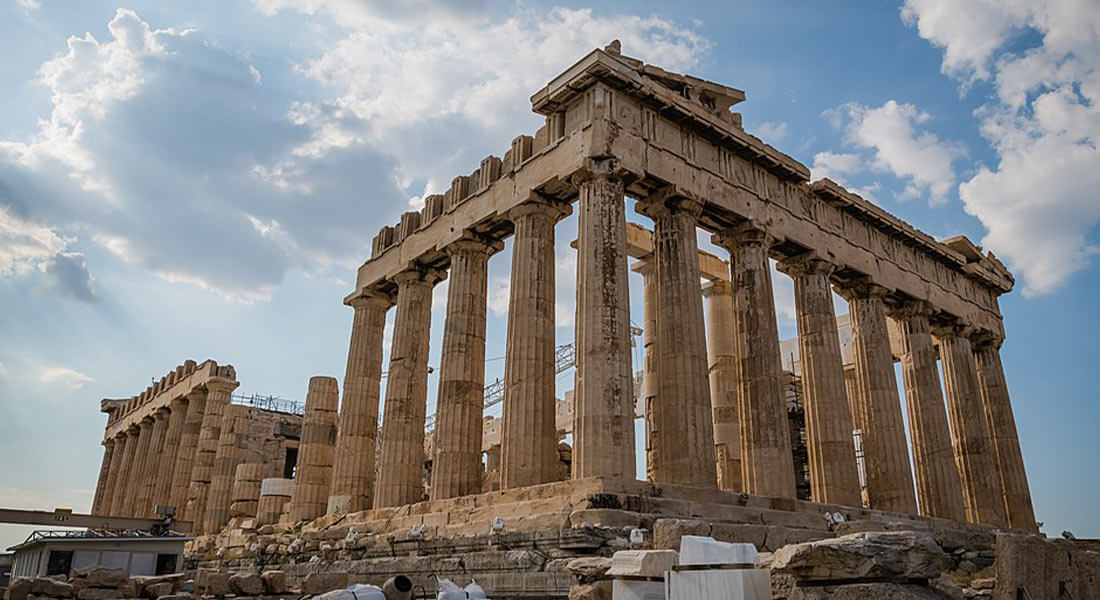
Ancient Greece: Facts Unveiled. Delve into a culture rich in art, democracy, and knowledge, where philosophical minds birthed the foundation of Western thought.
Fact 1: Birthplace of Democracy
Ancient Greece is widely recognized as the birthplace of democracy, a political system in which citizens have the power to govern. This monumental shift in governance began in Athens around 507 B.C., when Cleisthenes, an Athenian statesman, introduced a series of political reforms known as the Constitution of Athens.
Under this democratic system, all citizens had the right to vote in the assembly and serve on juries. However, it’s crucial to remember that not everyone was considered a citizen. Only adult males born from Athenian parents were entitled to this privilege, excluding women, slaves, and foreigners. Despite its limitations, this early form of democracy set the foundation for modern democratic institutions.
Fact 2: Invention of the Olympic Games
The ancient Greeks were the inventors of the Olympic Games, a tradition that continues to the present day. The first recorded Olympic Games took place in 776 B.C. in Olympia, a sanctuary site in the western Peloponnese.

The Games were held every four years, or an Olympiad, which became a unit of time measurement in ancient Greece. Initially, it was a one-day event featuring a single race but gradually expanded to a five-day spectacle with various athletic competitions. The Olympics were not just about sports, they were also a religious festival, dedicated to Zeus, the king of the Greek gods.
Fact 3: Marathon Race Origins
The origin of the marathon race is linked to another historical event in ancient Greece. The term ‘marathon’ comes from the legend of Pheidippides, a Greek soldier who reportedly ran from the town of Marathon to Athens, a distance of about 26 miles (42 kilometers), to deliver the news of a military victory against the Persians in 490 B.C.
After arriving in Athens and delivering his message, Pheidippides collapsed and died from exhaustion. His legendary run is commemorated in the modern marathon race, which has become a standard feature of the Olympics and other international sporting events, with its distance set to mirror that of Pheidippides’ fabled journey.
Fact 4: Exceptional Progress in Arts
Ancient Greece saw exceptional progress in the field of arts, particularly in sculpture, architecture, and pottery. Artists sought to represent the human form in a more naturalistic manner, which resulted in the development of the classical style, characterized by proportion, balance, and idealized beauty.
This era produced notable works such as the Parthenon, a temple dedicated to the goddess Athena, and the statue of Zeus at Olympia, one of the Seven Wonders of the Ancient World. The influence of Greek art extends beyond its time, serving as a significant inspiration for Roman art and later Western art traditions.
Fact 5: The Concept of Theatre
The ancient Greeks are also credited with the development of theatre as an art form. Theatrical performances were a major part of religious festivals, especially the City Dionysia in Athens, where the dramatic competitions were held. The Greeks pioneered the genres of tragedy and comedy, with renowned playwrights such as Sophocles, Euripides, and Aristophanes.
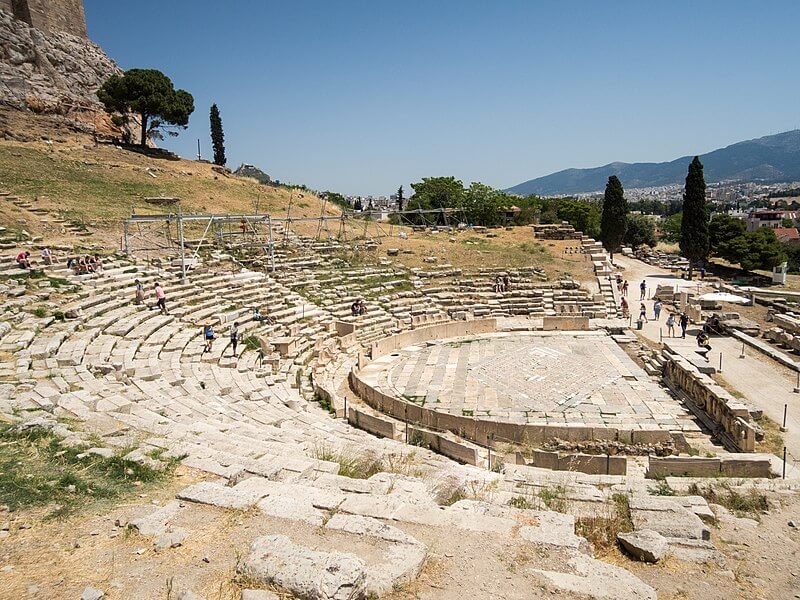
Greek theatre also saw the introduction of theatrical devices such as masks, costumes, and the ‘deus ex machina’ – a plot device where a seemingly unsolvable problem is suddenly resolved. These early theatrical conventions have greatly influenced contemporary theatre and storytelling.
Fact 6: Influential Philosophical Thought
Philosophy flourished in ancient Greece, with thinkers such as Socrates, Plato, and Aristotle laying the groundwork for Western philosophy. Their teachings covered a wide range of subjects, from ethics and politics to metaphysics and aesthetics.
Socrates is known for his Socratic Method, a form of dialogue based on
asking and answering questions to stimulate critical thinking. Plato, a student of Socrates, is celebrated for his philosophical dialogues and his proposition of the Theory of Forms. Aristotle, Plato’s most famous student, made significant contributions to numerous fields and developed a comprehensive system of Western philosophy, which incorporates logic, metaphysics, ethics, and aesthetics.
Fact 7: Development of Historical Writing
History as a systematic and analytical record of the past was first developed in ancient Greece. The historian Herodotus, often called the “Father of History,” began this tradition with his work ‘Histories,’ a detailed account of the Greco-Persian Wars.
However, Herodotus’ approach to history was somewhat holistic, blending factual information with myths and legends. It was Thucydides, another significant Greek historian, who took a more analytical and factual approach to historical writing. His ‘History of the Peloponnesian War’ is still studied today for its detailed and objective account of the conflict between Athens and Sparta. This shift towards analytical history set the groundwork for how history is studied and understood today.
Currently Reading

Historical Challenge: Can You Conquer the Past?
Answer more than 18 questions correctly, and you will win a copy of History Chronicles Magazine Vol 1! Take our interactive history quiz now and put your knowledge to the test!