
 By istorija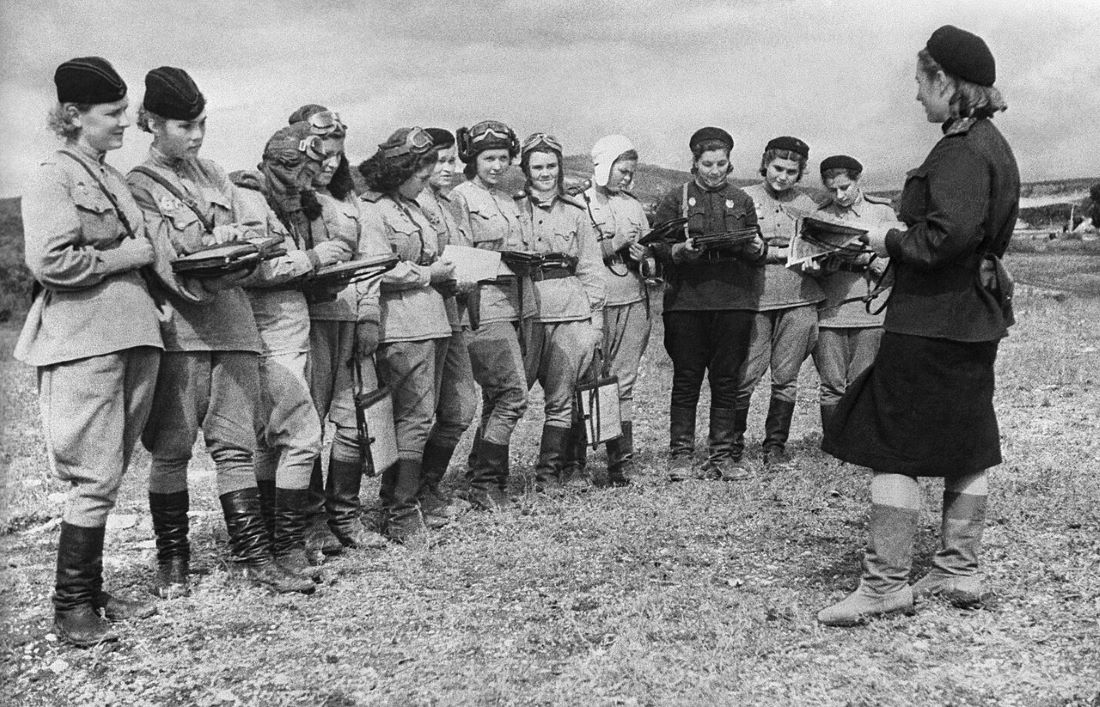
The Great Patriotic War (1941–1945) demanded total mobilization of Soviet society. Unlike most other belligerents, the Soviet Union systematically integrated women into combat roles on a massive scale. More than 800,000 women served in the Red Army, Navy, and partisan units; tens of thousands fought directly on the front lines as snipers, pilots, tank drivers, machine-gunners, artillery crews, sappers, and infantry soldiers. This was not a marginal or symbolic participation: women constituted roughly 8–10% of frontline personnel at different stages of the war and accounted for a significant portion of certain specialized roles (especially snipers and night bombers).
From the official Soviet viewpoint, female combatants embodied the equality promised by socialist ideology, the unbreakable unity of the people, and the absolute necessity of defending the Rodina (Motherland) against fascist invasion. Their heroism was heavily publicized during the war and remained part of state propaganda and education long after 1945.
Mobilization and Official Policy
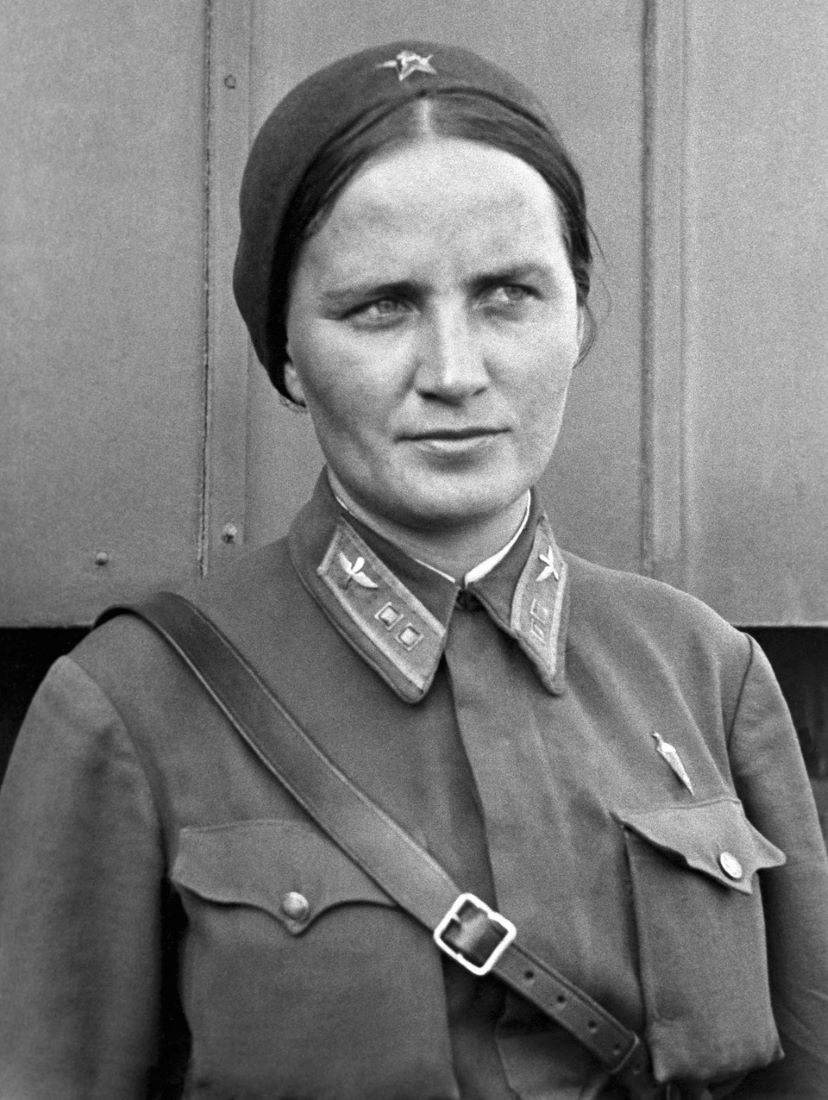
After the German invasion in June 1941, women began volunteering en masse. By spring 1942 the State Defense Committee formalized their recruitment. Three all-female aviation regiments were created under Major Marina Raskova; separate sniper schools were established; and women were accepted into artillery, tank, medical, communications, and engineer units.
The Soviet leadership never presented female combat service as temporary or exceptional in the same way Western Allies often did. Official rhetoric framed it as natural proof of gender equality under socialism: if women could study, work in factories, and hold political office in peacetime, they could—and should—fight to defend socialism in wartime. At the same time, the enormous scale of losses meant that practical necessity overrode any lingering traditionalism.
Women Snipers – The Most Celebrated Marksmen
The Soviet Union trained and deployed more female snipers than any other nation in history. Estimates suggest 2,000–2,500 women completed sniper training; between 500 and 1,000 served at the front for extended periods. Their combined confirmed kills are usually cited in the range of 10,000–12,000 (though exact figures remain debated due to wartime record-keeping and propaganda inflation).
Most famous figures include:
- Lyudmila Pavlichenko (“Lady Death”) – 309 confirmed kills, the most successful female sniper in history. She fought at Odessa, Sevastopol, and around Moscow; toured the United States in 1942 to rally support.
- Roza Shanina – 59 confirmed kills in just 78 days before her death in East Prussia in 1945.
- Aliya Moldagulova and Manshuk Mametova – Kazakh and Kazakh-Nogai heroines killed in action and posthumously awarded Hero of the Soviet Union.
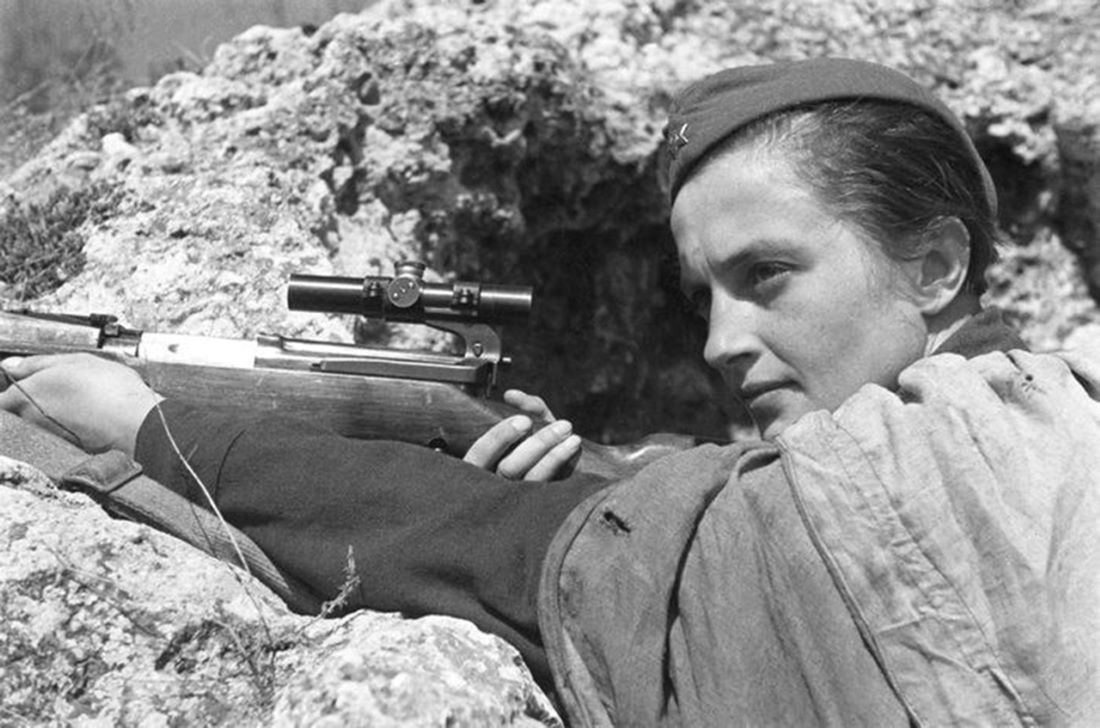
Female snipers were valued for patience, steady nerves, and smaller physical profile (easier to conceal). They operated in pairs (sniper + observer) and often worked from camouflaged positions for days. Their success was heavily propagandized: photographs, interviews, and articles portrayed them as avenging angels of the Motherland.
All-Female Aviation Regiments – The Night Witches and Beyond
Marina Raskova, Hero of the Soviet Union and pre-war record-setting pilot, convinced Stalin to form three women’s aviation regiments in October 1941:
- 588th Night Bomber Regiment (later 46th Guards) – flew Polikarpov Po-2 biplanes on harassment bombing missions at night. Nicknamed “Night Witches” (Nachthexen) by Germans because of their silent approaches and engine cut-offs before bombing. They flew up to 18 sorties per night in wooden biplanes never intended for combat. Commander Yevdokiya Bershanskaya led the regiment throughout the war; 23 members became Heroes of the Soviet Union.
- 587th Bomber Regiment (later 125th Guards) – flew Pe-2 dive bombers on daylight tactical missions. Commander Marina Chechneva and others earned high decorations.
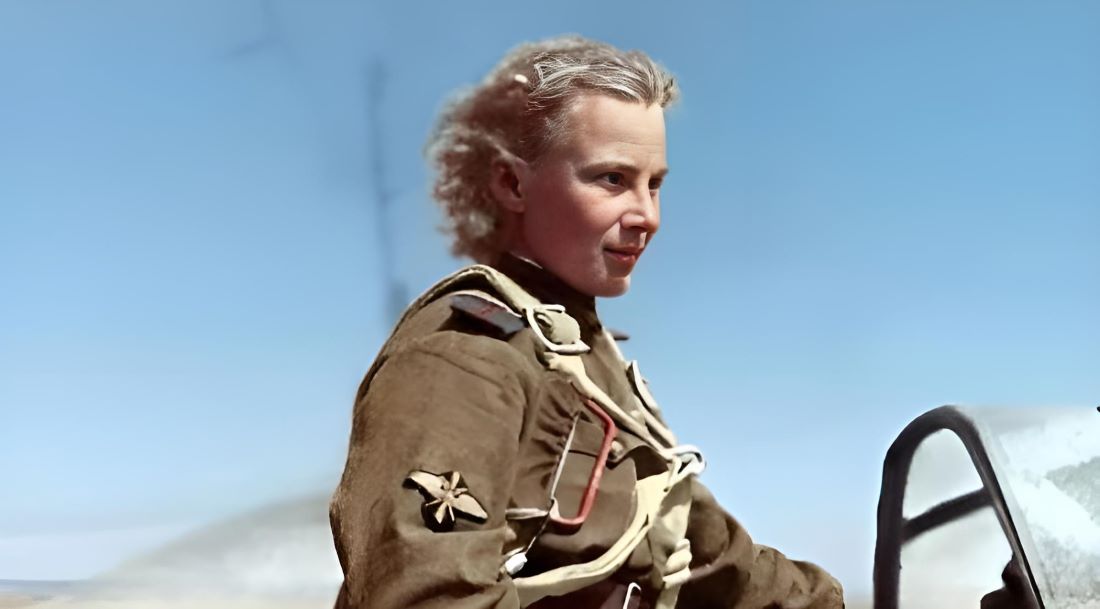
- 586th Fighter Regiment – flew Yak-1/7/9 fighters on air defense and escort duties. Included aces like Lilya Litvyak (11–12 individual + 3–4 shared victories, first woman fighter ace in history) and Katya Budanova (11 victories).
These regiments compiled combat records comparable to or better than many male units, despite flying older or lighter aircraft and facing intense anti-aircraft fire.
Ground Combat Roles – From Machine-Gunners to Tank Drivers
Women served as:
- Machine-gunners and anti-tank rifle operators (anti-tank battalions)
- Tank drivers and turret gunners (notably in Marshal Katukov’s 1st Guards Tank Army)
- Mortar crews, sappers clearing minefields, and flamethrower operators
- Medics who often fought when their units were overrun (many posthumous Hero awards went to field medics)
Partisan units behind German lines frequently included large numbers of women in combat and intelligence roles.
Post-War Treatment and Official Memory
After May 1945 many women were demobilized quickly. The state encouraged return to traditional family roles; some faced stigma for having been at the front (perceived as “unfeminine” or concerns about wartime morality). Official recognition was generous during the war and in the immediate post-war years (over 90 women received the title Hero of the Soviet Union), but in the late Stalin and Khrushchev eras the narrative softened: emphasis shifted toward mothers and rear-area workers.
From the 1960s onward, memoirs, films (The Dawns Here Are Quiet, 1972), and school textbooks revived and romanticized the image of the female warrior. In modern Russia and former Soviet republics, International Women’s Day (March 8) frequently includes tributes to wartime heroines.
Analytical Summary
The massive participation of Soviet women in combat cannot be explained by ideology alone. Extreme losses on the Eastern Front (over 8.5 million military dead) left no choice but to use every available person. Socialist rhetoric provided ideological justification and helped maintain morale, but the primary driver was survival.
Compared with Western Allies, the Soviet case stands out for scale and depth of combat integration rather than symbolic or auxiliary roles. Yet it also reveals contradictions: women were praised as equals in battle but often expected to revert to domesticity afterward; many decorations came posthumously; and post-war society did not translate frontline equality into lasting civilian gains.
The legacy remains powerful: for millions of Soviet citizens raised in the post-war decades, names like Pavlichenko, Litvyak, and the Night Witches symbolized unbreakable resistance and the capacity of women to match or exceed men under the most extreme conditions.
Historical Challenge: Can You Conquer the Past?
Answer more than 18 questions correctly, and you will win a copy of History Chronicles Magazine Vol 1! Take our interactive history quiz now and put your knowledge to the test!