
 By istorija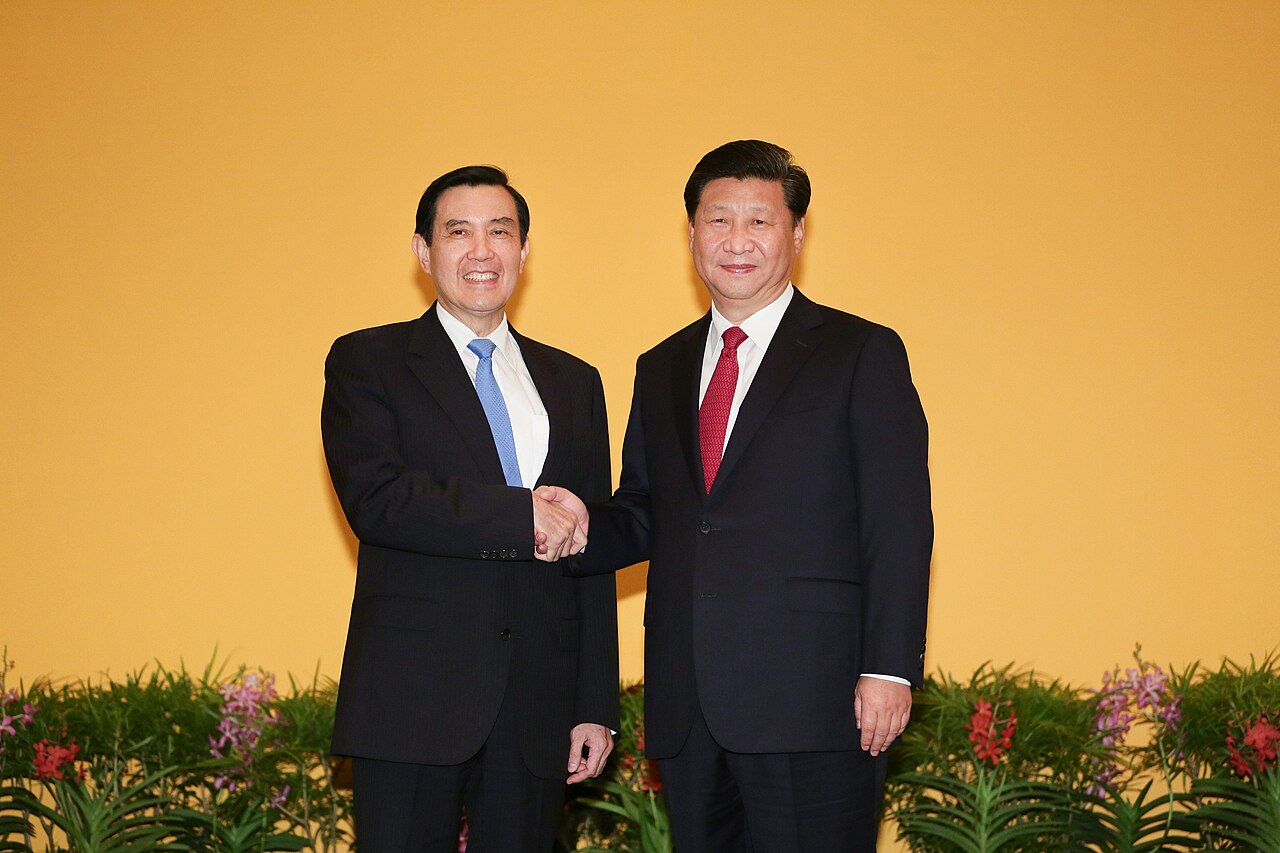
There are not one, but two Chinas in the world today.
One is the People’s Republic of China on the mainland, an authoritarian superpower ruled by the Chinese Communist Party. The other is the Republic of China, better known as Taiwan, a vibrant, democratic society with its own elected government, military, currency, and distinct identity.
This division is not merely geographical or political. It is the living legacy of an unfinished civil war that still shapes Beijing’s deepest fears and strategic goals.
Chiang Kai-shek and the Nationalist Retreat
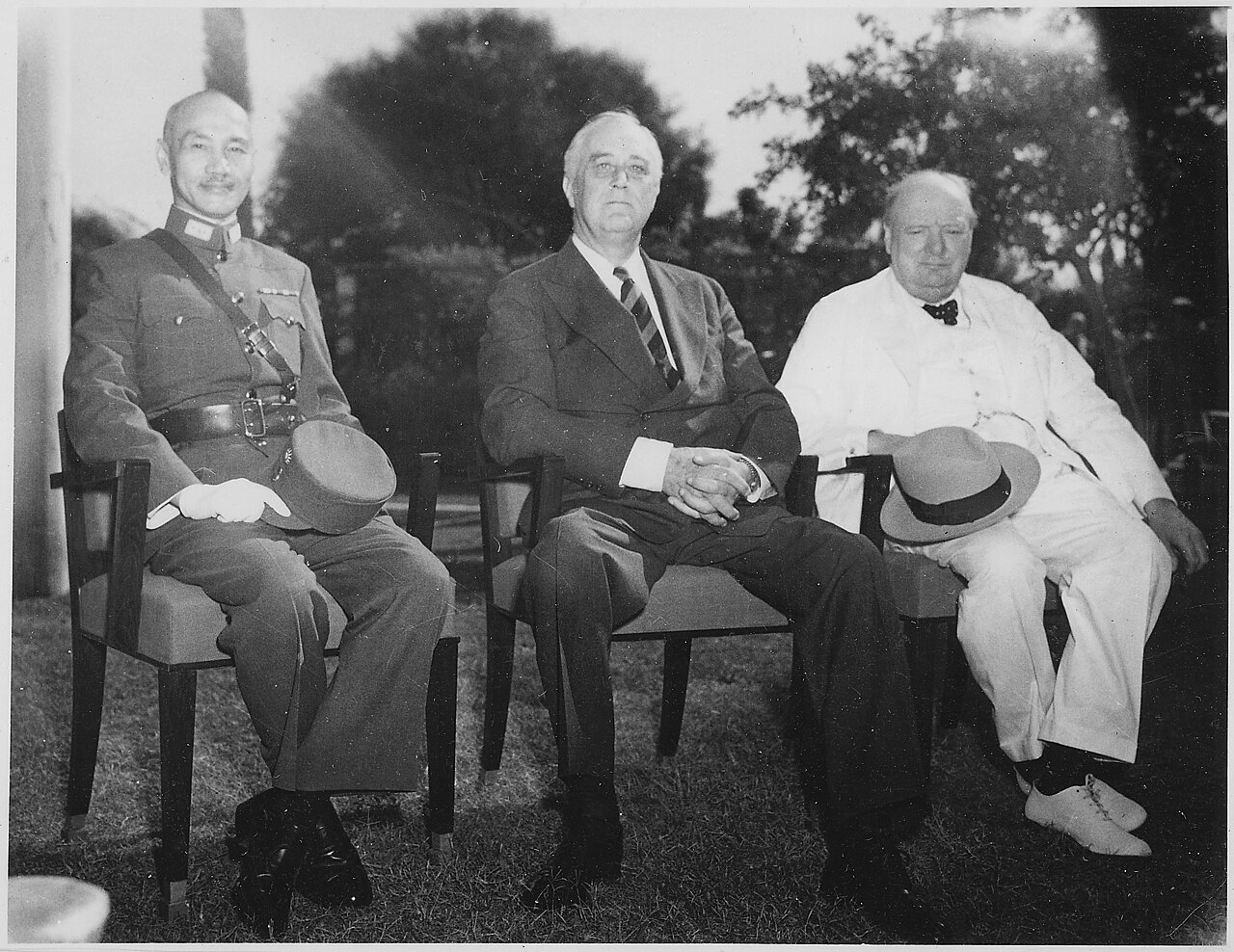
The central figure in this story is Chiang Kai-shek (1887–1975), leader of the Nationalist Party (Kuomintang – KMT). After Sun Yat-sen’s death, Chiang rose to power and led the Nationalists during the Northern Expedition and the long struggle against Japanese invasion.
Following Japan’s defeat in 1945, the Chinese Civil War resumed between the Nationalists and Mao Zedong’s Communists. Despite receiving substantial American aid, the KMT suffered from corruption, hyperinflation, poor morale, and ineffective leadership. In 1949, Mao’s forces achieved a decisive victory.
Chiang Kai-shek, along with approximately two million soldiers, officials, and civilians, retreated to the island of Taiwan. There, he re-established the Republic of China in exile, claiming it remained the legitimate government of all China. For decades, many Western countries, including the United States, continued to recognize Taipei rather than Beijing.
Why Beijing Still Claims Taiwan as Its Own
From the Chinese Communist Party’s perspective, Taiwan is not a separate countr, it is a breakaway province that must eventually be “reunified,” by force if necessary. This position stems from several deep historical and ideological reasons:
- The CCP views the Chinese Civil War as unfinished. In their official narrative, the Nationalists were corrupt reactionaries backed by Western imperialists. The Communist victory in 1949 completed the revolution. Allowing Taiwan to remain independent would be an unacceptable humiliation.
- Nationalism and territorial integrity are core pillars of the Party’s legitimacy. The CCP presents itself as the force that ended China’s “Century of Humiliation.” Losing Taiwan would undermine that claim.
- Strategic value: Taiwan sits on critical sea lanes and represents a potential military outpost right off China’s coast. Controlling it would greatly expand Beijing’s power in the Western Pacific.
Counter-Revolution as the Ultimate Threat
The Chinese Communist Party’s greatest fear has always been counter-revolution, any force that could reverse the victory of 1949 and restore a different political system.
This fear is not abstract. It is rooted in the trauma of the Civil War and constantly reinforced by Party propaganda. In Beijing’s eyes:
- Democracy, liberalism, and separatism are not legitimate political ideas, they are existential threats.
- Taiwan’s existence as a prosperous, democratic Chinese society is particularly dangerous because it proves that Chinese people can thrive under a system different from the CCP model.
- Any successful democratic transition on the mainland would be seen as the ultimate counter-revolution.
That is why Beijing reacts so aggressively to any move by Taiwan toward formal independence or greater international recognition. The issue is not only about territory it is about the survival and legitimacy of the Communist Party itself.
The Stark Contrast Today
The difference between the two Chinas could hardly be greater:
- The People’s Republic of China has become an authoritarian superpower with advanced technology, a powerful military, and strict social control.
- Taiwan has successfully transitioned from authoritarian rule to a full democracy, with one of the highest standards of living in Asia and a world-leading semiconductor industry.
For the Chinese Communist Party, a democratic and prosperous Taiwan serves as a living refutation of its claim that its system is the only possible path for the Chinese people. This makes Taiwan not just a territorial dispute, but an ideological and existential challenge.
Conclusion
The story of the two Chinas is the story of an unresolved civil war. Chiang Kai-shek lost the mainland but preserved an alternative Chinese future on Taiwan. The Communist Party won the mainland but has never been able to erase the existence of that alternative.
As long as a free and democratic Taiwan exists, it stands as a powerful reminder that Chinese civilization is not destined to be defined by one-party rule. That is why Beijing continues to view Taiwan as its most sensitive core interest and counter-revolution as its ultimate enemy.
Understanding this historical wound is essential to understanding why the Taiwan question remains one of the most dangerous flashpoints in the world today.
Historical Challenge: Can You Conquer the Past?
Answer more than 18 questions correctly, and you will win a copy of History Chronicles Magazine Vol 1! Take our interactive history quiz now and put your knowledge to the test!