
 By istorija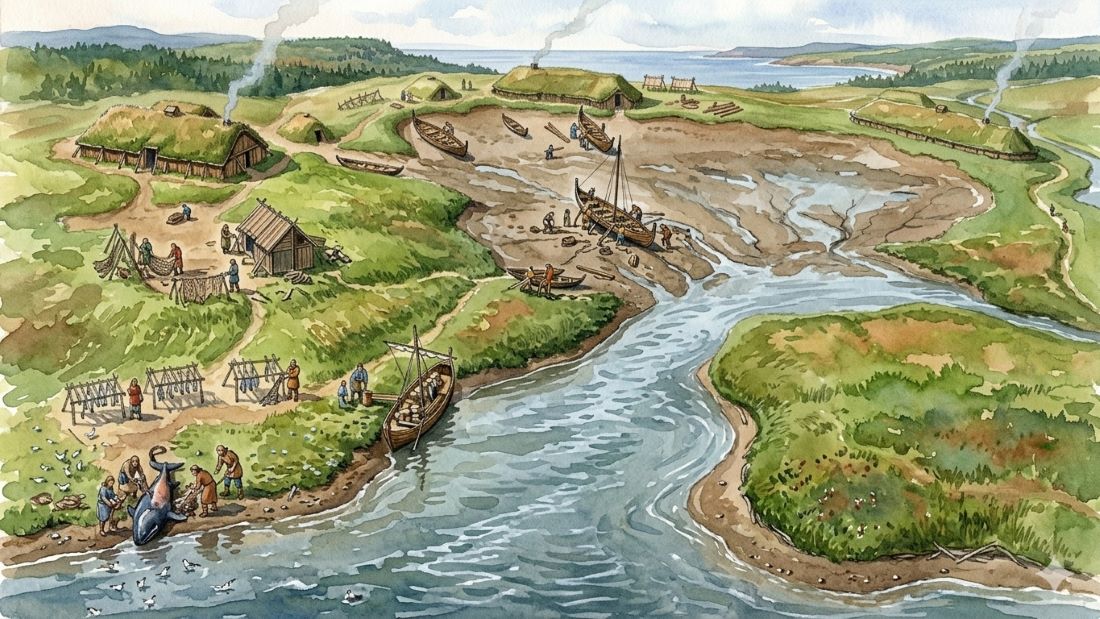
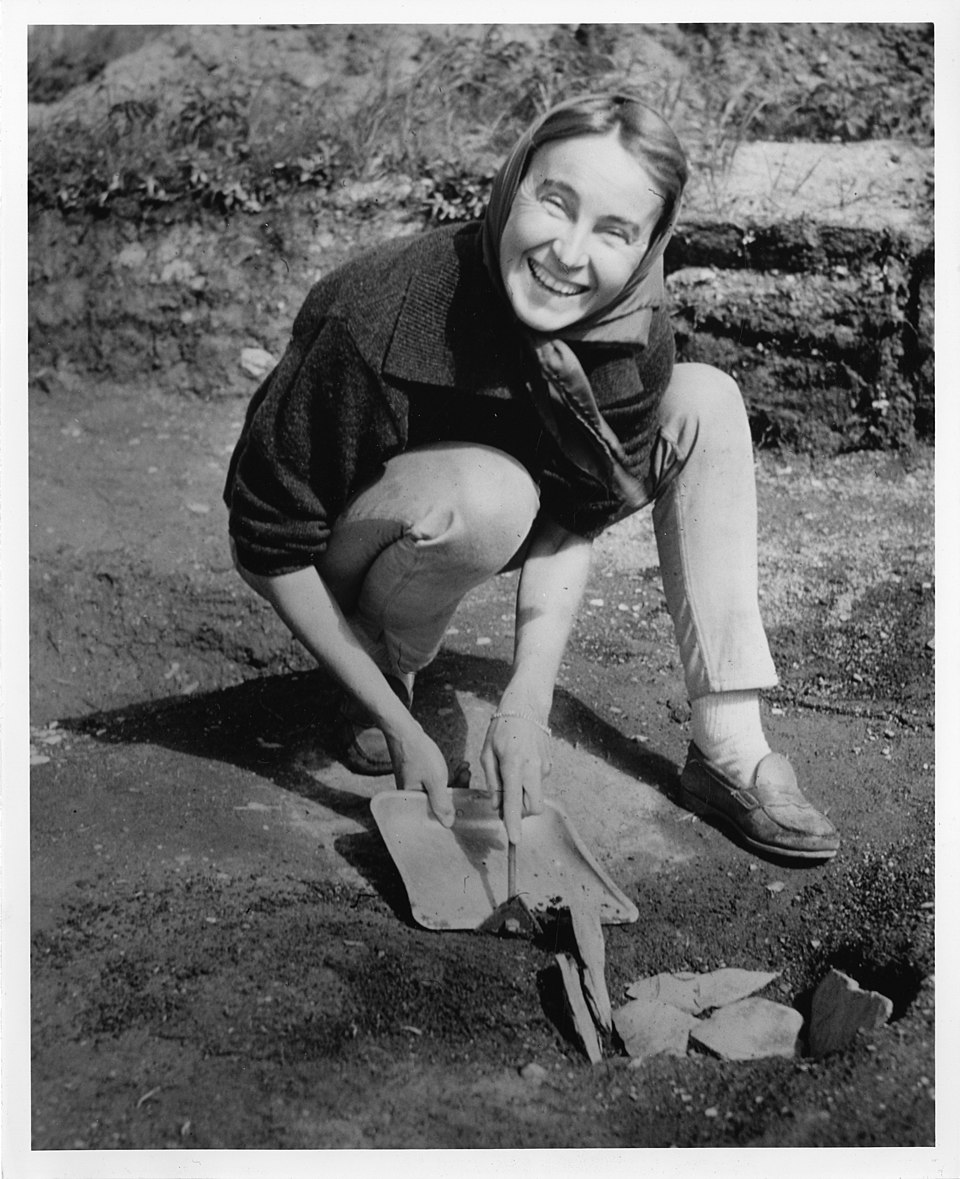
For centuries, the Norse sagas told of a land called Vinland — a place west of Greenland where wild grapes grew, salmon filled the rivers, and the Norse established a short-lived settlement. Most historians treated these stories as legend or exaggeration. Then, in the 1960s, Norwegian explorer Helge Ingstad and his archaeologist wife Anne Stine Ingstad made one of the most important discoveries in North American history: the physical remains of a Viking settlement at L’Anse aux Meadows on the northern tip of Newfoundland.
This is the only confirmed Norse archaeological site in the Americas. Thanks to groundbreaking new research published between 2021 and 2025, we now know exactly when the Norse were there — and what they were doing. The story is no longer vague legend. It is precise, evidence-based history.
The Sagas: What the Norse Themselves Said
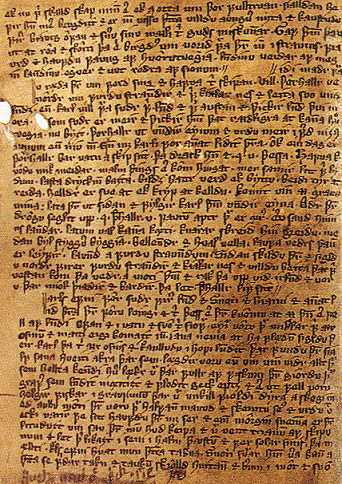
Two Icelandic sagas, written down in the 13th century but based on much older oral traditions, describe the voyages:
- Saga of the Greenlanders and Saga of Erik the Red tell of Leif Erikson (son of Erik the Red) sailing west from Greenland around the year 1000.
- They describe three lands: Helluland (flat stone land), Markland (forest land), and Vinland (wine land or pasture land).
- The sagas mention temporary settlements, contact with Indigenous peoples (called Skrælings), and at least one winter camp where the first European child born in the Americas — Snorri — was born to Thorfinn Karlsefni and Gudrid.
For decades these accounts were treated as semi-mythical. Archaeology changed that forever.
The Discovery of L’Anse aux Meadows
In 1960, the Ingstads identified turf-walled structures, iron-working slag, and Norse-style artifacts at L’Anse aux Meadows. Excavations in the 1960s and 1970s revealed eight buildings: three large halls, four smaller huts, and a workshop. The layout matched Norse settlements in Greenland and Iceland.
The site was not a full colony. It was a base camp used for exploration, boat repair, and iron production. Butternuts (a North American species that does not grow in Newfoundland) and a butternut burl cut with metal tools proved that the Norse traveled further south — possibly as far as the Gulf of St. Lawrence or even New Brunswick.
The Breakthrough: Exact Dating to 1021 CE
For years the site could only be dated roughly to “around 1000 CE” using conventional radiocarbon methods. That changed dramatically in 2021.
A team led by Michael Dee and Margot Kuitems at the University of Groningen used a revolutionary new technique based on the 993–994 CE Miyake event — a massive solar storm that caused a global spike in atmospheric radiocarbon (¹⁴C). This cosmic-ray event left a precise marker in tree rings worldwide.
They analysed three pieces of wood from L’Anse aux Meadows that had been cut with metal tools (clearly Norse work, not Indigenous). All three showed the 993 CE radiocarbon spike exactly 28 rings from the bark edge. This means the trees were felled in 1021 CE — exactly 1,000 years ago.
The study, published in Nature (2021), provided the first secure calendar date for any European presence in the Americas before Columbus. Subsequent research (2023–2025) has reinforced this date and suggested the site may have been used intermittently for several decades, possibly into the early 11th century.
What Life Was Like at the Settlement
L’Anse aux Meadows was a small, seasonal outpost, not a permanent village:
- The Norse built turf-and-timber halls similar to those in Greenland.
- They produced iron from local bog ore — the only evidence of iron smelting in pre-Columbian North America.
- They repaired boats and worked wood.
- They hunted, fished, and gathered wild resources.
- Contact with Indigenous peoples (Dorset and early Beothuk cultures) appears to have been limited and probably tense, though direct evidence of conflict is scarce.
The settlement was used as a launching point for further exploration southward, as proven by the butternuts.
Why Vinland Was Abandoned
The Norse presence in North America was brief and experimental. Possible reasons for abandonment include:
- Hostile relations with Indigenous groups.
- Harsh climate and short growing seasons.
- Distance from Greenland and Iceland made resupply difficult.
- Internal political problems back home in Scandinavia.
By the mid-11th century, the outpost was no longer used. The Norse never returned in significant numbers, and knowledge of Vinland faded into saga literature.
Significance Today
L’Anse aux Meadows proves that Europeans reached North America nearly 500 years before Columbus. It is the earliest confirmed transatlantic crossing and the only verified Norse settlement in the Americas. The 2021 dating breakthrough has made the site one of the most precisely dated archaeological locations in the world.
Ongoing research using satellite imagery, advanced soil analysis, and new excavations continues to search for additional Norse activity along the coasts of Newfoundland and Labrador. The story of Vinland is still being written.
The discovery at L’Anse aux Meadows reminds us that history is never settled. Sometimes a single archaeological site and a clever scientific method can rewrite what we thought we knew about the past.
Historical Challenge: Can You Conquer the Past?
Answer more than 18 questions correctly, and you will win a copy of History Chronicles Magazine Vol 1! Take our interactive history quiz now and put your knowledge to the test!