
 By istorija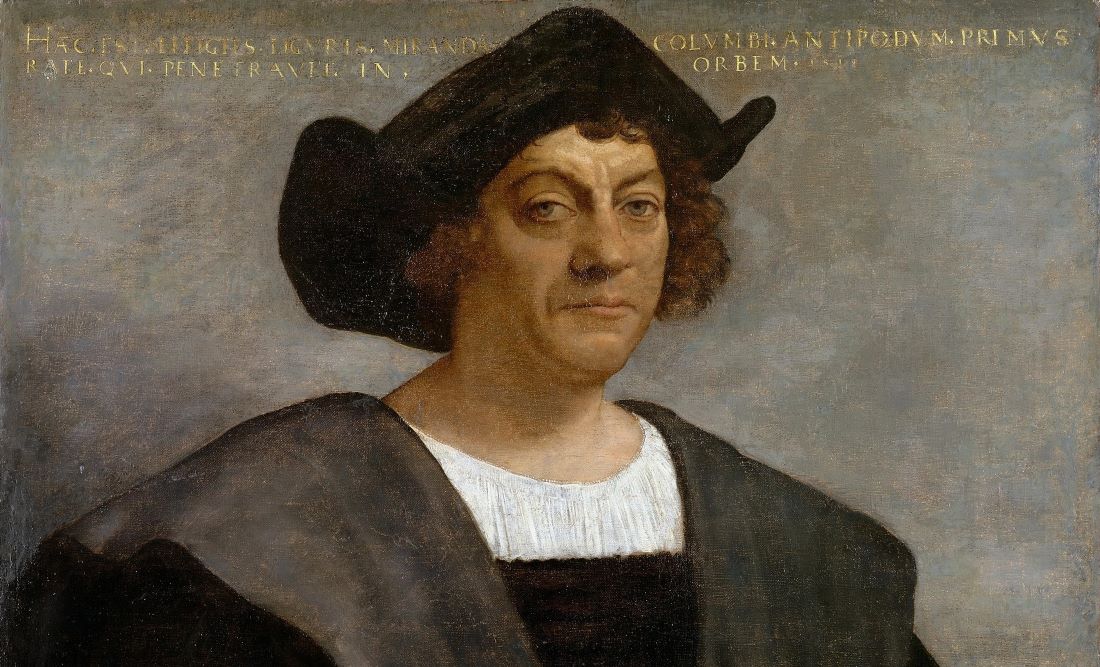
For over five centuries, school textbooks, national holidays, and public monuments have repeated the same simple story: in 1492 Christopher Columbus sailed from Spain and “discovered” America. It is one of the most deeply ingrained myths in Western education and popular culture. Yet the claim is historically false on multiple levels.
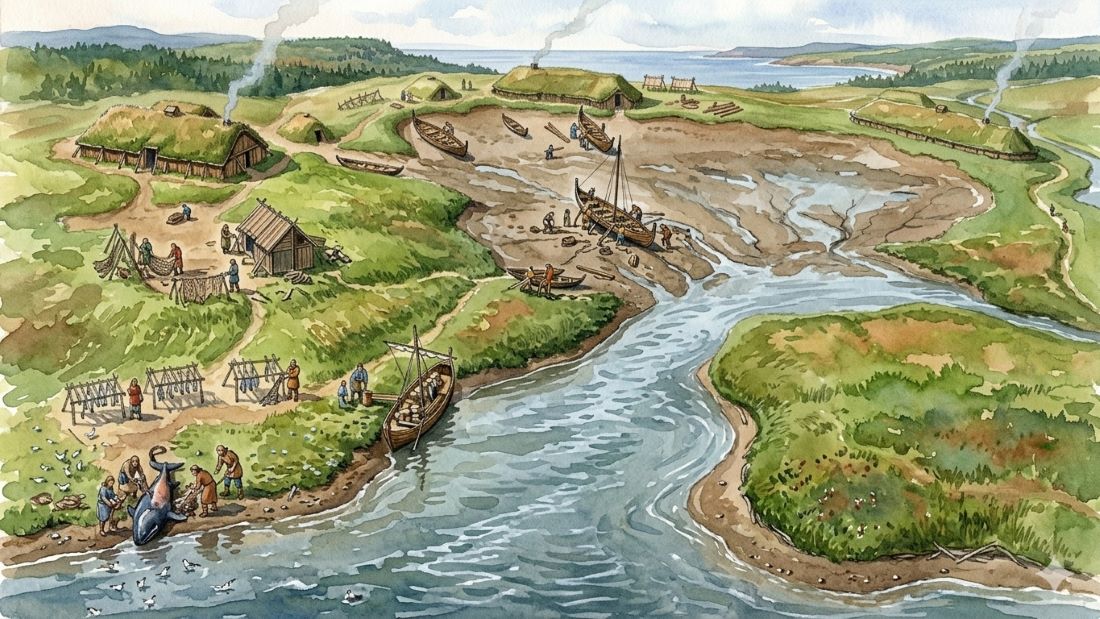
Columbus did not discover a “new world” that was unknown to humanity. The continents of the Americas had been inhabited by Indigenous peoples for at least 15,000–20,000 years before 1492. He was also not the first European to reach the Americas — Norse explorers had established a settlement in Newfoundland around 1021 CE. What Columbus actually did was initiate sustained contact between Europe and the Americas, an event that transformed the globe but came at an enormous human cost.
The Traditional Myth and Why It Persists
The popular image of Columbus as the heroic explorer who proved the Earth was round and opened the New World was largely shaped in the 19th and early 20th centuries. It was promoted during the height of European and American imperialism and reinforced by nationalist education systems. The myth served a clear purpose: it portrayed European expansion as a triumph of progress and civilization rather than conquest and exploitation.
Key elements of the myth:
- Columbus proved the Earth was round (false — educated Europeans already knew this).
- He was the first person to reach the Americas (false).
- He “discovered” a virgin, empty continent (false — millions of Indigenous people lived there).
Who Was Already There? Evidence of Pre-Columbian Contact
Indigenous Peoples of the Americas Genetic, archaeological, and linguistic evidence confirms that the first humans reached the Americas via Beringia at least 15,000–23,000 years ago, with some studies pushing the date back even further. By 1492, the Americas were home to sophisticated civilizations (Maya, Aztec, Inca, Mississippian cultures) and hundreds of diverse societies with advanced agriculture, astronomy, and urban centers.
The Vikings – Confirmed Norse Settlement The most solid evidence of pre-Columbian European contact is the Norse settlement at L’Anse aux Meadows in Newfoundland, Canada. Excavated in the 1960s and confirmed by multiple studies, the site dates to approximately 1021 CE (precise dendrochronology published in Nature in 2021). Norse sagas (Saga of the Greenlanders and Saga of Erik the Red) describe voyages to “Vinland.” Recent archaeological work has identified butternuts and other European artifacts at the site, confirming it was a temporary base for exploration further south.
Polynesian Contact with South America Emerging research suggests limited pre-Columbian contact between Polynesians and South America. Sweet potatoes (a South American crop) were cultivated in Polynesia centuries before European arrival. Genetic studies published in Nature (2020–2024) found traces of Native American DNA in some Polynesian populations, particularly on Easter Island and the Marquesas, indicating contact around 1200–1300 CE. While not a full-scale “discovery,” this shows trans-Pacific exchange occurred long before Columbus.
Other speculative contacts (Chinese, African, or Irish monks) remain unproven or heavily debated and lack the solid archaeological support of the Viking and Polynesian cases.
Why Columbus Became the Symbol
Columbus was not the first, but he was the most consequential. His voyages initiated permanent, sustained contact between the Old World and the New. Within decades, this led to the Columbian Exchange — the massive transfer of plants, animals, diseases, and people that reshaped both hemispheres.
The myth of Columbus as discoverer served powerful 19th-century interests:
- It justified European colonization and Manifest Destiny in the United States.
- It created a usable national hero for newly independent American republics.
- It downplayed the violence, enslavement, and demographic collapse (90%+ mortality among many Indigenous populations due to disease) that followed 1492.
Modern scholarship has shifted dramatically. Many countries have replaced Columbus Day with Indigenous Peoples’ Day, and historians now emphasize the catastrophic consequences for Native populations alongside the achievements of European exploration.
Discovery Is a Matter of Perspective
Columbus did not discover America — it had already been discovered and inhabited for millennia. He was the first European to establish lasting contact that changed the course of world history. The myth of discovery served political and cultural needs of later eras, but it no longer holds up to historical evidence.
The real story of 1492 is far more complex and consequential than the simple heroic tale we were taught in school. It marks the beginning of globalization, the Columbian Exchange, and one of the greatest demographic catastrophes in human history.
Historical Challenge: Can You Conquer the Past?
Answer more than 18 questions correctly, and you will win a copy of History Chronicles Magazine Vol 1! Take our interactive history quiz now and put your knowledge to the test!