
 By istorija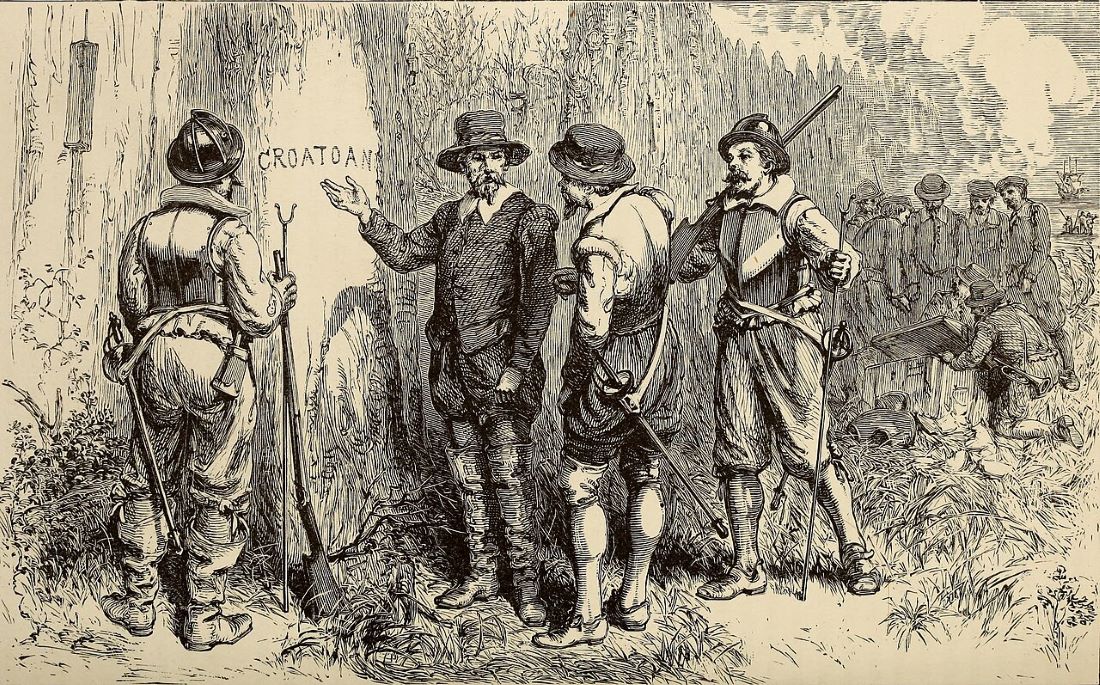
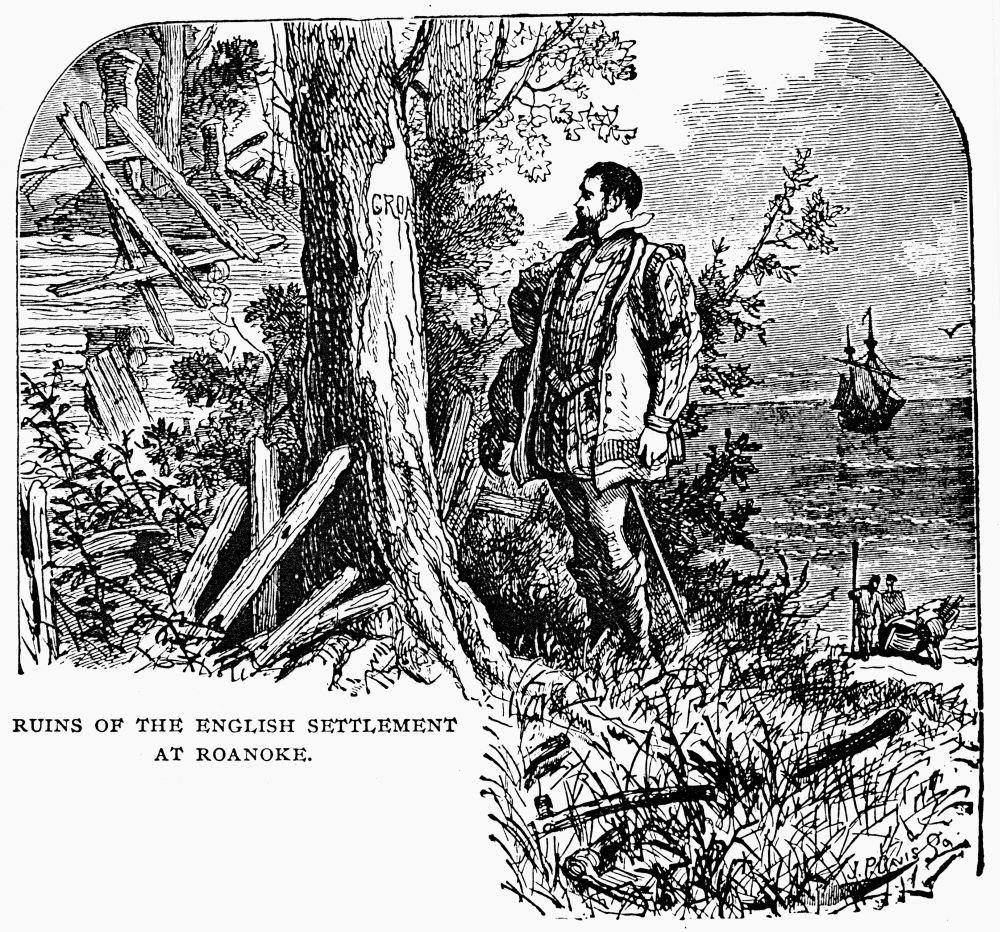
In 1587, 115 English men, women, and children — including the first English child born in the New World, Virginia Dare — landed on Roanoke Island, off the coast of present-day North Carolina. They were the second attempt by Sir Walter Raleigh to establish a permanent English colony in North America. When their governor, John White, returned from England in 1590 with supplies, he found the settlement completely deserted. The only clues were the word “CROATOAN” carved into a tree and the letters “CRO” on a post. There were no signs of struggle, no graves, and no bodies.
For over 400 years, the “Lost Colony” has been one of America’s greatest historical mysteries. Popular imagination has produced countless theories: massacre by Native Americans, starvation at sea, relocation to Croatoan Island, or even supernatural disappearance. But thanks to two decades of intensive archaeological work by the First Colony Foundation and other researchers, the mystery is no longer as mysterious as it once seemed.
The colonists did not vanish. The latest evidence strongly suggests they deliberately left Roanoke and integrated with local Native American tribes — primarily the Croatoan on Hatteras Island and other groups further inland.
The Historical Background
The Roanoke venture was part of Raleigh’s broader attempt to plant an English presence in North America to challenge Spanish dominance. The first group (1585–1586) had failed due to poor relations with the local Secotan and Roanoke tribes and lack of supplies. The 1587 group was meant to be different: it included families and was intended as a permanent settlement.
John White, an artist and governor, left for England in late 1587 to fetch more supplies. War with Spain delayed his return for three years. When he finally arrived in August 1590, the colonists were gone, but the carved words “CROATOAN” and “CRO” strongly suggested they had moved to Croatoan Island (modern Hatteras Island), where the friendly Croatoan tribe lived.
White was unable to search further because of bad weather and the loss of a boat. He returned to England, and the colonists were never seen by Europeans again.
Traditional Myths vs Emerging Evidence
Myth 1: The colonists were massacred or starved on Roanoke Island Fact: No mass graves, signs of battle, or skeletal remains have ever been found on Roanoke Island itself. The orderly departure and carved messages suggest a planned relocation, not panic.
Myth 2: They tried to sail back to England and were lost at sea Fact: There is no evidence of boats left behind or shipwreck debris. The colonists had instructions from White to leave a message if they moved.
Myth 3: They were absorbed by the Croatoan tribe Fact: This is now the leading and best-supported theory.
Latest Archaeological Discoveries (2023–2026)
The First Colony Foundation has conducted systematic excavations that have dramatically shifted the narrative:
- Elizabethan Gardens / Roanoke Island (2023–2024): Archaeologists uncovered Algonquian pottery shards from the 1500s alongside European copper items (including a copper wire ring likely worn by a Native warrior). This points to close interaction or cohabitation between the English settlers and the local Algonquian village of Roanoac.
- Site X and Site Y (Bertie County, inland North Carolina): English pottery (Surrey-Hampshire Border ware and North Devon baluster jars) dating to the late 16th century has been found in significant quantities. These are not trade goods but domestic items used for cooking and storage. The presence of “hammerscale” (waste from blacksmithing) suggests the colonists were actively working metal while living among Native communities.
- Hatteras Island (Croatoan territory): Excavations have uncovered “buckets” of hammerscale in Native American middens (trash heaps). This is strong evidence that English colonists lived alongside the Croatoan people for years, practicing metalworking — a skill the Native inhabitants did not possess.
These finds, combined with John White’s own map annotations (revealed by advanced imaging in the 2010s), indicate that the colonists split into smaller groups after White left. Some likely moved south to Hatteras Island to join the Croatoan, while others traveled inland up the Albemarle Sound toward what is now Bertie County.
Why the “Lost Colony” Label Is Misleading Today
Modern archaeology and historical analysis suggest the colonists were not lost in the sense of disappearing without trace. They made a rational decision to relocate and integrate with friendly Native groups when supplies ran low and relations with some tribes deteriorated. Over time, they were gradually absorbed into local populations.
DNA studies (ongoing among the Lumbee and other regional tribes) have found possible European genetic markers, though results remain debated and require further verification. The most compelling evidence remains archaeological: English artifacts found in Native contexts dating precisely to the period after 1587.
A Story of Adaptation, Not Disappearance
The Roanoke colonists did not vanish into thin air. They adapted to a harsh new environment by doing what many European settlers would later do — forming alliances and merging with Indigenous communities. The “Lost Colony” is less a mystery of disappearance and more a story of survival through cultural integration.
The latest research from the First Colony Foundation and supporting scholars has transformed a centuries-old enigma into a far more human and understandable tale: a small group of English families who chose to live among the Native peoples of the Outer Banks and coastal North Carolina rather than perish.
Petra may be more visually spectacular, but Roanoke’s story is perhaps even more profound — a quiet reminder that history’s greatest mysteries are often solved not by dramatic revelation, but by careful, patient archaeology and a willingness to follow the evidence.
Historical Challenge: Can You Conquer the Past?
Answer more than 18 questions correctly, and you will win a copy of History Chronicles Magazine Vol 1! Take our interactive history quiz now and put your knowledge to the test!