
 By istorija
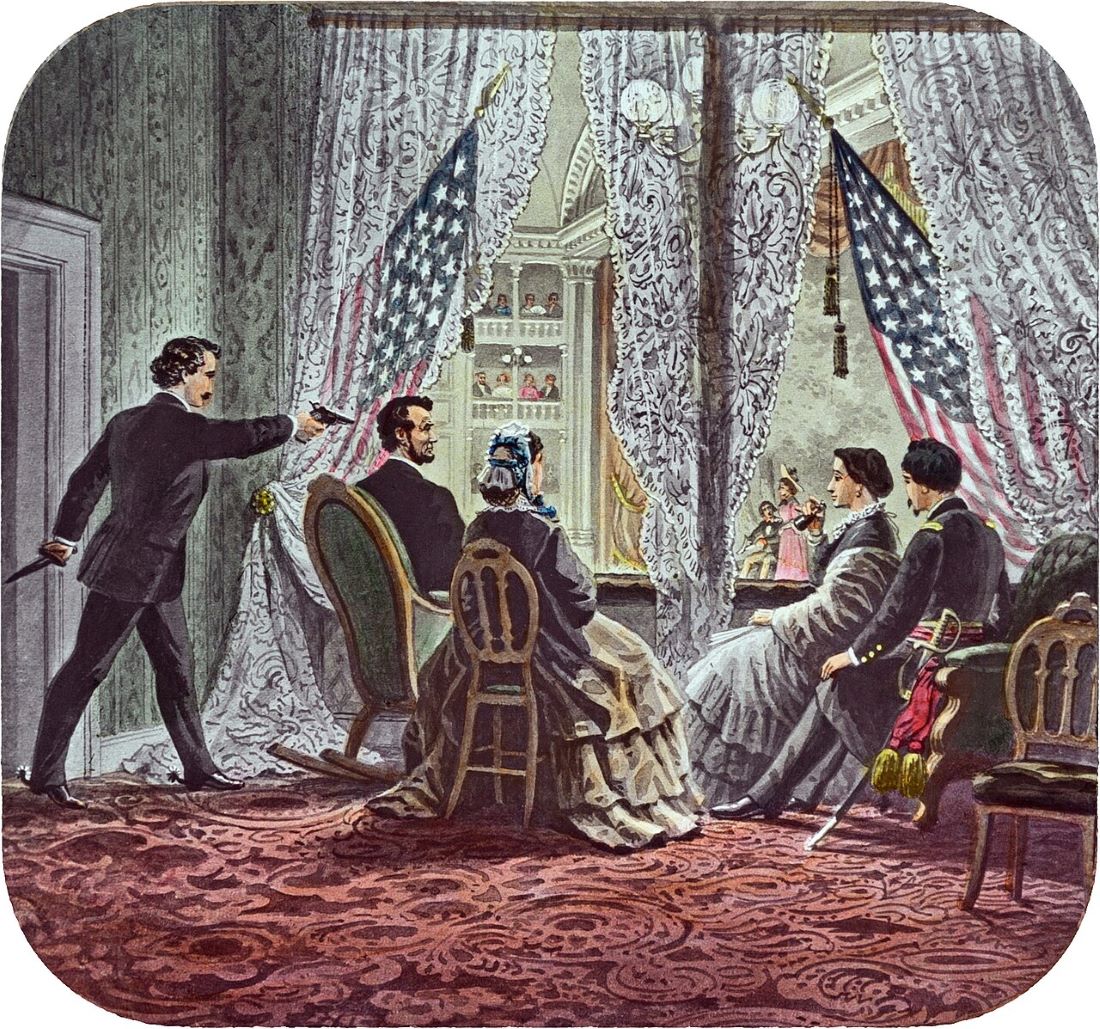
The assassination of Abraham Lincoln on April 14, 1865, remains one of the most pivotal and haunting moments in American history. Just days after the Civil War’s effective end with Robert E. Lee’s surrender at Appomattox, actor and Confederate sympathizer John Wilkes Booth slipped into the presidential box at Ford’s Theatre during a performance of Our American Cousin. He fired a single .44-caliber Derringer shot into the back of Lincoln’s head at point-blank range. The president lingered through the night, dying early the next morning at the Petersen House across the street.
But what if the story wasn’t as straightforward as history books tell? The assassination sparked immediate questions, wild rumors, and enduring conspiracy theories that persist to this day. From claims of government insiders to international plots, these ideas have fueled books, documentaries, and endless debates. In this article, we explore the major conspiracies surrounding Lincoln’s death and dive into intriguing “what if” scenarios—particularly, what might have happened if Lincoln had survived the bullet.
The Established Facts: A Simple Conspiracy or Something More?
The official record is clear: Booth acted with a small group of conspirators. Originally, the plot was to kidnap Lincoln and exchange him for Confederate prisoners to prolong the war. By April 1865, with the Confederacy collapsing, Booth escalated to murder. He assigned accomplices to target key figures:
- Lewis Powell attacked Secretary of State William H. Seward (wounding him severely).
- George Atzerodt was supposed to kill Vice President Andrew Johnson but lost his nerve and fled.
- David Herold aided Powell and later helped Booth escape.
Booth shouted “Sic semper tyrannis” (“Thus always to tyrants”) as he leaped to the stage, breaking his leg in the process. He fled south, evading capture for 12 days before being cornered and killed in a burning barn on the Garrett farm in Virginia.
A military tribunal tried eight suspects in 1865. Four—Mary Surratt (boarding house owner), Powell, Herold, and Atzerodt—were hanged. Others received prison sentences. The plot appeared limited to Booth’s circle of Confederate sympathizers seeking revenge for the South’s defeat.
Yet doubts emerged almost immediately. Why did the attacks seem coordinated but incomplete? Why were security lapses at Ford’s Theatre so glaring? These gaps opened the door to speculation.
Major Conspiracy Theories
- Andrew Johnson Was Involved One of the earliest and most persistent theories accuses Vice President (and new President) Andrew Johnson of complicity. Booth visited Johnson’s hotel earlier that day and left a calling card. Mary Todd Lincoln herself believed Johnson had “an understanding with the conspirators.” Johnson, a Southerner and former Democrat, clashed with Radical Republicans during Reconstruction—fueling suspicions he benefited from Lincoln’s removal. Most historians dismiss this, citing no solid evidence beyond circumstantial timing and political animosity.
- A Broader Confederate Government Plot Some argue Booth was a tool of Jefferson Davis and the Confederate Secret Service. Coded letters found on Booth hinted at ties to Richmond. The capture of Confederate explosives expert Thomas Harney (en route to bomb the White House) days earlier added fuel. Revenge for Union raids (like Dahlgren’s on Richmond) is cited as motive. While Confederate leaders viewed Lincoln as a legitimate target, no direct proof links Davis to the plot—though the idea of a “grand conspiracy” appealed to Northern paranoia.
- Edwin Stanton and Radical Republicans Orchestrated It Secretary of War Edwin Stanton, who led the manhunt, faced accusations of masterminding the assassination to seize power or push harsher Reconstruction. Theories claim Stanton delayed aid to Lincoln or manipulated evidence. This stems from Stanton’s iron-fisted wartime control and post-assassination actions. Modern scholars largely reject it as baseless paranoia.
- Booth Escaped and Lived On A fringe but enduring myth: the body burned in the barn wasn’t Booth’s—someone else died in his place, and he fled (to India, Texas, or elsewhere). Books like The Lincoln Conspiracy (1977) and eyewitness claims fueled this. DNA tests on Booth’s remains in the 1990s confirmed his death, debunking it for most.
- International Bankers or Other Wild Theories Less credible ideas blame European bankers (angered by Lincoln’s greenbacks) or even tie it to later events (e.g., Lincoln-Kennedy coincidences urban legend). These often rely on misinformation.
Historians like Edward Steers Jr. and Michael Kauffman argue the evidence points to Booth’s small, amateurish group motivated by Confederate loyalty and personal zeal—not a vast cabal.
What If Scenarios: How Would History Change If Lincoln Survived?
The most compelling alternate history question: What if the bullet missed or Lincoln recovered?
Lincoln’s plan for Reconstruction was lenient—”with malice toward none, with charity for all.” He favored quick readmission of Southern states (10% Plan), limited punishments, and gradual Black rights (he supported limited suffrage for educated Black men and veterans by 1865). Andrew Johnson’s stubborn racism and clashes with Congress led to Black Codes, violence, and a watered-down Reconstruction that collapsed by 1877—ushering in Jim Crow, disenfranchisement, and segregation.
If Lincoln lived:
- Smoother Reconciliation — His political skill and popularity might have bridged Radical Republicans and moderates, avoiding Johnson’s veto battles. Southern states could reintegrate faster with federal protections for freedpeople.
- Stronger Civil Rights — Lincoln’s evolving views (Emancipation Proclamation, Black troops) suggest he might push the 14th Amendment earlier and more forcefully. Permanent Black enfranchisement could prevent the KKK’s rise and delay Jim Crow.
- Less Radical Backlash — Without Johnson’s leniency toward ex-Confederates, fewer “redeemers” regain power quickly. The nation might avoid the violent backlash that undermined Reconstruction.
- Long-Term Impact — A more unified post-war America could accelerate civil rights progress, potentially shortening the century of segregation. Historians like Eric Foner note Lincoln’s compassion and adaptability might have produced deeper, lasting changes—though challenges (racism, economic devastation) remained.
Of course, speculation varies: some argue Reconstruction’s failures were inevitable due to deep divisions; others believe Lincoln’s leadership could have forged a truly “new birth of freedom.”
Final Thoughts
The Lincoln assassination wasn’t just the murder of a president—it was the snuffing out of a unique voice at a fragile moment. Conspiracies add intrigue, but the core truth is tragic enough: one man’s hatred altered the nation’s path.
Whether a lone actor’s revenge or something darker, the event reminds us how fragile history can be. What do you think—could Lincoln have healed the wounds of war more effectively? Don’t forget to take our quick quiz on Lincoln’s life and legacy!
Historical Challenge: Can You Conquer the Past?
Answer more than 18 questions correctly, and you will win a copy of History Chronicles Magazine Vol 1! Take our interactive history quiz now and put your knowledge to the test!