
 By istorija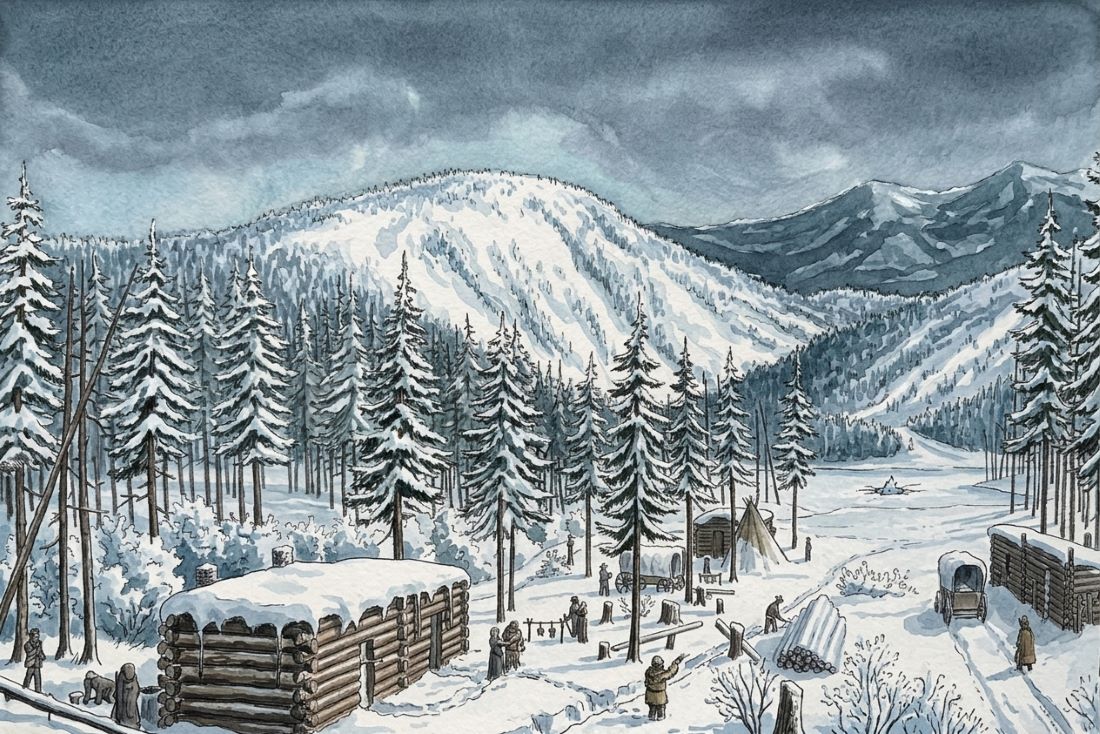
Mention the “Donner Party” to anyone today, and a single, grim concept instantly comes to mind: cannibalism. For nearly two centuries, this 1846 pioneer expedition has been reduced to a horrific historical punchline. The popular narrative paints a picture of a doomed group that quickly turned on one another in the frozen wilderness.
However, modern historical analysis and recent archaeological digs tell a vastly different story. The members of the Donner Party were not monsters, nor did they look at each other as food. They were ordinary families—farmers, merchants, and children—who became victims of terrible advice, fraudulent geography, and an unprecedented meteorological anomaly.
To understand America’s most infamous survival tale, we must look past the sensationalized headlines and examine how an optimistic journey to California turned into a frozen nightmare.
The Fatal Decision: Lansford Hastings and the “Shortcut”
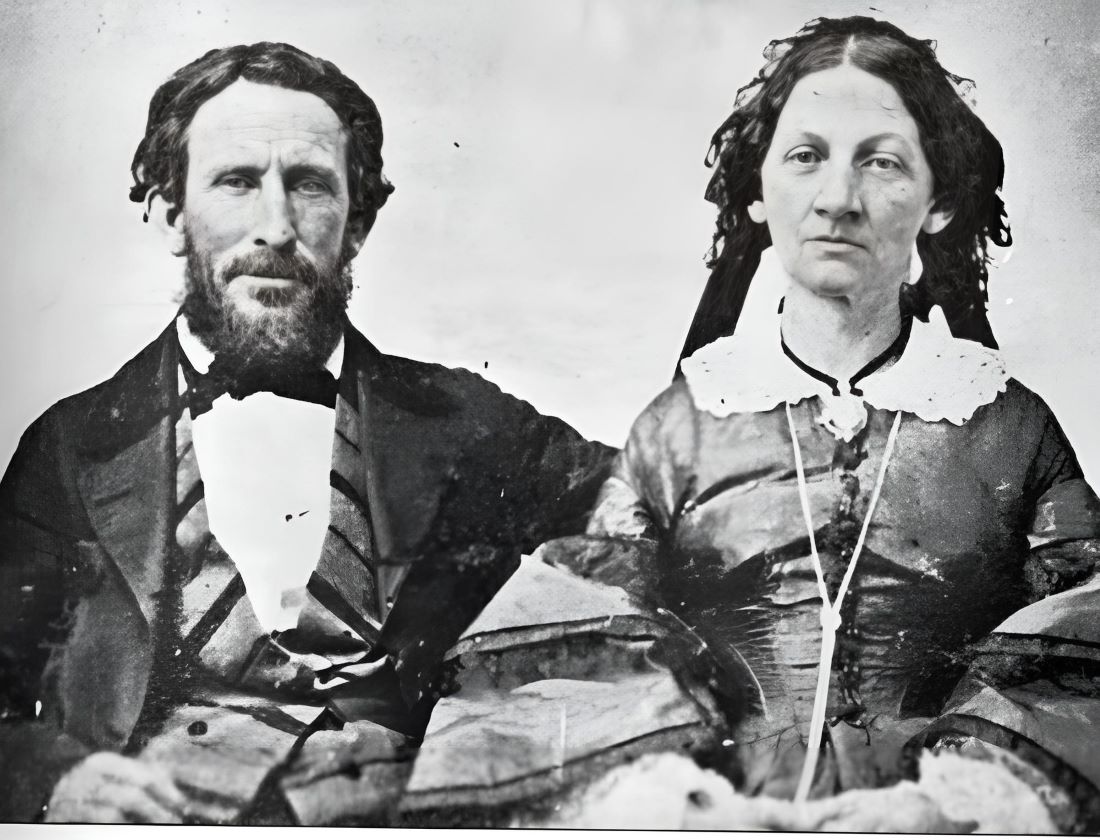
In May 1846, a massive wagon train left Independence, Missouri, heading west. Among them was a wealthy group led by George Donner and James Reed. Like thousands of other pioneers, they sought a new life in the fertile valleys of California.
The journey was going smoothly until the group reached Wyoming. There, they faced a fatal crossroads: stick to the proven route or take an untested “shortcut” known as the Hastings Cutoff. This new path was heavily promoted by Lansford Hastings, an ambitious promoter who dreamed of building an American empire in California.
Hastings claimed his route would shave 350 miles off the trip. The catch? Hastings had never actually guided a single heavy wagon through the cutoff himself.
Believing the promotional claims, the Donner Party split from the main wagon train and headed south toward the Great Salt Lake—a choice that sealed their fate before they even reached the mountains.
Why Did They Get Stuck? The Mud and the Mountains
The promised shortcut turned out to be a nightmare of unbroken wilderness. Instead of a clear trail, the pioneers found themselves hacking a brand-new wagon road through the dense timber of the Wasatch Mountains with axes, burning through precious energy and time.
When they finally reached the Great Salt Lake Desert, Hastings’ guidebooks promised a quick two-day crossing over 40 miles. In reality, the heavy wooden wheels broke through the razor-thin salt crust, sinking hub-deep into sticky, suffocating mud. The crossing dragged on for six agonizing days, stretching over 80 miles. Panicked oxen bolted into the desert and were lost forever; heavy wagons loaded with essential food supplies had to be abandoned.
By the time the Donner Party rejoined the traditional California Trail, they hadn’t saved time—they were nearly a month behind schedule.
When they reached the foot of the Sierra Nevada mountains in late October, the men, women, and children were physically spent and low on rations. Then, nature delivered a killing blow: an unprecedented blizzard hit the pass a full month earlier than historic averages, dumping five feet of snow overnight and trapping all 89 pioneers near Truckee Lake (now Donner Lake).
The First to Die: Starvation Before Subversion
Contrary to popular belief, the trapped pioneers did not resort to cannibalism immediately. They fought with incredible discipline to avoid it for months.
The first to die in the winter camp was Luke Halloran, who had been suffering from tuberculosis, followed by those who succumbed to hypothermia and starvation in early November. Initially, the families survived by slaughtering their remaining oxen and horses, carefully rationing every scrap of meat.
When the meat ran out, sheer horror took over. Hungry children searched desperately for mice beneath the cabin floors, while adults boiled rotted animal hides into a foul-smelling, glue-like paste that barely kept their organs functioning. They charred old cattle bones in the fire until they were soft enough to crumble and eat.
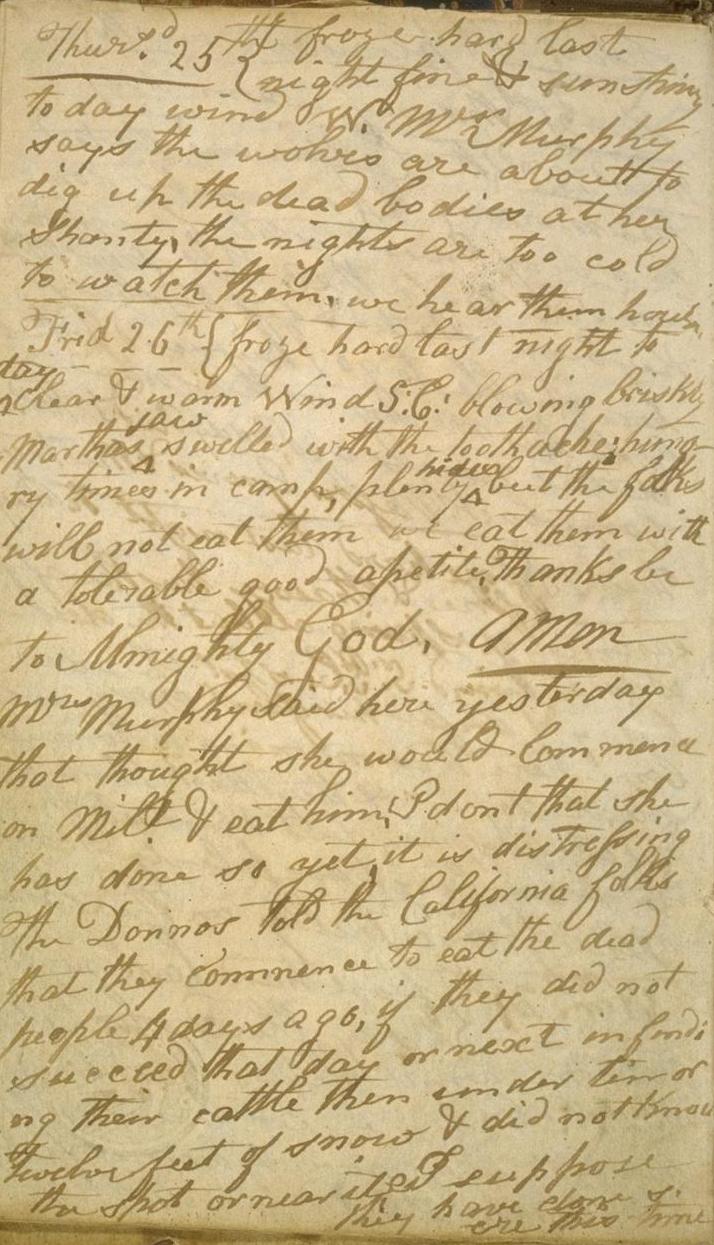
The stark horror of their day-to-day existence was recorded by Patrick Breen, an Irish immigrant who kept a diary inside a dark cabin buried under fifteen feet of snow:
“Mrs. Murphy said the wolves was howling round the cabins last night. Hungry times, no prospect of skinning oxen… Lord help us.” — Patrick Breen Diary, December 1846
Only when delirium set in and the human body began consuming its own tissue did the ultimate choice present itself.
The “Forlorn Hope” and the Reality of Cannibalism
In mid-December, fifteen of the strongest pioneers fashioned crude snowshoes out of ox bows and stepped out into the blizzard, attempting to climb over the pass to find help. This desperate group became known as the Forlorn Hope.
Lost for weeks without food, members of this group were the first to cross the harrowing threshold. Crucially, they set strict ethical boundaries even in their madness: they swore never to kill anyone for food, and no one would consume a member of their own immediate family. They only utilized the bodies of those who had already perished from cold and starvation.
Back at the lake, cannibalism did not begin until late February 1847—nearly four months after the storm trapped them. Even then, it was not universal. Out of the 89 members, a significant number refused to touch human flesh, preferring death.
Families like the Breens and the Reeds managed to survive without resorting to cannibalism through fierce rationing of hides and hidden stashes. In fact, modern archaeological digs at the Alder Creek camp unearthed butchered cattle and horse bones, but no verifiable physical evidence of human cannibalism at that specific site, showing that experiences varied wildly from cabin to cabin.
The True Heroes: How Anyone Survived
The story of the Donner Party is a tragedy, but it is equally an epic of human resilience. When news of the trapped families finally reached California, rescue teams—the Relief Expeditions—were formed. Men volunteered to scale vertical, snow-choked mountain passes in sub-zero conditions, carrying 40-pound packs of food to save strangers.
The most incredible survival dynamic belonged to the women. While men died rapidly due to physical exhaustion, biological differences, and acute stress, the women displayed extraordinary stamina.
Tamsen Donner, wife of leader George Donner, kept her young children alive for months on tiny scraps. When the first relief party arrived, she refused to leave, choosing to stay in the mountains with her dying husband while sending her children to safety—a choice that ultimately cost her life. Meanwhile, Margret Reed managed to keep all four of her children alive through the entire winter without losing a single one.
    [ THE GENDER SURVIVAL SPLIT ]

    Adult Men (Ages 18-49)   ===> 29% Survival Rate (22 died / 9 survived)
    Adult Women (Ages 18-49) ===> 64% Survival Rate (5 died / 9 survived)
In total, over 60% of the men died, while more than 60% of the women survived.
Statistical Breakdown of the Tragedy
To grasp the full scale of the catastrophe, we can examine how age and demographic groups impacted the final survival numbers:
Frequently Asked Questions (FAQ)
Did the Donner Party kill people to eat them?
With the tragic exception of two Native American guides (Luis and Salvador) who were shot during a state of complete delirium by a member of the Forlorn Hope group, cannibalism was strictly practiced on individuals who had already died of starvation or freezing.
How many people survived the Donner Party?
Out of the 89 pioneers trapped in the Sierra Nevada mountains, 45 survived and 44 died. Nearly half of all survivors were children.
Why didn’t they just hike out of the mountains earlier?
They tried repeatedly. However, the snowdrifts reached 15 to 20 feet in height. Without snowshoes, a person sinks to their chest and burns thousands of calories per hour, making escape impossible until organized rescue teams arrived with gear.
Conclusion: From Ghouls to Victims
Years after she was rescued as a young girl, Virginia Reed wrote a simple piece of advice in a letter to a cousin back east that captured the bitter wisdom of her experience:
“Never take no cut-offs and hurry along as fast as you can.” — Virginia Reed, May 1847
The real story of the Donner Party is not a tale of monsters, but a deeply human tragedy about bad maps, an early winter, and the incredible lengths parents went to keep their children alive.
When relief parties finally reached the mountain cabins in the spring of 1847, they didn’t find criminals; they found traumatized survivors who would carry the psychological weight of their choices for the rest of their lives.
The Donner Party was remembered for what they ate. History should remember them for what they endured.
Currently Reading

Historical Challenge: Can You Conquer the Past?
Answer more than 18 questions correctly, and you will win a copy of History Chronicles Magazine Vol 1! Take our interactive history quiz now and put your knowledge to the test!