
 By istorija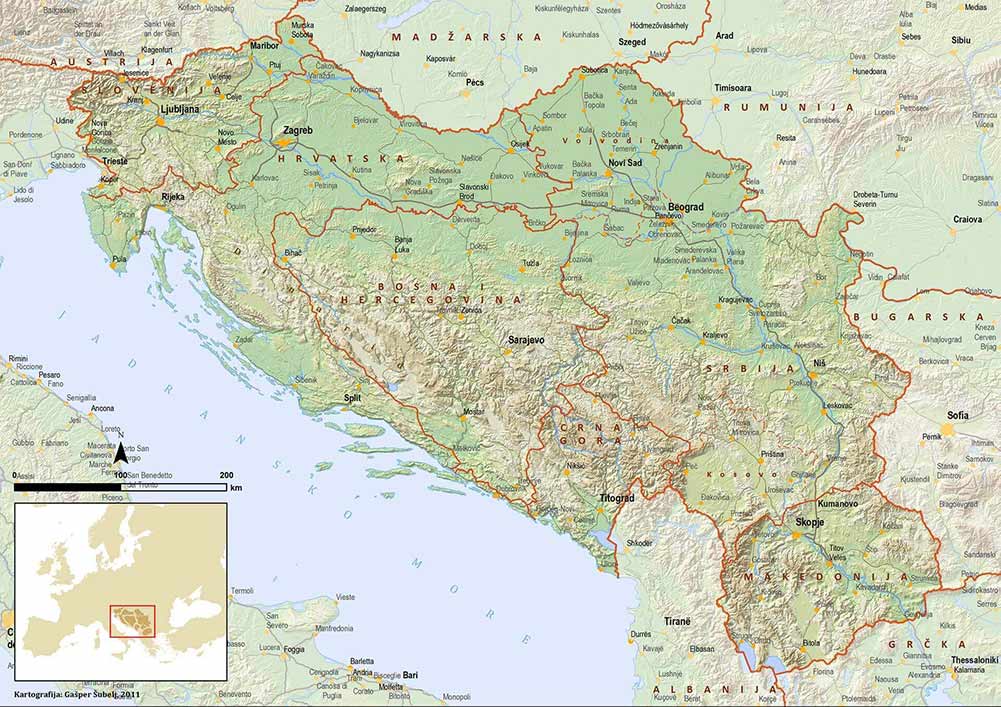
For most of the 20th century, a complex federal state dominated the central Balkans. To the casual observer, Yugoslavia is often remembered simply as a single socialist enigma or a tragic story of ethnic fragmentation. However, historical reality is more nuanced. The name “Yugoslavia” (meaning “Land of the South Slavs”) actually represented three distinct political entities. Each was built on different ideological, constitutional, and structural foundations.
From a centralized monarchy to a non-aligned socialist federation, and finally to a downsized rump state, these three eras reflected the turbulent shifts of modern European history.
The Roots of the Concept: The South Slavic Question
The idea of a unified South Slavic state did not emerge suddenly in 1918. Its roots lie in 19th-century romantic nationalism and movements like the Illyrian Movement.
For centuries, the South Slavs were divided between two competing empires. The Austro-Hungarian Empire ruled over Slovenes, Croats, and the Serbs of Bosnia and Herzegovina and Vojvodina. Meanwhile, the Ottoman Empire historically controlled Serbia, Montenegro, and Macedonia.
Intellectuals in cities like Zagreb and Belgrade argued that these fragmented groups shared deep linguistic ties. They believed that a collective state was the only way to resist regional imperial ambitions.
However, deep disagreements existed regarding how this state should function. Many Serbian political elites envisioned the future country as an extension of Serbia’s hard-won statehood, constitutional monarchy, and military victories. Conversely, a significant segment of Croatian and Slovene political leadership preferred a decentralized federation or a loose confederal alliance of equals.
The First Yugoslavia: The Kingdom (1918–1941)
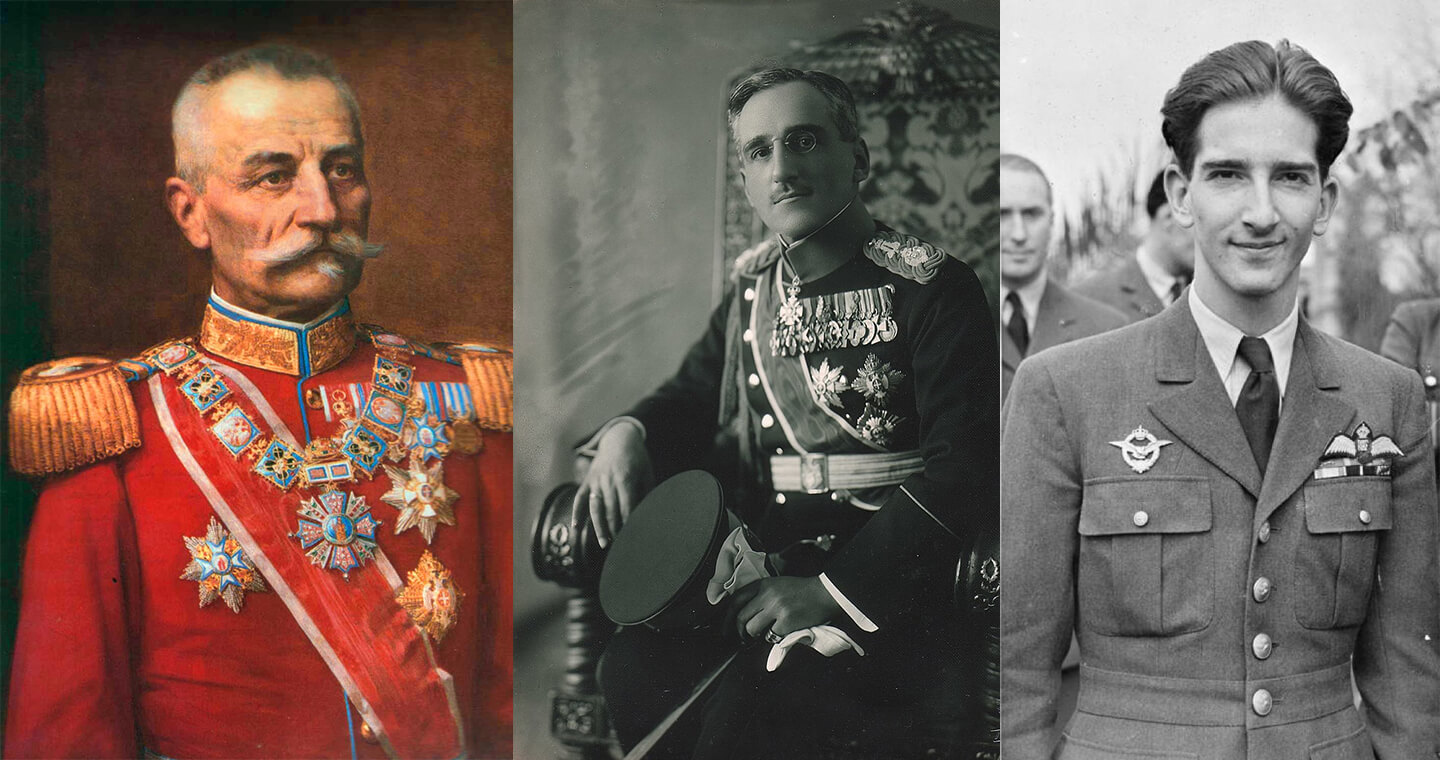
The First Yugoslavia was born on December 1, 1918. It was initially proclaimed as the Kingdom of Serbs, Croats, and Slovenes by Prince Regent Aleksandar Karađorđević. This new entity unified the independent Kingdoms of Serbia and Montenegro with the Austro-Hungarian South Slavic territories.
Constitutional Struggles
The state faced immediate structural instability. The Vidovdan Constitution of 1921 established a highly centralized, unitary monarchy. This system alienated various regional political leaders, particularly the Croatian Peasant Party led by Stjepan Radić, who demanded autonomy. The political gridlock turned violent in 1928 when Radić was mortally wounded during a parliamentary session in Belgrade.
The Royal Dictatorship
To stop the collapse of the parliamentary system, King Aleksandar I instituted a royal dictatorship on January 6, 1929. He officially renamed the state the Kingdom of Yugoslavia.
Timeline of the First Yugoslavia
To suppress historic ethnic identities, the King redrew the internal map into nine administrative districts called banovinas. These districts were named strictly after geographic features and rivers.
Though the Cvetković-Maček Agreement of 1939 later attempted to solve the crisis by creating an autonomous Banovina of Croatia, the compromise came too late. On April 6, 1941, the Axis powers invaded Yugoslavia, partitioning its territory and plunging the region into a brutal war and occupation.
The Second Yugoslavia: The Socialist Federation (1945–1992)
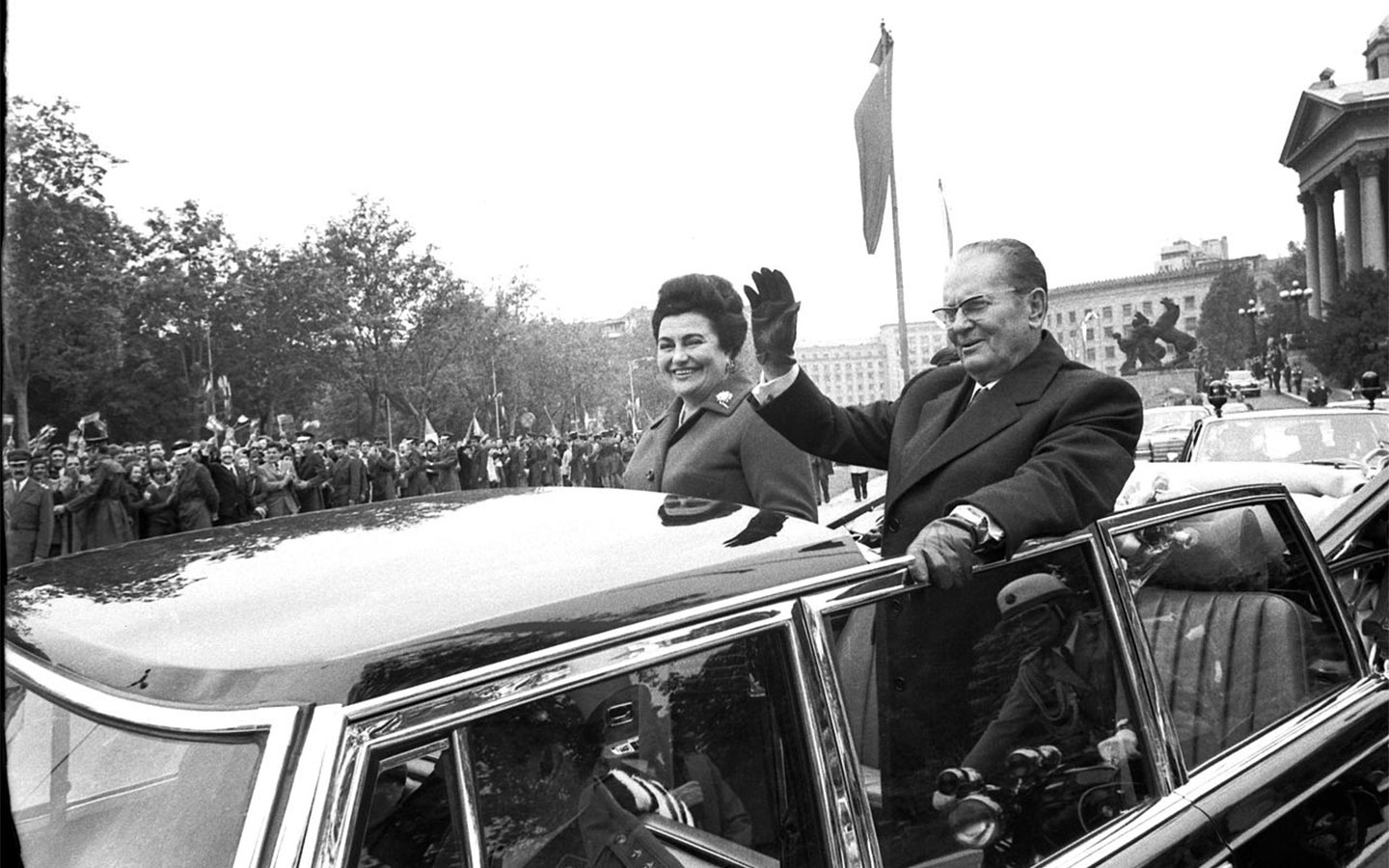
Following the defeat of the Axis occupation by Josip Broz Tito’s Partisan resistance movement, the Second Yugoslavia emerged. It was officially declared in late 1945 as the Federal People’s Republic of Yugoslavia (FPRY), and later renamed in 1963 as the Socialist Federal Republic of Yugoslavia (SFRY).
The Federal Blueprint
Unlike the old centralized kingdom, Tito’s state was structured as a federation of six republics and two autonomous provinces.
- Republics: Serbia, Croatia, Slovenia, Bosnia and Herzegovina, Macedonia, and Montenegro.
- Autonomous Provinces (within Serbia): Vojvodina and Kosovo.
The state motto was “Brotherhood and Unity” (Bratstvo i jedinstvo). This policy was designed to suppress nationalist sentiments through a combination of cultural integration and strict state security.
Environmental Variations: Tito’s Third Way
The Second Yugoslavia was unique because it rejected the standard Soviet model. Following the famous Tito-Stalin split of 1948, Yugoslavia refused to become a Soviet satellite and charted an independent course.
Instead of Soviet-style state planning, the country introduced Socialist Self-Management (Samoupravljanje). Under this system, workers theoretically managed their own social enterprises, creating a hybrid market-socialist economy that allowed more freedom than the rest of the Eastern Bloc.
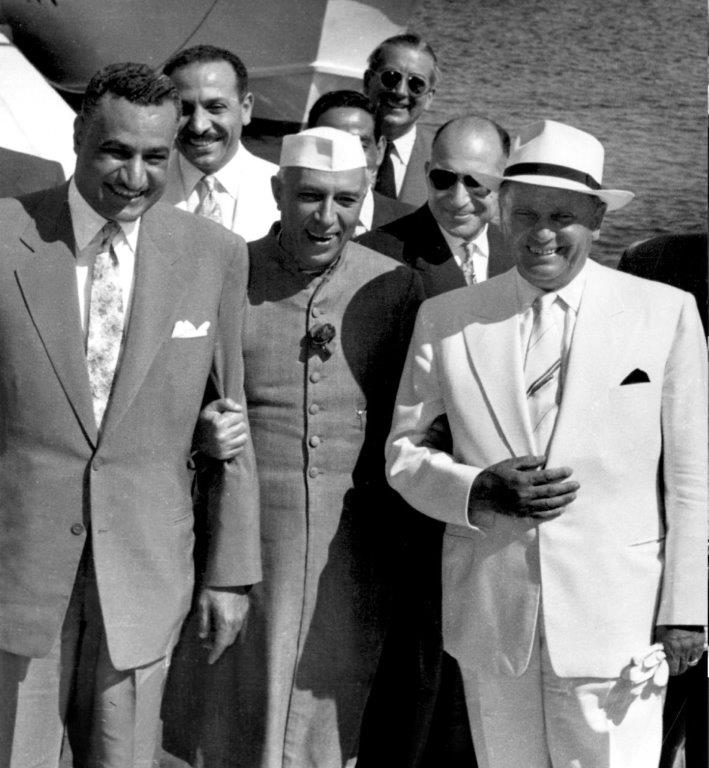
Internationally, Yugoslavia became a prominent diplomatic bridge during the Cold War. Tito was one of the principal founders of the Non-Aligned Movement in 1961, working alongside world leaders like Jawaharlal Nehru of India, Gamal Abdel Nasser of Egypt, Sukarno of Indonesia, and Kwame Nkrumah of Ghana.
The 1974 Constitution radically decentralized power, giving the individual republics de facto veto powers. While this satisfied regional autonomy demands for a time, it severely weakened the federal center. Following Tito’s death in 1980, economic stagnation, rising foreign debt, and the revival of nationalism caused the system to fracture, leading to the conflicts of the early 1990s.
The Third Yugoslavia: The Rump State (1992–2003)
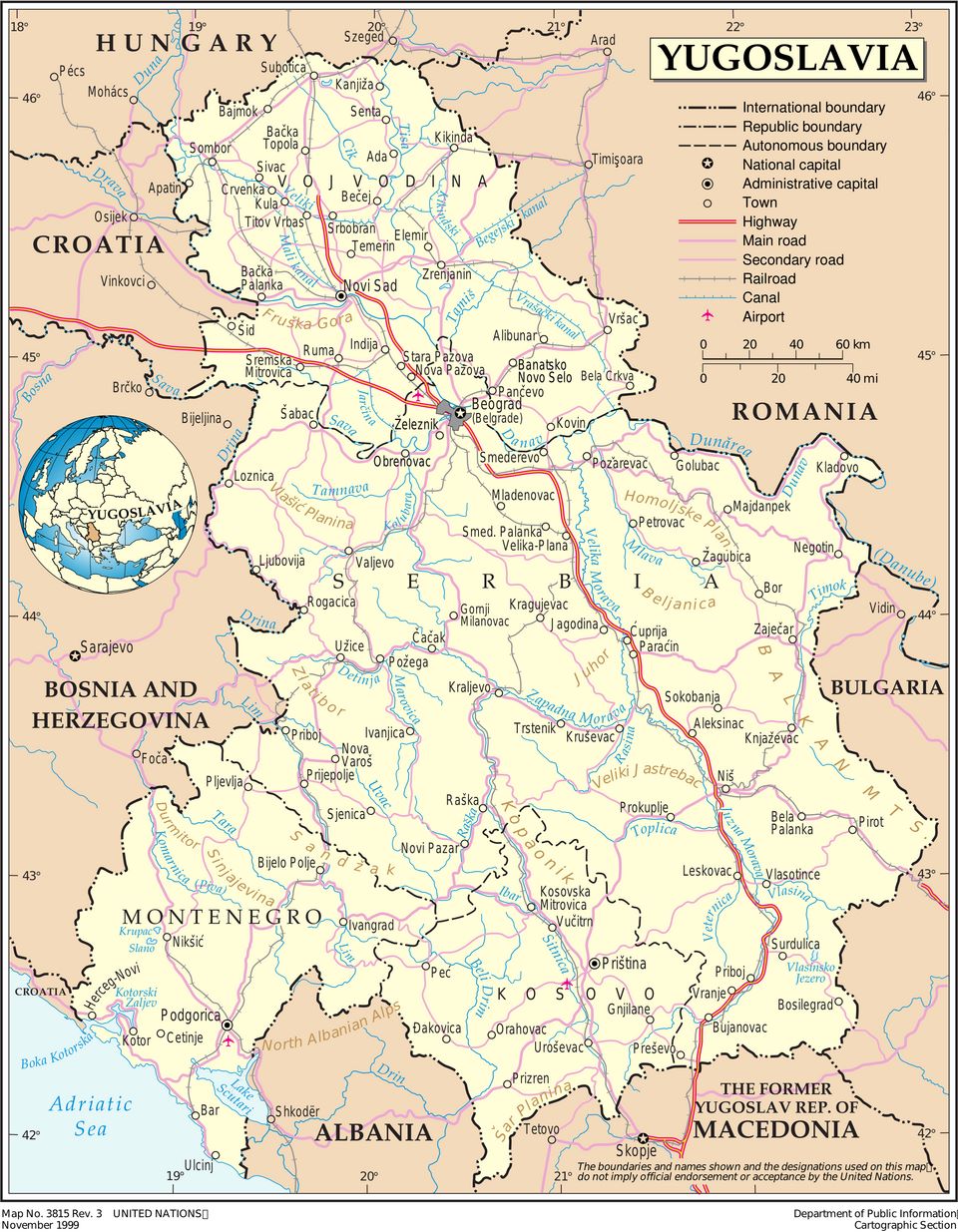
As Slovenia, Croatia, Macedonia, and Bosnia and Herzegovina declared independence between 1991 and 1992, the two remaining republics—Serbia and Montenegro—chose to maintain a joint state framework. On April 27, 1992, they proclaimed the Federal Republic of Yugoslavia (FRY).
Geopolitical Isolation
The Third Yugoslavia was a radically downsized rump state. It faced severe international isolation, comprehensive UN economic sanctions, and hyperinflation during the wars in Croatia and Bosnia.
The Gradual Dissolution
The crisis peaked in the late 1990s with the Kosovo War, leading to the 1999 NATO bombing of Yugoslavia. Following the political changes of October 5, 2000, the country was readmitted to the United Nations and began normalizing its international relations.
The Final Chapter
By 2003, the federal structure of the FRY was no longer functional due to growing political divergence between the two republics. Under international mediation, the state was reconstituted on February 4, 2003, as a loose confederal union named simply Serbia and Montenegro.
This change marked the official retirement of the name “Yugoslavia” from the world map. The union ended completely in May 2006, when Montenegro voted for independence in a referendum.
5. Comparative Breakdown: The Three Yugoslavias at a Glance
| Feature | The First Yugoslavia (1918–1941) | The Second Yugoslavia (1945–1992) | The Third Yugoslavia (1992–2003) |
|---|---|---|---|
| Official Names | Kingdom of SHS; Kingdom of Yugoslavia | Federal People’s Republic (FPRY); Socialist Federal Republic (SFRY) | Federal Republic of Yugoslavia (FRY) |
| Political System | Unitary Constitutional Monarchy (Dictatorship after 1929) | One-Party Socialist Federal Republic | Semi-Presidential Federal Republic |
| Internal Divisions | Historic borders initially; 9 Banovinas after 1929 | 6 Republics and 2 Autonomous Provinces | 2 Republics (Serbia and Montenegro) |
| International Alignment | Pro-Western Alliances (Little Entente, France, UK) | Non-Aligned Movement (Independent Socialist) | Isolated / Sanctioned (1992–2000) |
| End of State | Destroyed by Axis invasion in WWII | Fragmented through secession and war | Reconstituted as “Serbia and Montenegro” |
Frequently Asked Questions (FAQ)
How many Yugoslavias were there?
There were three distinct political entities that used the name Yugoslavia during the 20th century: the Kingdom (1918–1941), the Socialist Federation (1945–1992), and the Federal Republic consisting of Serbia and Montenegro (1992–2003).
Why were there three Yugoslavias?
Each Yugoslavia represented a different political experiment to solve the South Slavic question. The first tried a centralized monarchy, the second used a socialist federal model, and the third was a rump state trying to preserve a shared framework after the breakup of the larger federation.
What is the difference between the Kingdom of Yugoslavia and socialist Yugoslavia?
The Kingdom of Yugoslavia (First Yugoslavia) was a centralized monarchy ruled by the Karađorđević dynasty with a capitalist economy. Socialist Yugoslavia (Second Yugoslavia) was a communist-led, decentralized federation organized into six republics and led by Josip Broz Tito.
When did the name Yugoslavia officially disappear?
The name officially disappeared from the political map on February 4, 2003, when the Federal Republic of Yugoslavia was replaced by the looser state union of Serbia and Montenegro.
Conclusion: A Century of Political Experimentation
The history of Yugoslavia shows that the state was never a static entity. It was an ambitious, eighty-year political project aimed at South Slavic unification.
When analyzing this history, it is best to see it not as a single continuous nation, but as a succession of three different political systems. The first sought unity through a centralized crown, the second balanced diversity through socialist ideology, and the third remained as a historical echo before the final separation of 2006.
Currently Reading
Historical Challenge: Can You Conquer the Past?
Answer more than 18 questions correctly, and you will win a copy of History Chronicles Magazine Vol 1! Take our interactive history quiz now and put your knowledge to the test!