
 By istorija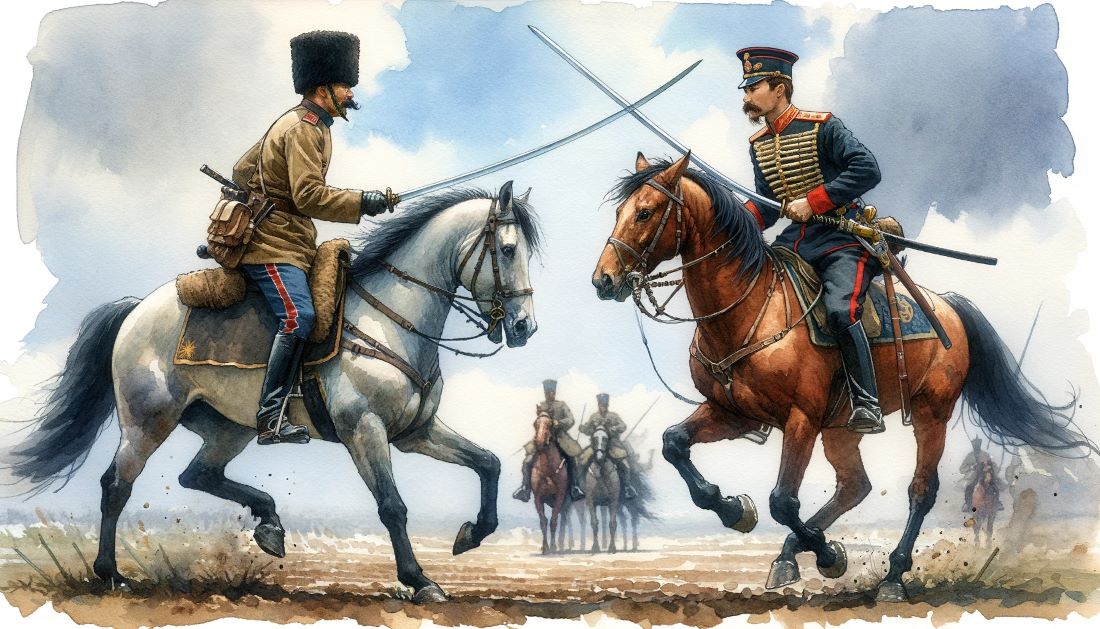
In the summer of 1905, as two massive empires battered each other in the dust of Manchuria, folklore recorded one of the most memorable tales of 20th-century warfare.
According to Balkan narrative tradition and widespread media accounts, the Russo-Japanese War briefly paused for an ancient ritual: a single-handed saber duel between an unnamed Japanese samurai clad in dark armor and a tall Montenegrin officer serving the Russian Tsar.
The Montenegrin officer allegedly won, striking down his opponent in a clash of steel before riding back to the cheers of thousands.
It is a dramatic tale of chivalry and warrior honor. Yet, when cross-referenced with primary sources and military archives, the reality of the event becomes far more nuanced.
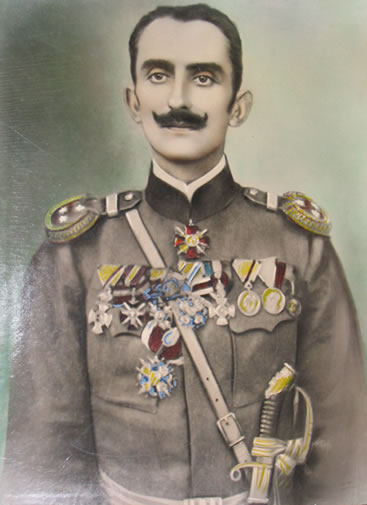
While Aleksandar Lekso Saičić was undeniably a real person—a decorated officer whose extraordinary bravery in Manchuria is backed by imperial military citations—the famous duel that cemented his pop-culture legacy reveals how genuine battlefield heroics can transform into epic legend.
Imagine This Scene
Imagine two modern industrial armies, equipped with machine guns, heavy artillery, and complex trench systems, coming to a complete halt on a dusty plain in Eastern Manchuria.
A Japanese messenger under a white flag rides into the dead zone between the lines with a startling request: Pause the war. Send out your best fighter to face our champion in single combat.
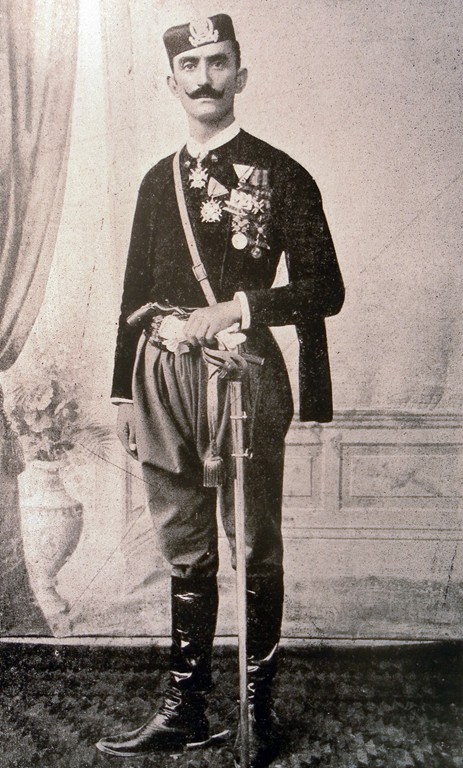
The Russian high command hesitates, eager to boost morale after a series of tactical setbacks. Then, a 32-year-old lieutenant from the mountainous region of Berane steps forward. He selects a fast horse, tests a few cavalry sabers, and rides alone into the open field to face an adversary dressed in dark armor.
    [ THE LEGENDARY ENCOUNTER ]

    The Russian Camp  ===> Sends Lieutenant Lekso Saičić (Montenegrin Volunteer)
    The Japanese Camp ===> Sends an unnamed Champion (Clad in dark traditional armor)
    The Outcome       ===> Saičić takes a forehead wound, dodges a fatal blow,
                           and strikes down the opponent in full view of both armies.
It reads like an episode straight from Homer’s Iliad or a classic 19th-century romantic poem. But once compared with contemporary military records and modern historiography, the cracks in the narrative quickly begin to appear.
The Myth: How the Story is Told
The narrative of the duel has been preserved in Montenegrin and Serbian popular history, most prominently documented in the biographical works of historians Dr. Đuro Batrićević and Petar Milatović.
In their account, the Japanese commander demanded a duel according to ancient warrior customs near Jun-ju-an in Manchuria. Saičić—a former cadet of Prince Nikola of Montenegro serving in the Imperial Russian Army—accepted the challenge to defend the honor of “Russian arms.”
“One flew at the other / Like eagles they clashed / And the sabers twirled / Reflecting off the Sun…”
As the legend goes, after striking down the dark-clad Japanese warrior, Saičić bowed to his fallen adversary and returned to his lines. Popular retellings claim he was congratulated not only by Russian officers, but also by Admiral Rozhestvensky of the Russian fleet and Admiral Tōgō of the Imperial Japanese Navy, who supposedly arrived with a diplomatic escort to honor the victor.
Unraveling the Legend: What the Archives Show
When military historians analyze the account using primary documentation—such as official regiment logs and foreign war correspondent reports—several structural inconsistencies become evident:
A. The “Samurai” Anachronism
The samurai warrior class was officially dismantled during the Meiji Restoration (1868–1873) and the subsequent Haitōrei edicts. As scholar Rotem Kowner notes in the Historical Dictionary of the Russo-Japanese War, by 1904 the Imperial Japanese Army was a thoroughly modernized conscript force organized along Prussian doctrine. Japanese officers wore standard Western-style uniforms, making the appearance of a warrior in traditional feudal armor highly improbable.
B. Geographically Displaced Admirals
The legend explicitly places two famous naval commanders at the scene of an inland Manchurian battle: Russian Admiral Zinovy Petrovich Rozhestvensky and Japanese Admiral Tōgō Heihachirō.
    [ NAVAL REALITY CHECK ]

    Admiral Rozhestvensky ===> Commander of the Baltic Fleet; captured at sea
                              during the Battle of Tsushima (May 1905).
    Admiral Tōgō          ===> Supreme Commander of the Combined Fleet;
                              directed operations from naval flagships.
Neither commander was stationed with land infantry units in Manchuria. Rozhestvensky was wounded and captured at sea during the Battle of Tsushima, rendering his participation in a terrestrial duel a geographical impossibility.
C. Silence in Official Military Records
The Russo-Japanese War was among the first modern conflicts extensively documented by international journalists, military attachés, and official general staff reports. Neither the Russian State Military Historical Archive (RGVIA) nor Japanese imperial war logs contain contemporary entries recording a formal single-combat challenge during the campaign.
Fact vs. Fiction: The Real Lekso Saičić
The absence of archival proof for the formal duel has led some to question whether Saičić himself was a mythical figure. However, official records confirm that his military service was very real—and exceptionally distinguished:
-
❌ “Lekso Saičić was merely a folklore character.”
✔ Fact: He was an actual officer from Berane whose courage in Manchuria is verified by official service registers.
-
❌ “He never saw action against Japanese forces.”
✔ Fact: Saičić served on the Manchurian front, sustaining severe combat wounds while leading high-risk reconnaissance patrols.
-
❌ “His military decorations were fabricated in later accounts.”
✔ Fact: Imperial Russian records confirm he was awarded top military honors for valor, including the Order of St. Vladimir (4th Class with Swords and Bow) and the Order of St. Anne.
How History Morphed Into Legend
If no formal pre-battle duel occurred, where did this detailed narrative originate?
Military historians and folklorists point to a well-documented phenomenon: the blending of a real, traumatic combat encounter with long-standing oral poetic traditions.
Family lore and oral accounts indicate that Saičić was wounded in the forehead during hand-to-hand combat with Japanese forces. Over decades of retellings in Montenegro, this intense real-life skirmish was reframed through the structure of traditional epic poetry, transforming a localized tactical clash into a knightly duel between two representative champions.
Frequently Asked Questions (FAQ)
Did Aleksandar Lekso Saičić actually exist?
Yes. Aleksandar Lekso Saičić (1873–1911) was a real historical figure from Berane, Montenegro. He was a trained officer who volunteered to serve in the Imperial Russian Army during the Russo-Japanese War.
What decorations did Saičić receive during the war?
According to official military records, Saičić was awarded several high-ranking Imperial Russian commendations for gallantry, including the Order of Saint Vladimir (4th Class with Swords and Bow), the Order of Saint Anne (2nd and 3rd Classes), and the Order of Saint Stanislaus (2nd and 3rd Classes with Swords).
Why is a samurai duel in 1905 considered historically implausible?
Following the Meiji Restoration in the late 19th century, Japan modernized its armed forces and abolished the samurai warrior caste. By 1904, Japanese forces fought as a modern army using contemporary firearms, uniforms, and European-inspired tactical doctrines.
Are there official primary sources documenting formal duels in Manchuria?
No contemporary Russian, Japanese, or international war correspondent records confirm any pre-arranged single-combat duels taking place during the Russo-Japanese War.
Conclusion
Stripping away the romantic embellishments does not diminish Aleksandar Lekso Saičić’s achievement—it restores his human legacy.
He did not need a staged duel with a samurai to prove his courage. He was a skilled officer who traveled thousands of miles from Montenegro to fight in one of the most grueling conflicts of the early 20th century, earning prestige through documented battlefield valor.
Perhaps no samurai ever rode out to challenge Aleksandar Lekso Saičić on a quiet Manchurian plain. But the fact that generations believed he was worthy of such a legend tells us something just as important. Myths are often born where genuine courage leaves history with too few witnesses.
Currently Reading


Historical Challenge: Can You Conquer the Past?
Answer more than 18 questions correctly, and you will win a copy of History Chronicles Magazine Vol 1! Take our interactive history quiz now and put your knowledge to the test!